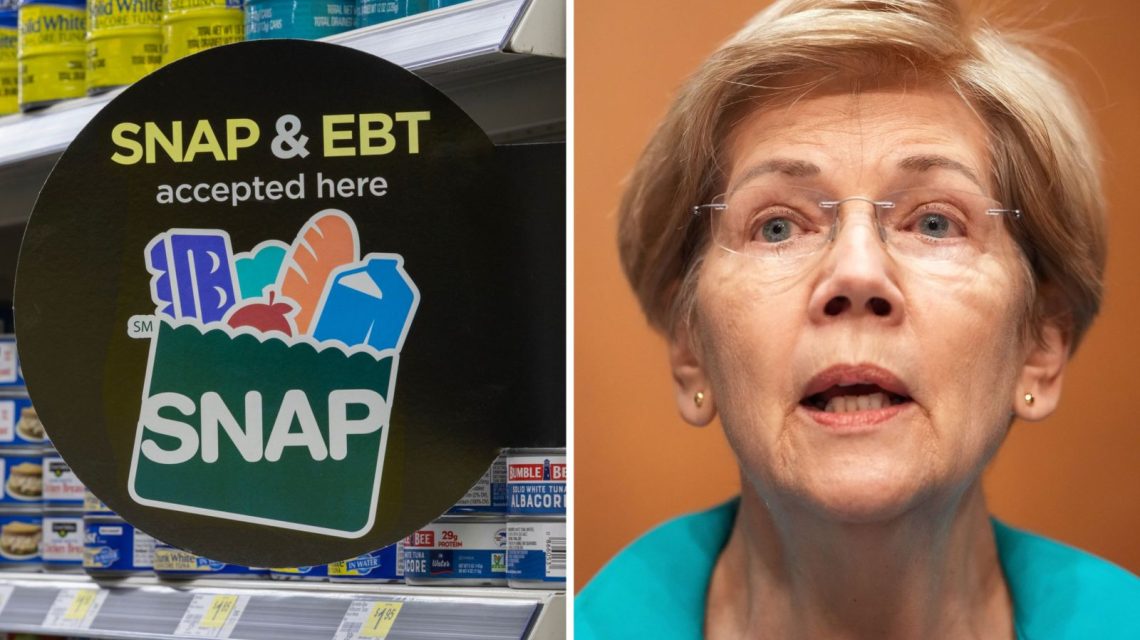
Senator Elizabeth Warren has issued a warning about a significant financial shift impacting state budgets due to changes in the federal funding structure for the Supplemental Nutrition Assistance Program (SNAP). The Massachusetts Democrat highlighted that a forthcoming reduction in federal support will pressurize states to choose between funding crucial services like SNAP and other essential programs.
Currently, the federal government contributes to 50% of SNAP’s administrative costs. This will soon decrease to 25%. Warren expressed concern through social media, stating, “States shouldn’t have to choose between SNAP and schools. Congress must reverse these cuts.”
The funding changes were part of the recently enacted One Big Beautiful Bill Act (OBBBA), which President Donald Trump signed into law on July 4, 2025. Besides cutting administrative cost support, it could also demand that states pay a portion of SNAP’s direct food benefits, shifting substantial expenses from the federal government to state budgets. This new fiscal responsibility, requiring additional billions annually from states, forms a part of extensive federal cuts to SNAP spending.
“Families shouldn’t have to choose between food and rent,” Warren emphasized.
Projections by the Congressional Budget Office indicate that these combined provisions could decrease federal SNAP spending by $211 billion by 2035.
Understanding the New SNAP Cost Rules
Prior to these changes, the federal government covered all SNAP food benefits, with administrative expenses shared between states and Washington. Under the new rules, starting October 1, 2026, states must cover 75% of their own administrative costs.
The USDA estimates this will add about $3.4 billion annually to states’ expenses from FY2027 to FY2031. A further shift begins on October 1, 2027, when states must contribute to food benefits based on the accuracy of their payment systems.
- States with error rates over 10% pay 15%.
- Rates between 8% and 9.99% result in a 10% charge.
- Error rates from 6% to 7.99% incur a 5% payment.
States that maintain error rates below 6% in benefit dispersion will not have to contribute financially towards SNAP benefits.
Projected Financial Impact on States
The Center on Budget and Policy Priorities estimates that 35 states and one U.S. territory could face additional costs in FY2028, totaling approximately $9 billion. Nearly half of these states might owe $100 million or more.
Some states with high 2025 error rates could delay payments, such as Alaska and New Mexico, whereas other states may need to address these financial obligations immediately.
Republican Perspective on State Accountability
Proponents of the SNAP funding shift from the Trump administration argue for greater accountability among states. The National SNAP payment error rate was 10.62% in FY2025, and Republicans see these funding adjustments as a way to curb these errors and related costs.
Brooke Rollins, Agriculture Secretary, stressed the need for states to increase accountability.
Senate Agriculture Committee Chairman John Boozman emphasized the necessity for states to responsibly manage the program, while House Agriculture Committee Chairman Glenn Thompson argued that the changes force states to be judicious about fund management.
State Responses and Potential Challenges
State governors and officials have raised concerns about the extreme pressures these costs will have on already constrained budgets. For example, New York’s Governor Kathy Hochul estimated that this shift could add up to $1.4 billion in new annual costs for the state and local governments.
In California, analysts anticipate an extra $2.5 billion in yearly expenses. The state’s nonpartisan State Auditor warns this could jeopardize budget stability. The CBO expects states may adopt various responses, such as absorbing costs, altering SNAP eligibility, or stepping back from the program to manage these newfound financial demands.
 Concerns Over Food Safety and Its Impact on Families
  A Mother’s Tragic Journey Under Abortion Ban
  U.S. Strategic Goals Remain Unmet Amid Prolonged Conflict
  The Impact of Arts and Closure on Democracy
  U.S. Ambassador Comments on Iran War Duration Amid Political Concerns
  US-China Relations Under Scrutiny: Expert Warns of Escalating Tensions