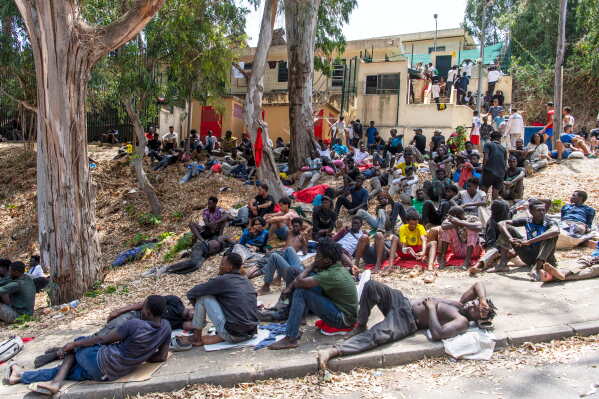
Spain has installed a 500-meter-long barrier on the sea border between its North African territory of Ceuta and neighboring Morocco after tens of thousands of migrants breached the frontier. At least 67 migrants died, some drowned and others were killed in a stampede to cross a breakwater barrier, according to the Spanish government.
Spanish Prime Minister Pedro Sánchez criticized the reaction of some European Union leaders, who called for Spain to be suspended from the EU’s Schengen zone. Sánchez described these actions as influenced by prejudice, misinformation, ignorance, or political interests.
A small number of exhausted migrants managed to swim to Ceuta’s Tarajal beach, where soldiers escorted them across the border. Most of the 50,000 to 60,000 migrants who entered Ceuta returned shortly after. Spain’s Interior Minister Fernando Grande-Marlaska stated that Spain is firm against lawbreakers. He defended Morocco as a reliable partner and stressed the importance of cooperation with neighboring countries.
The leaders of 22 EU countries have called for a coordinated response to the situation. In a letter to EU officials, these countries urged for a videoconference of interior ministers to address the situation. They emphasized the need to prevent uncontrolled mass crossings and perceived threats that illegal entry into the EU could turn into legal stays.
Italian Premier Giorgia Meloni has threatened to suspend Italy’s Schengen agreement with Spain and reimpose border controls on arrivals from Spain. Sánchez argued that such actions were selfish and polarizing.
Hundreds of migrants returned to Morocco, some claiming they did so willingly after experiencing harsh treatment on the Spanish side. Many migrants faced difficult conditions in Ceuta, including lack of food and shelter. Some returned to Morocco through informal entry points, watched by Moroccan police and soldiers.
Ceuta resident Mohamed Abdelatif expressed concern about the disruption caused by the border incidents. In the Moroccan city of Tangier, migrants returning from Ceuta found the railway station busy and some slept on the ground.
While some migrants returned to Morocco, others were determined to remain in Ceuta despite the challenges. Mohamed Hatri, a 23-year-old Moroccan, stated that he would stay in Ceuta, regardless of hunger or restrictions.
 U.S. Secures New Greenland Security Agreement
  Crisis in Yemen Amid Renewed Conflict
  Fishing Expedition Uncovers US Military Drone in Gulf Waters
  Hurricane Polo Threatens Catastrophic Impact on Mexico’s Coast
  Trump’s Diplomatic Agenda: UN Speech and Global Issues
  The Shofar: A Symbol of Healing and Redemption