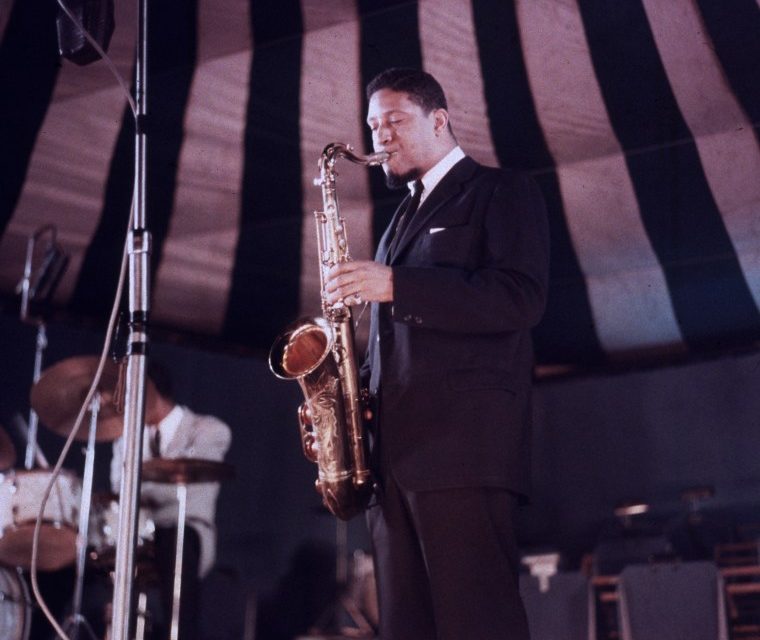
NEW YORK — Legendary tenor saxophonist Sonny Rollins passed away on Monday at the age of 95. His spokesperson, Terri Hinte, informed The Associated Press of Rollins’ death at his Woodstock, New York, home. She did not specify a cause but mentioned his recent struggles with various physical issues.
Rollins was celebrated for his improvisational mastery and his bold, unique tone that kept him at the forefront of jazz for over five decades. From his early days as a teenage sensation to his mature solo ventures and explorations in free jazz, he secured a revered place among the greats of the bebop era. Alongside figures like John Coltrane and Charlie Parker, Rollins shaped the course of jazz saxophone playing.
In the mainstream, Rollins’ influence reached rock audiences through the Rolling Stones’ 1981 album “Tattoo You,” featuring his sax solo on “Waiting on a Friend.” Despite his success, Rollins continually sought new musical paths, frequently taking breaks from performing to refine his artistry. He described himself as “a work in progress,” avoiding complacency and always striving for more in his music.
Enduring Achievements
In the 1990s and 2000s, Rollins released critically acclaimed albums and maintained an intense practice routine. He continued to tour into his eighties until pulmonary fibrosis forced him to retire. His final concert took place in 2012, and he ceased playing altogether in 2014. Although he missed performing live, the act of playing itself was his deepest yearning.
His album “This Is What I Do” earned him a Grammy for best jazz instrumental album in 2001. He won again in 2006 for best jazz instrumental solo for “Why Was I Born?” a piece from the album “Without a Song: The 9/11 Concert.” This live recording was made four days post-September 11, with Rollins performing despite having been evacuated from his home near ground zero. His wife and manager, Lucille, encouraged him to go on with the show; she passed away in 2004. Rollins is survived by nephew Clifton Anderson and nieces Vallyn Anderson and Gabrielle DeGroat.
Meeting the Greats
Rollins’ breakthrough came in his teens when he joined Thelonious Monk’s band. This opportunity led to collaborations with Miles Davis and Bud Powell, who introduced him to recording before he finished high school. Despite his early promise, Rollins’ career nearly derailed due to a heroin addiction in the late 1940s and early 1950s. He endured two jail sentences and ended up on the streets before seeking treatment in Kentucky in 1954, leading to a personal and philosophical transformation.
Upon recovery, Rollins joined the Max Roach-Clifford Brown quintet. In 1956, his solo album “Saxophone Colossus” solidified his status as a top jazz saxophonist. He experimented further with a pianoless trio setup, creating seminal works like “Way Out West,” “A Night at the Village Vanguard,” and “Freedom Suite.” Yet, at the height of his popularity, he retreated from the spotlight, spending two years practicing in seclusion on New York’s Williamsburg Bridge.
During this hiatus, jazz evolved from bebop to free jazz. When Rollins re-emerged in 1961, his embrace of new styles divided fans. By the mid-1960s, he toured Europe widely, shifting between traditional jazz and the avant-garde. He even composed music for the film “Alfie,” which cemented Michael Caine’s stardom. A visit to Japan introduced Rollins to Zen Buddhism, prompting another extended break through the early 1970s.
A Living Legend
Rollins returned to recording in 1972, now celebrated as a living legend. He received a Guggenheim Fellowship and joined the Downbeat Hall of Fame. He appeared on television and performed in prestigious concert halls.
Theodore Walter Rollins was born in Harlem on Sept. 7, 1930. Raised in a musical family, he gravitated towards the saxophone by age 11. Though primarily self-taught, he became an all-star, performing in clubs at a young age.
He leaves a legacy filled with unreleased recordings, but Rollins expressed no concern for their future. “After I’m gone, I won’t have any say in what’s done with my music,” he expressed, feeling relief that he wouldn’t have to agonize over it anymore.
 Phil Collins Reflects on Trump and Unwritten Song
  Chad Lowe’s Family Mourns Loss of 13-Year-Old Daughter Fiona
  Alan Alda’s Journey Through Career and Health
  FBI Director Kash Patel Engaged to Country Singer Alexis Wilkins
  Hayley Williams Criticizes ICE Amid Rising Attacks on Federal Officers
  Ella Langley’s Unwavering Passion for Hunting Amidst Internet Disapproval