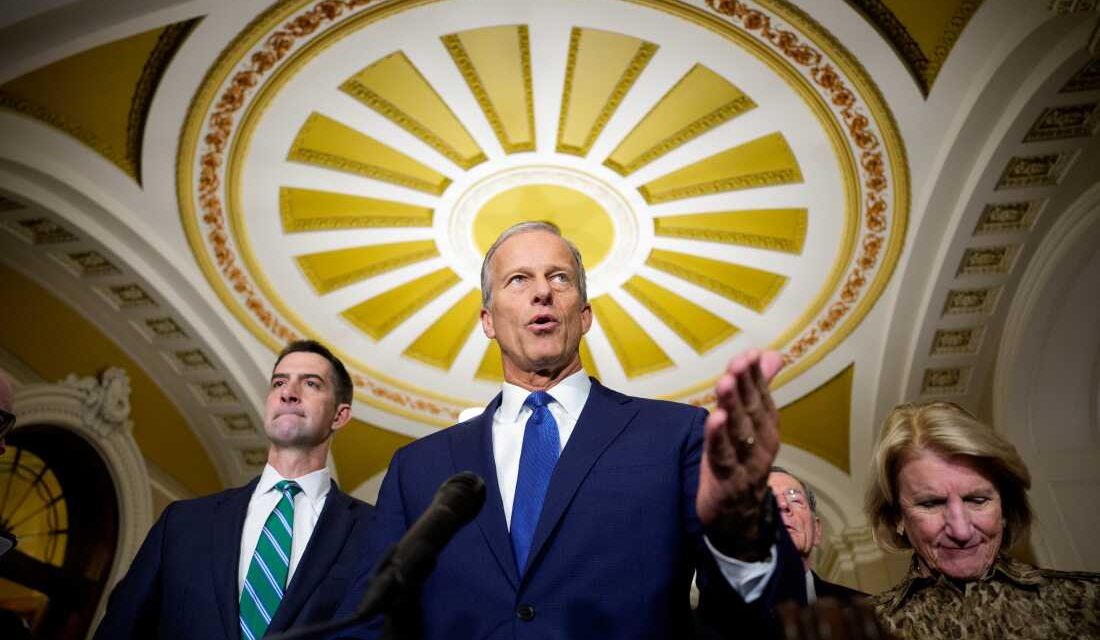
Senate Majority Leader John Thune, R-S.D., addressed the media at the U.S. Capitol, focusing on the SAVE America Act and other subjects. The proposed Republican election overhaul, strongly endorsed by former President Trump, failed to pass in the Senate.
The Senate voted on the act as an amendment during debates over an immigration funding package. This bill faced delays in the Senate after the House narrowly approved its version in February. The proposal aimed to implement immediate changes during ongoing congressional primaries. A key requirement was for voters to present U.S. citizenship documents, such as passports or birth certificates, when registering. Research indicates that access to these documents could be challenging for millions of Americans. Experts argue that the provision addresses a problem that rarely exists, as noncitizen voter participation in U.S. elections is minimal.
“The alleged sin that it is trying to correct happens so infrequently that it really does seem like the solution would be much, much worse than the disease,” noted Georgetown law professor Steve Vladeck in an NPR interview.
Despite evidence, Trump has continuously promoted the SAVE America Act as essential for preventing election fraud, which he falsely claims is widespread. During his State of the Union address, Trump urged Congress to prioritize passing this legislation. He accused Democrats of opposing the act to enable cheating. Trump’s online posts underscored his commitment to the act, declaring he would not approve other legislation before its passage.
Trump’s stance influenced some Republicans to consider ending or bypassing the legislative filibuster to facilitate passing the act. Yet, John Thune recognized insufficient support among his party to pursue such measures.
“It’s about the votes. It’s about the math,” Thune mentioned. “And I’m—for better or worse—I’m the one who has to be the clear-eyed realist about what we can achieve here.”
The act additionally sought to mandate photo ID for voting and required states to use a Department of Homeland Security tool known to wrongly flag U.S. citizens. Traditionally, Republicans have resisted efforts to centralize voting processes. However, Trump has advocated for nationalizing voting procedures. University of Notre Dame law professor Derek Muller suggested that the SAVE America Act, if passed, could have represented a major shift towards nationalizing elections.
Muller noted a shift in the debate from whether to nationalize elections to how to do so, suggesting this discourse might simplify Democrats’ efforts if they regain power.
“And that may well—even in failure to pass the Act!—make the conversation for Democrats next time they are in power much easier to have,” Muller wrote in a blog.
 Lessons from the Briefing Room
  Rashida Tlaib’s Surveillance Bill Targets Federal Funding for License Plate Readers
  Religious Groups Oppose Hate Speech Training Law in California
  Addressing the High Recidivism Rates in the U.S.
  Public Execution and Its Implications
 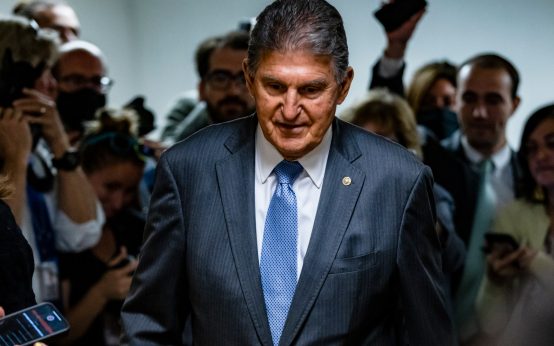 Joe Manchin Cautions Democrats on Trump Investigations