Dr. Qanta Ahmed, affiliated with the Independent Women’s Forum, has raised concerns about escalating violence in Europe. The clashes between pro-Palestinian and communist mobs with the police in France have resulted in over 800 arrests during incidents of looting and arson. Ahmed discusses the cultural and political changes driving these destructive protests in European cities.
The unrest in France has become a focal point for leaders in Hungary and Poland to address migration policies. Despite facing fines and sanctions from the EU, both nations maintain rigid stances on immigration. Hungary, under former Prime Minister Viktor Orbán, and Poland, sanctioned in 2025, continue to resist unchecked migration.
According to Eurostat data from 2025, France had nearly 10 million foreign-born residents, Italy had approximately 7 million, Poland had about 1 million, and Hungary had less than 700,000, with many born in other EU countries.
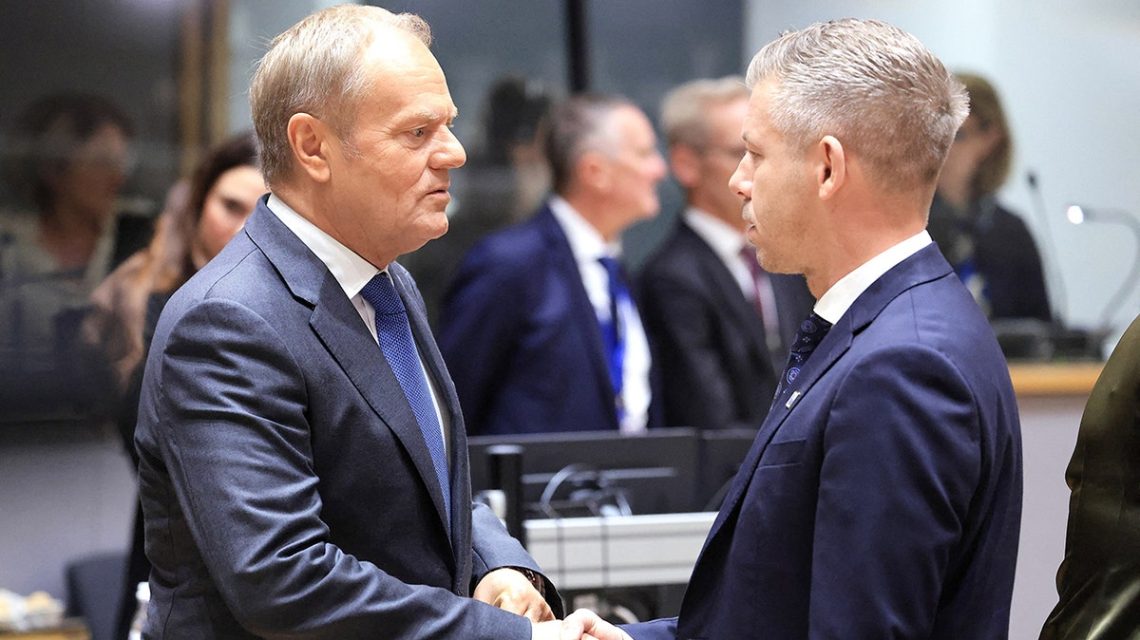
Hungary’s Prime Minister Péter Magyar responded to the violence by emphasizing strict immigration policies. He stated, “Europe can count on Hungary. In the face of senseless destruction and unjustified violence, the rationale for our strict migration approach is evident.”
Poland’s Prime Minister Donald Tusk echoed similar sentiments. He stated, “Poland will not pay for the mistakes of other European countries.” Tusk affirmed Poland’s commitment to reinforcing the border against illegal migration and maintaining its asylum policy without accepting applications.
Daniel Schatz, a Sweden-based political scientist, commented on how the riots in France serve as political leverage across Europe. He noted that images of chaos have significant political influence, reinforcing the message of stronger immigration controls.
Eurostat’s crime statistics from 2024 report France among the EU’s highest police-recorded offenses at 304,900. Italy follows with 142,600 offenses, while Poland and Hungary report significantly lower numbers at 57,300 and 28,600, respectively. Additionally, Eurostat’s 2023 perception metric shows France reporting the highest percentage of people witnessing crime or vandalism, at around 20%.
Boštjan Udovič from Slovenia’s University of Ljubljana remarked that France’s riots are linked to immigration and the lack of integration among immigrants. Magyar and Tusk convey a clear message to the EU, demonstrating skepticism about liberal immigration policies. The unrest in France serves as vindication for Hungary’s stringent migration stance and reinforces Poland’s warnings against repeating other countries’ mistakes.
The European Council summit has highlighted a growing desire among European countries to move away from permissive policies. Magyar emphasized the urgency to preserve Europe’s cultural heritage, expressing solidarity with the French people.
Tyler Speicher, an American journalist residing in Slovenia, provides background on the ongoing protests and political dynamics. Magyar reiterated that while peaceful protest is a fundamental right, vandalism and violence are considered serious crimes.
 Veteran Anchor Christiane Amanpour Announces Departure from CNN
 Researchers Face Setback in Search for Amelia Earhart’s Plane
 Ukraine’s Ongoing Struggles Amid U.S. Political Shifts
 Researchers Narrow Timeline of Early Human Migration to North America
 Iran’s Strategic Moves in the Strait of Hormuz
 Marco Rubio’s Visit to India and Its Implications