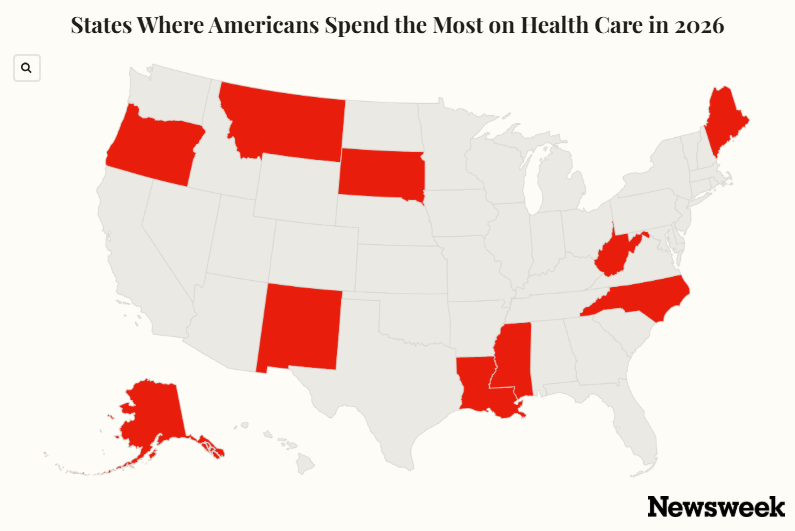
Americans are spending more of their income on health care amid sharply rising costs over the past two decades. Variations exist across states, as highlighted in a recent WalletHub report. Some states report residents allocating over 10 percent of their income on medical care, while others experience significantly lower percentages. Nationwide, average out-of-pocket health care spending has increased from $811 to $1,514 annually, significantly exceeding inflation, thus intensifying household financial challenges.
Impact of Rising Costs
The escalating health care costs are increasingly influencing financial choices for many Americans. Some individuals are postponing or skipping necessary medical care. Even in states with relatively lower costs, incomes often do not adequately cover the expenses, especially with ongoing inflation affecting essential needs like housing and food.
WalletHub Report Insights
The WalletHub report evaluated all 50 states on the percentage of median household income spent on essential medical services and medications.
The states where residents spend the most include:
- Alaska — 10.08 percent
- Oregon — 9.32 percent
- Maine — 9.30 percent
- Mississippi — 9.18 percent
- West Virginia — 9.14 percent
- New Mexico — 9.07 percent
- North Carolina — 8.78 percent
- Montana — 8.62 percent
- South Dakota — 8.60 percent
- Louisiana — 8.13 percent
On the lower end, states with minimal healthcare expenses include:
- Utah — 5.11 percent
- Virginia — 5.62 percent
- California — 5.64 percent
- New Jersey — 5.81 percent
- Nevada — 5.87 percent
New York ranks 15th, with 7.98 percent of income spent on health care.
Factors Influencing Healthcare Spending
Data indicates that high health care spending often correlates with steep medical costs rather than exclusively low income.
In Alaska, residents spend 10.1 percent of their median income on healthcare. Despite a high median income, elevated costs, particularly for doctor visits and medications, escalate overall spending. In
Oregon, 9.3 percent of income is directed toward health care, driven by high service costs. Maine follows as the third-highest state, where medical prices and average lower-income levels necessitate a higher spending share.
Data Analysis
The WalletHub study evaluated five medical spending aspects across states:
- Doctor visits
- Dentist visits
- Optometrist visits
- Prescription costs for ibuprofen
- Prescription costs for insulin glargine
Cost assessments were compared against state median household incomes to gauge financial impact. Data, as of April 30, was sourced from the Council for Community and Economic Research and the U.S. Census Bureau.
Strategies for Reducing Costs
Geography plays a vital role in health care costs, but individuals can take steps to mitigate expenses. Maintaining health insurance and using preventive care can reduce long-term costs. Financial experts advocate setting up emergency funds and utilizing tax-advantaged health savings accounts as viable options to manage expenses.
A noticeable decline in healthcare facilities in several states correlates with less competition, forcing residents to travel more for services and inflating costs.
Future Considerations
Regional differences in health care affordability might become policy targets as costs continue to rise. Without adjusting pricing, insurance coverage, or facilitating income growth, inhabitants in high-cost regions may allocate more of their income to essential medical care. Industry consolidation suggests competition may remain limited, potentially fueling continuous health care inflation, which inevitably impacts consumers.
 Measles Exposure in Philadelphia Raises Health Concerns
  Lawsuits Claim Vision Loss Risk from GLP-1 Medications
  States Tighten Regulations on Tianeptine, Known as ‘Gas Station Heroin’
  Medicare Lab Test Payments: Upcoming Changes and Their Implications
  Gen Z Faces Economic Barriers to Dating and Intimacy
  Understanding and Preventing Suicide: A Public Health Priority