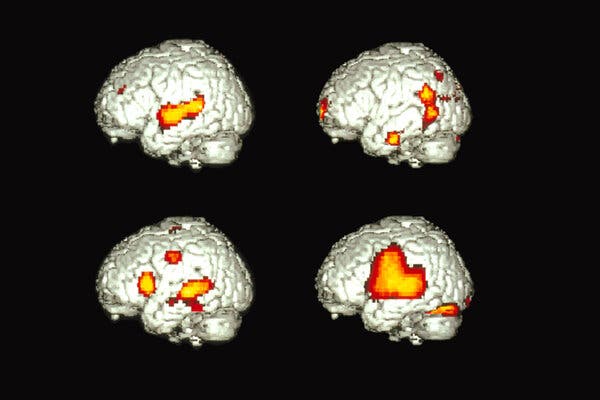
A recent study on bilingual speakers suggests that a single ‘grammatical engine’ in the brain can manage multiple languages simultaneously. This challenges previous assumptions about how the brain processes different languages.
People who have spoken a language their entire life naturally memorize its grammatical rules. For instance, even without prior knowledge, one might know that the present participle of ‘absquatulate’ is ‘absquatulating.’ However, grammar rules can differ significantly between languages, leading neuroscientists to theorize that bilingual individuals might exhibit distinct brain activity patterns for each language.
This new study, however, highlights surprising similarities. According to the findings, when bilingual individuals determine whether a word should be singular or plural, their brain activity remains notably consistent, irrespective of whether they are using their first or second language.
‘It wasn’t obvious that it was going to be so shared,’ said Esti Blanco-Elorrieta, a psychologist and neuroscientist at New York University. She is one of the authors of the study, which was published in the journal JNeurosci. She believes this is a groundbreaking finding in understanding how integrated two languages can be within the brain.
Historically, researchers perceived bilingualism as an ‘add on’ or a ‘disruption’ to processing one’s native language, stated Judith Kroll, a psycholinguist at the University of California, Irvine. She did not participate in the study but noted its importance. Previous research identified physical differences in bilingual brains, such as more efficient white matter and changes in gray matter. Additionally, bilingual individuals typically excel in memory and concentration tasks.
 How Little Brown Bat Genes Are Outsmarting a Fungal Killer
  The Impact of Generative AI on Critical Thinking Among Knowledge Workers
  New Insights from Research on Ancient Ethiopian Palace
  Moose Street Brawl in Colorado Captured on Video
  Why Animal Scavengers Protect Your Health
  Gene Editing and Ethical Debates at Origin Genomics