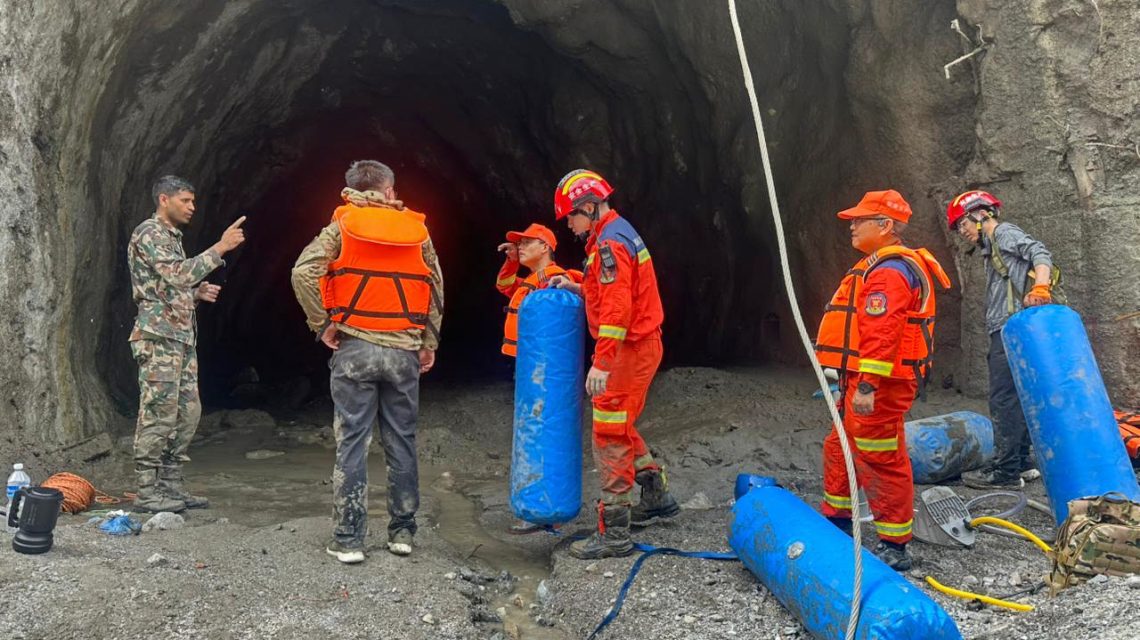
On August 31, 2026, Nepal Army soldiers conducted rescue operations at the Upper Trishuli hydropower project site in Nepal. Filmmaker and drone pilot Manish Maharjan played a critical role in these efforts. Maharjan had entered Nepal from China’s Tibet via Rasuwagadhi, near where the flooding started two days before the disaster.
Maharjan joined rescue teams a day after flash floods killed over 1,000 people and left thousands missing in Nepal and China. His thermal drones assisted in locating and finding at least 900 workers still missing from 12 hydropower projects buried under mud and debris, including around 500 believed trapped in power plant tunnels.
Drones proved effective in spotting stranded individuals on hillsides and isolated areas, including caves. Maharjan explained, “We used microphone speakers to call out to them. In some places, we even played songs and then waited for a response.” This strategy succeeded in locating some people.
The tunnels, however, posed a unique challenge. “We found tunnels were filled with mud like toothpaste in a tube,” Maharjan noted. Drones were ineffective in locations without hollow spaces.
The flash floods on August 26 resulted from a glacial collapse in the Himalayan region. Satellite imagery revealed the bedrock beneath a glacier collapsed, dragging part of the glacier along and registering as a magnitude 5.2 seismic event. Rocks and melted water surged into rivers, causing widespread damage to hydropower plants, roads, buildings, and bridges in Tibet and Nepal.
Initially, some workers in tunnels managed to call for help, reporting colleagues still trapped inside. However, contact with these workers has been uncertain as time slips away. Experts emphasize the importance of the first 72 hours for survival, noting the risk from a lack of clean water. Breathable air is another crucial survival factor.
While searching at the Rasuwagadhi hydropower project, Maharjan sent a drone deep into a tunnel but found no signs of life. “We checked repeatedly, but it was filled with mud and debris. Looking at it, I could only imagine the flood’s force,” he observed. Tunnel searches are challenging because of difficult access and the absence of empty spaces. “I can only fly drones in tunnels that are long and straight,” he stated. “Once there are bends, turns, or zigzags, it becomes much harder to operate and search effectively.”
 Inside the Secret Deals Powering the President’s Push to Deport Migrants to Countries Not Their Own
  Navigating the Challenges of Third-Country Deportations
 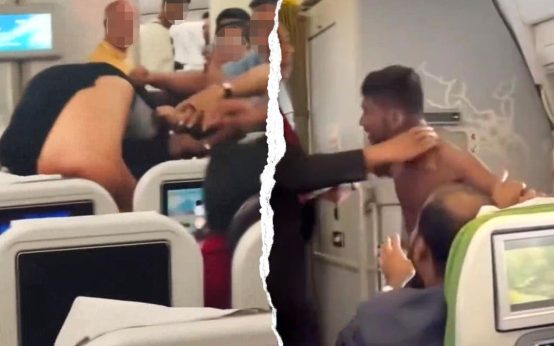 Midair Altercation on Bangladesh to London Flight
 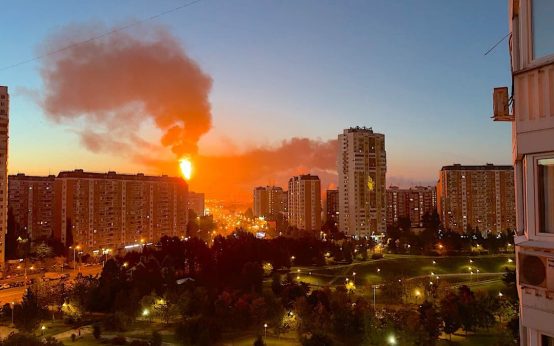 Ukraine Missile and Drone Barrage Hits Russia Amidst Elections
  U.S. Strategic Goals Remain Unmet Amid Prolonged Conflict
  New Photos Reveal Damage from Iranian Strikes in the Middle East