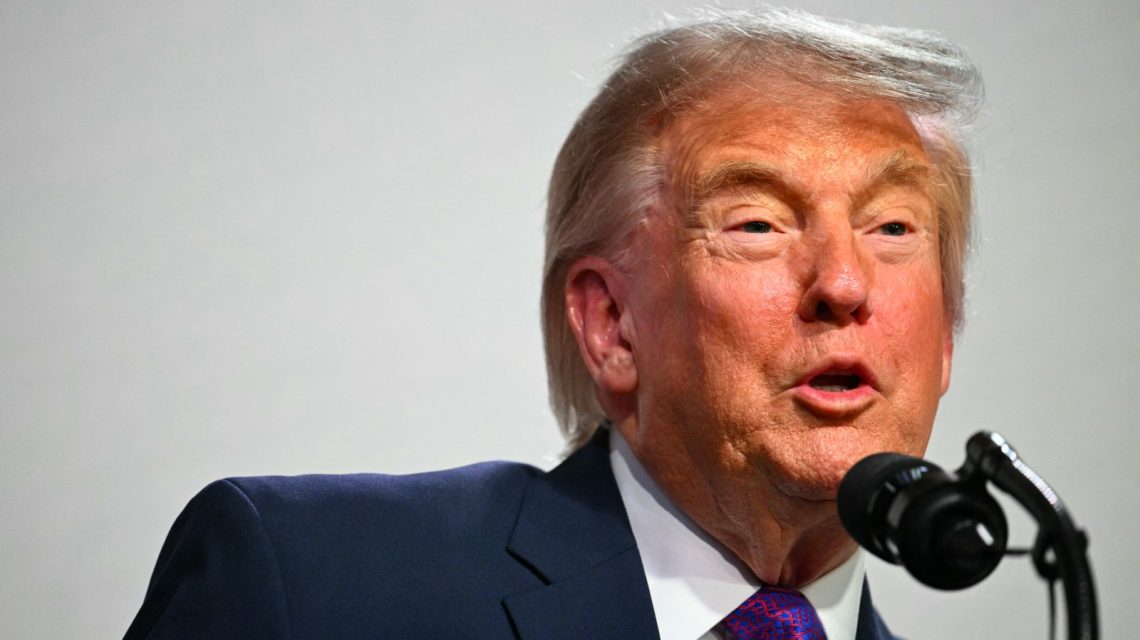
Recent polling data reflects growing disapproval among Republicans regarding President Donald Trump’s economic management, marking a significant shift within his political coalition. An AP/NORC poll released on Wednesday reveals that 37 percent of Republicans disapprove of Trump’s handling of the economy. This discontent poses a critical challenge for the GOP as the 2026 midterm elections approach.
Despite Trump’s commitment to strengthening the economy and addressing inflation during his 2024 campaign, Americans continue to face challenges related to the economy and rising living costs. Gas prices have become a prominent issue for many, exacerbated by the ongoing conflict in Iran. The national average reached $4.555 per gallon, according to AAA data.
White House spokesperson Kush Desai expressed optimism regarding the economy, stating in Newsweek that it has remained “resilient” under Trump’s leadership. Desai assured that further implementation of healthcare and housing affordability agendas would yield positive results in Trump’s second term.
The poll surveyed 1,117 adults from May 14 to May 18, 2026, with a margin of error of plus or minus 3.8 percentage points.
The poll indicates 30 percent of Republicans disapprove of Trump’s actions regarding Iran, nearly three months into the conflict impacting the global economy. Overall, only 33 percent of Americans approve of Trump’s economic policies, while 67 percent express dissatisfaction.
Trump’s Overall Approval Ticks Up
Despite the economic concerns, Trump’s general approval rating has improved slightly from last month, though it remains low. The poll shows 37 percent of respondents approve of Trump’s performance, up from 33 percent in a survey conducted from April 16 to April 20, 2026. This still represents a decline from May 2025, when 41 percent of Americans approved of the president.
Trump’s Influence in GOP Primaries
Trump continues to wield significant influence within the Republican Party, even as his national approval rating decreases. Recent GOP primary results underscore Trump’s stronghold over the party. For example, Trump-endorsed Ed Gallrein succeeded in ousting incumbent Representative Thomas Massie in Kentucky, receiving substantial attention and funds.
Senator Bill Cassidy of Louisiana, known for his vote to convict Trump after his impeachment, failed in the Senate primary. Trump-aligned candidates Julia Letlow and John Fleming are advancing to a runoff.
Other Poll Results
Several recent polls have shown Trump’s approval rating declining both nationally and in key swing states. A Reuters/Ipsos poll indicates only 35 percent approval, with 63 percent disapproval. Similarly, Echelon Insights reports a 40 percent approval rate, while YouGov/The Economist shows 37 percent approval. The New York Times/Siena College poll reflects 37 percent approval against 59 percent disapproval.
Impact on the Midterms
Trump’s popularity is expected to be a crucial element in the midterm elections, typically seen as a reflection on the current president. Generally, the incumbent party loses seats during midterms. Historical data from Trump’s and Biden’s administrations highlights significant shifts in congressional power during such elections.
The Kalshi prediction market suggests a 74 percent likelihood of Democrats reclaiming the House, while Republicans hold a 54 percent chance of maintaining Senate control. Polymarket data similarly forecasts an 81 percent probability for Democrats to secure a House majority, though Republicans are slightly favored to retain the Senate.
Gas Prices as a Key Midterm Challenge
Rising gas prices continue to be a critical issue amid the Iran conflict, resulting from disruptions at the Strait of Hormuz—a pivotal route for global oil supply. According to U.S. Energy Information Administration data, this closure has intensified global oil market pressures, causing further price hikes.
Gas prices increased from $4.533 per gallon on Tuesday to $4.555 per gallon, with California experiencing the highest prices at $6.145 per gallon. House Democratic Leader Hakeem Jeffries criticized the Republican-led war in Iran for contributing to rising gas costs.
Experts predict gas prices will decrease once Washington and Tehran reach an agreement, although relief may take time. Trump has conveyed mixed messages about the conflict’s future, recently suggesting a quick resolution.
In an effort to mitigate gas price impacts, Congress recently passed a bill enabling year-round sales of E15—a blend of gasoline and 15 percent ethanol. E15 is generally more affordable than E10, with estimates showing cost reductions of 5-10 percent.
 Israeli Leader’s Upcoming U.N. Assembly Speech Marked by Controversy
  Republicans Call for Quick Resolution to Iran Conflict
  United States Secures Arctic Defense Pact
  Senator Warren Seeks to Restrict Private Equity in Restaurant Chains
  Marco Rubio’s Expanding Role in Trump Administration
  Byron Donalds Adjusts Campaign Strategy as Florida Governor Race Intensifies