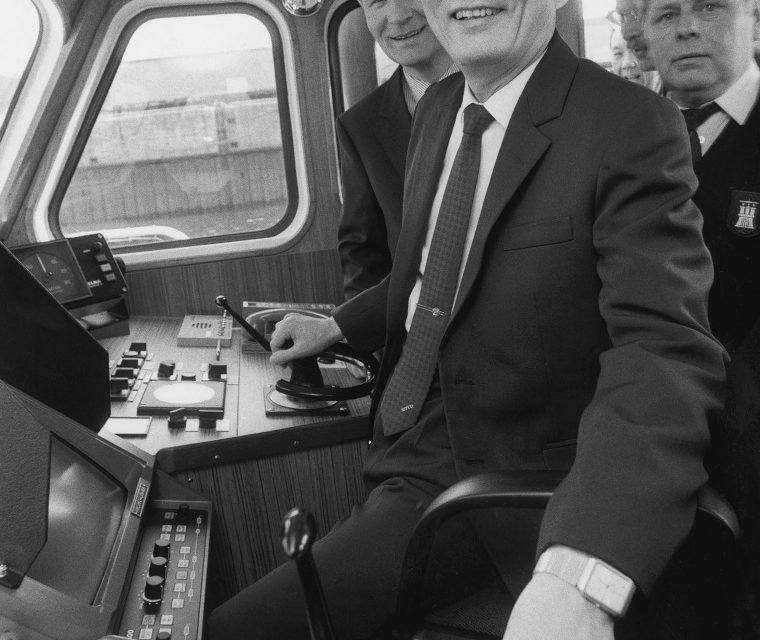
Former Chinese Premier Zhu Rongji, known for his role in China’s economic transformation, has passed away at the age of 97. According to China’s state media, Zhu died of illness in Beijing on a Wednesday morning. Zhu’s leadership was marked by his efforts to modernize the country’s economy, leading to explosive growth in the late 20th century.
An Era of Reform
Zhu, a sharp-tongued reformer, served as China’s Premier from 1998 to 2003. During his tenure, he implemented significant changes in state-owned industries. These transformations, although resulting in job losses, helped China become a global economic powerhouse, overtaking countries like Japan. Zhu was instrumental in China’s admission to the World Trade Organization (WTO), a pivotal move that enhanced China’s global trade relations and positioned it as the world’s largest exporter.
Political Challenges and Economic Triumphs
Zhu’s path wasn’t without obstacles. He often clashed with Communist Party conservatives and state industry leaders. His push for efficiency in state-owned entities led to widespread layoffs, demonstrating his commitment to economic reform. By 2010, these efforts helped China become the second-largest economy, trailing only the United States.
Initially dismissed as a ‘rightist,’ Zhu endured manual labor exile during the Cultural Revolution. He re-emerged in politics in 1979, quickly ascending to influential positions in Shanghai by the late 1980s. As Mayor of Shanghai, Zhu showed political acumen by addressing protests through negotiation rather than force, earning him a reputation for moderation.
Legacy of Leadership
Known for his candidness, Zhu often criticized corruption within the government. He famously declared his willingness to address corruption personally, stating he had prepared coffins for corrupt officials, including one for himself. Zhu’s direct approach and accountability won him public admiration, with many calling him ‘Boss’ or ‘Madman Zhu.’
His efforts in inflation control as Deputy Premier were remarkable. He implemented price controls and cut loans to failing state firms. This decisive management style made him a key figure in China’s economic narrative, securing WTO membership after extensive negotiations and facing resistance both domestically and internationally.
Impact Beyond Economics
Zhu spurred China’s housing market by encouraging the sale of state-owned apartments. This initiative led many urban households to own property, shifting the housing landscape significantly. However, Zhu never sought to privatize entirely, instead, he supported mixed-ownership models where the government retained substantial control over major industries.
Despite his prominence, Zhu rarely appeared in public life after retiring. He was remembered for bringing humor and humanity to otherwise serious political discourse, often through self-deprecating jokes.
Zhu’s life and work were celebrated for his courage in implementing reforms that shaped the modern Chinese economic landscape. His legacy as a bureaucrat who championed reform while maintaining loyalty to party principles remains influential in China’s history.
 Confusion Surrounds UK Bomb Plot Investigation as Suspects Released on Bail
  Maine Senate Race: Rising Home Heating Oil Prices and Political Tensions
  Democratic Women’s Caucus Unveils Economic Agenda
  White House Reopens Part of Lafayette Square
  Mamdani’s Child Care Plans and Their Potential Impact
  Challenges in Addressing Global Crises