An unexpected discovery of a Roman fort in Wales has captured the attention of archaeologists worldwide. Mark Merrony, affiliated with Wolfson College, Oxford, shared details of the excavation with Fox News Digital. Numerous artifacts, including ceramic tiles, surfaced at this newly identified site, suggesting a possible link to Welsh folklore. Further study is necessary to understand the role of the discovered aqueduct.
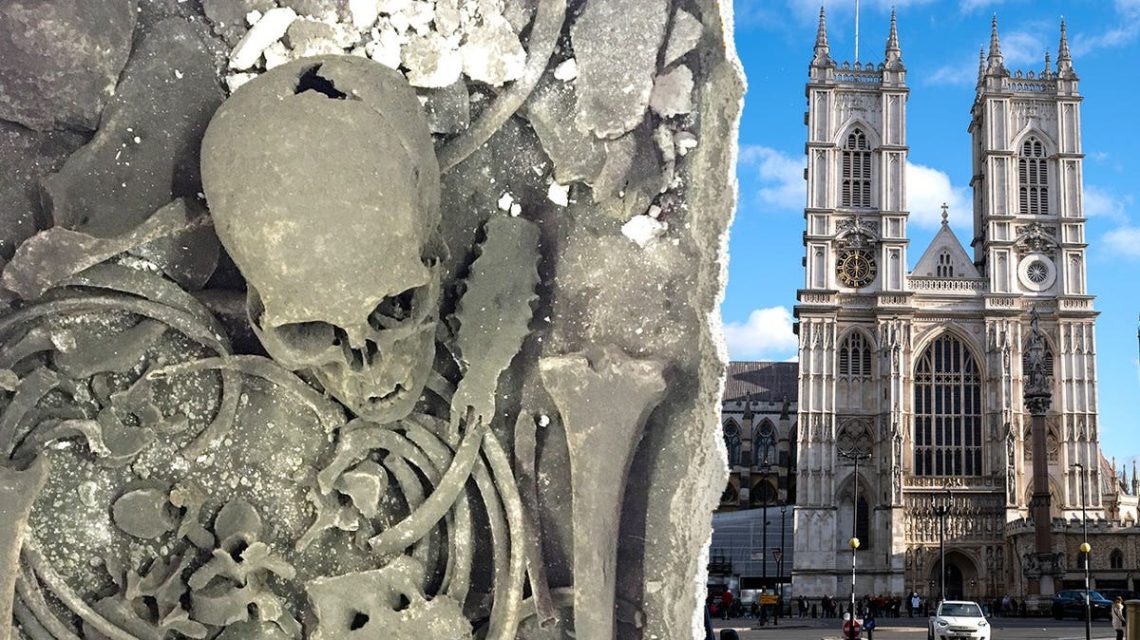
Simultaneously, mystery unraveled around an unknown skeleton at the famous Westminster Abbey in London. Found in 1869, this skeleton remained a puzzle for over 150 years. The recent study by Warwick Rodwell, a consultant archaeologist at Westminster Abbey, provided new insights. Published in the Journal of the British Archaeological Association, the research may have solved this long-standing enigma. Rodwell’s findings stem from an excavation in 2025 before constructing the new King Charles III Sacristy, scheduled for completion in 2027.
“We do not know the date of birth of either,” Rodwell remarked. Both monks would fit the historical timeframe if the Abbot received their appointment in their early twenties and died around fifty.
This Roman limestone sarcophagus, inscribed for Valerius Amandinus, a wealthy 4th-century Briton, did not house the expected remains. Instead, an early medieval Latin cross on the lid perplexed experts since it didn’t correspond with the Roman timeline. Rodwell proposed the skeleton belonged to one of two high-ranking monks, Aelfwig or Wulnoth, who lived in the 11th century. Carbon dating positioned the bones between 987 and 1052 AD, aligning with the monks’ lives.
Despite being recycled, the sarcophagus’s fine nature suggests its occupant held a distinguished status. The man, likely aged between 35 and 49 years, stood 5 feet 9 inches tall. Excavators noted white lime residue, indicating where a decayed wooden coffin once lay inside the stone casket. This sarcophagus is now displayed at Westminster Abbey’s Queen’s Diamond Jubilee Galleries.
Recent archaeological activities across England have provided additional insights into the medieval period. In 2025, excavations at a former department store site at the University of Gloucestershire uncovered 317 skeletons and remnants of a medieval church. Furthermore, a spring 2025 investigation at the Tower of London revealed a 14th-century mass grave possibly linked to the Black Death.
 NIH’s Foreign Animal Research Funding Criticized for Safety Failures
 Netanyahu Faces Legal Challenges Without Prime Ministerial Power
 NATO Intelligence: Russia May Launch Nuclear-Armed Satellite
 Father and Daughter Detained by ICE While Boarding Flight
 Medvedev Warns of Potential Nuclear Threat Amid Rising Tensions
 Current Global Events and Personal Finance Guidance