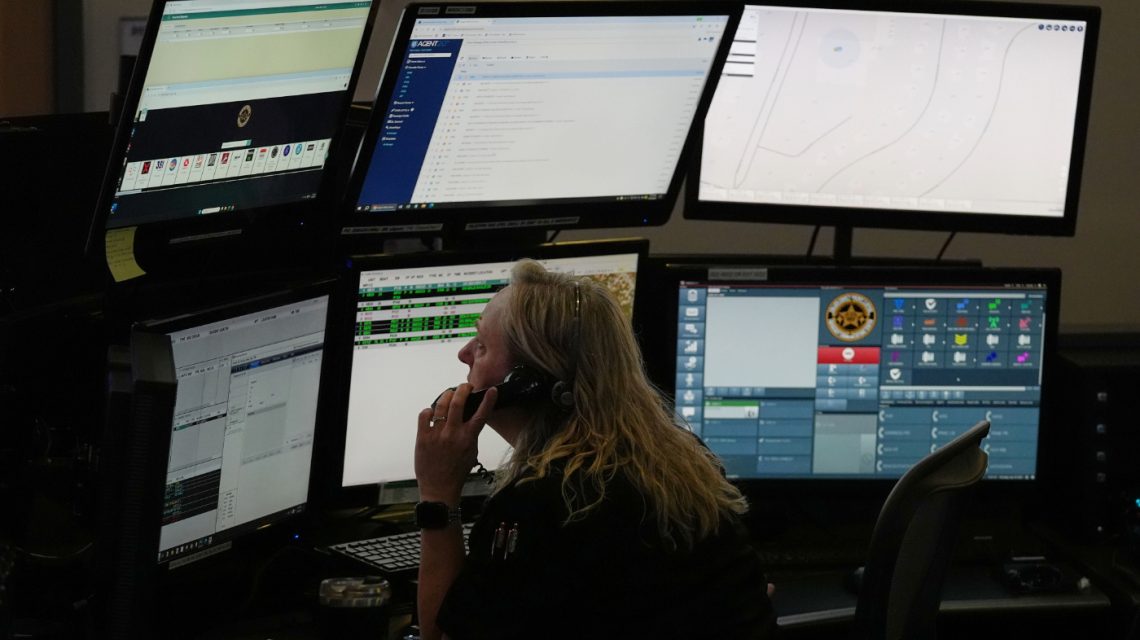
Dispatcher Donna Bocik received a 911 call at Collier County Emergency Services Center in Naples, Florida, on July 11, 2025. This event reflects the crucial role of 911 professionals in emergency response. Tim Teneyck, another experienced dispatcher, answered a 911 call that initially seemed to be a pizza order. The call was actually a coded distress signal related to domestic violence. By deciphering this unusual communication, Teneyck facilitated a swift and effective intervention.
In the United States, there are about 450 calls to 911 each minute. These calls are managed by skilled professionals who are often the first to address crises, despite being classified under federal labor law as administrative workers. A legislative effort is underway to reclassify 911 professionals as “protective service personnel” to accurately reflect their vital contributions.
The term “first responders” usually brings to mind images of police or firefighters confronting danger. However, 911 call takers, while not physically present at such scenes, encounter stressful and traumatic situations regularly. Surveys indicate that nearly half of 911 professionals handle calls involving kidnappings or hostages, while a significant percentage deal with serious assaults and suicide cases. During mass incident events like shootings, these professionals take numerous distress calls that expose them to intense trauma.
The psychological impact on 911 responders is significant. They face a ten-fold increase in risk for anxiety, post-traumatic stress disorder, and depression compared to the average person. Their mental health risks are also doubled compared to those in law enforcement, yet training and support systems remain inadequate.
Gender discrimination historically impacts 911 professionals. Women, who constitute nearly 80% of the workforce, were initially hired for their perceived listening skills but faced lower pay and fewer benefits. Misclassification aligns 911 roles with administrative positions often held by women, exacerbating pay disparities compared to police officers and firefighters.
The situation is gradually improving. States like Washington and Arizona have acknowledged the need to reclassify 911 professionals as first responders, granting them access to retirement benefits and a pension system. These changes bolster recruitment and retention in this vital field.
The federal legislation, known as the Enhancing First Response Act, passed unanimously in the Senate. It seeks to extend similar recognition at the federal level, allowing 911 professionals access to essential benefits. The House is urged to enact this measure, highlighting the principle of respecting those who handle emergency calls.
Rebecca Neusteter, the executive director of the Health Lab at the University of Chicago Harris School of Public Policy, underscores the importance of respectful recognition and support for 911 responders. Her book, “911, What’s Your Emergency? The Promise and Peril of Crisis Response,” will be published on September 15, providing deeper insights into the emergency response system.
 Federal Relief Funds Used for Anti-Racism Training in Albuquerque Schools
  Concerns Over Food Safety and Its Impact on Families
  Concerns Rise Over NIPSCO Permit In Jasper County
  Debate on Integrating Race into BMI Guidelines Among Doctors
  Hunger Crisis Deepens in Chicago, Reveals Latest Report
  Health Officials Tackle Legionnaires’ Disease Outbreak in South Bronx