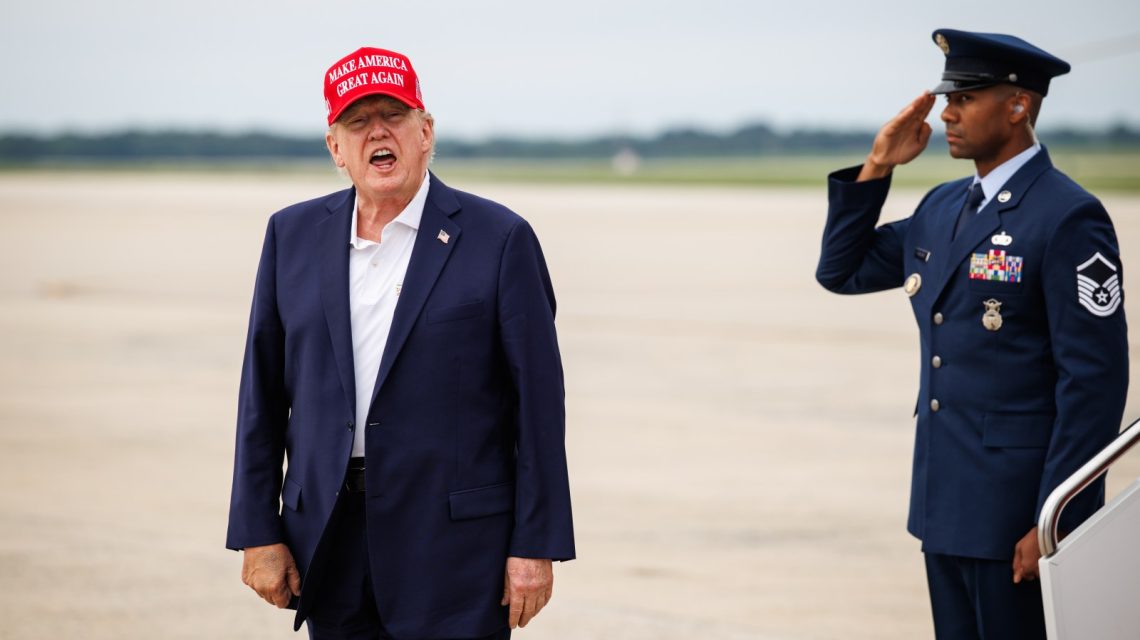
President Donald Trump recently escalated his aggressive stance towards foreign governments by threatening military action against Oman. In an interview with Fox News, Trump stated that Oman would face bombing if it interfered with U.S. efforts concerning Iran and the Strait of Hormuz. Such remarks highlight a significant shift in rhetoric towards Oman, traditionally a crucial partner of the U.S. in the Middle East and a diplomatic facilitator between Washington and Tehran.
Oman’s strategic importance lies in its position on the Strait of Hormuz, a vital chokepoint for global oil exports. About 20% of the world’s total passes through this narrow waterway. Oman’s history of balanced diplomacy between the U.S. and Iran underscores the weight of Trump’s statements, which are notably more hostile compared to those directed at recognized U.S. adversaries.
The Pentagon has deferred to the White House for responses on this issue, indicating the gravity of Trump’s comments.
Current and Past Military Engagements
Since his return to office in January 2025, President Trump has authorized military strikes across various countries. These include operations in Somalia, Iraq, Yemen, Iran, Syria, Nigeria, and Venezuela. These actions vary from counterterrorism airstrikes to significant campaigns such as the June 2025 assault on Iranian nuclear sites. This operation, targeting facilities at Fordow, Natanz, and Isfahan, followed the breakdown of nuclear negotiations.
Additional military endeavors by the U.S. have involved Yemen’s Houthi movement and extensive operations targeting ISIS in Iraq and Nigeria, underscoring Trump’s proactive use of military force during his tenure.
Potential Future Interventions
Beyond the countries already struck, Trump has shown willingness for possible military action elsewhere. Prior to his re-election, he did not discount the use of force in acquiring control over Greenland or the Panama Canal, citing their importance to national security. These suggestions faced strong pushback from Danish and Panamanian officials.
Following the operations in Venezuela, Trump raised the potential for U.S. involvement in Cuba, Colombia, and Mexico, mentioning possible actions against Mexican cartels. The recent threat to Oman is significant due to its explicit nature, distinguishing it from previous rhetoric regarding future interventions.
Contrasting Stances on Military Use
Trump’s second-term military strategy contrasts with his 2024 campaign promise to avoid new overseas conflicts. While his administration argues these actions are limited and protect U.S. interests, critics recall his pledge to end rather than initiate wars. The White House maintains that the strikes deter larger conflicts through a demonstration of strength.
Within the MAGA movement, the actions in Iran sparked debate. America First figures have expressed concern about potential entanglements in Middle East conflicts, whereas others defend the strikes as essential to maintaining U.S. security and deterring Iranian threats. This division reveals a significant fault line between traditional national-security conservatives and populist isolationists.
 Tucker Carlson’s Remarks on Britain and WWII Spark Backlash
  President Trump Advances New White House Ballroom Construction
  The Role of JD Vance in Engaging the Working Class
  Trump’s Capital Punishment Expansion While Criticism Grows
  White House Announces Medicare Fund for One-Time Payments
  Supreme Court Permits Trump Administration’s Third-Country Deportation Strategy