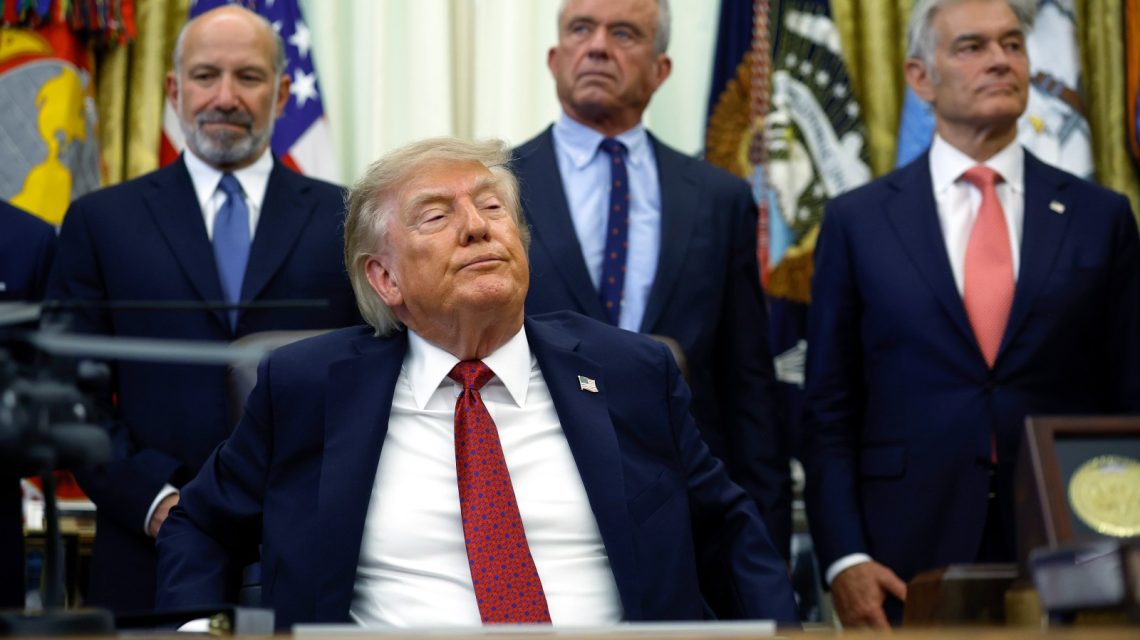
President Donald Trump has reiterated his plan to provide $5,000 checks to Americans, contingent on Republicans maintaining control of Congress. This initiative, however, hinges on the involvement of wealthy foreigners, who would need to contribute $5 million each.
Commerce Secretary Howard Lutnick remarked that the funds would not come from taxpayers nor affect the deficit. He referenced the Trump Platinum Card program, which is still in development. Lutnick has noted a waiting list of over 100,000 individuals for the program.
Lutnick stated, “We have a waitlist of more than 100,000 people who want to come. That’s $500 billion.”
In a recent post on Truth Social, Trump confirmed his commitment to the checks, initially unveiled during the Republican midterm convention in Dallas. He criticized Democrats for labeling the promise as a mere electoral bribe.
White House spokesperson Davis Ingle defended Trump’s record when asked about funding. He pointed to various achievements, contrasting them against the Democrats’ track record.
The proposed $5,000 checks would go to every adult U.S. citizen if Republicans maintain both the House and Senate. According to the Associated Press, the initiative could cost approximately $1.23 trillion. The administration has not decided if high-income Americans would be excluded from the plan.
The Platinum Card Program
The Trump Card website mentions the Platinum Card as “coming soon.” Foreign nationals can currently join the waiting list, yet the program itself has not launched. Participants would need to pay a $15,000 fee and make a $5 million contribution to receive benefits.
Lutnick’s calculations suggest that 100,000 people contributing $5 million each would generate $500 billion, covering only about 41% of the estimated $1.23 trillion cost. More contributions would be required to meet the plan’s financial demands.
The procedural details on the government website affirm that contributions would be collected once the program officially begins.
Alternative Funding Ideas
Other Trump officials have suggested various ways to finance the checks. The vice president hinted at using tariff revenue, but current collections fall short. Trump highlighted the administration’s gains from investments in Intel, yet these sums are insufficient.
Kevin Hassett, Director of the National Economic Council, mentioned leveraging congressional budget reconciliation for advancement. Ultimately, congressional authorization is necessary for spending.
The federal government faces about $2 trillion annual deficits, presenting challenges for funding such payments. Trump has considered similar plans before, none of which have been executed.
Democratic Criticism
The proposal has drawn criticism from Democrats. Senate Minority Leader Chuck Schumer accused Trump of vote buying. Representative Robert Garcia labeled it an “empty promise,” referencing unfulfilled proposals like the tariff and DOGE dividends.
California Governor Gavin Newsom criticized the attempt to “buy your vote,” while Representative Dan Goldman of New York called the pledge “corrupt and blatantly illegal,” emphasizing that congressional approval is necessary.
 American Public Opinion on Press Freedom
  Media Lawsuit Against Trump Administration for White House Ban
  The Cost of Challenging Beijing
  Analyzing Midterm Elections and Party Dynamics
  Allan Lichtman’s Framework for Assessing Presidential Greatness
  Florida Senate Race Tightens as Recent Polls Show Dead Heat