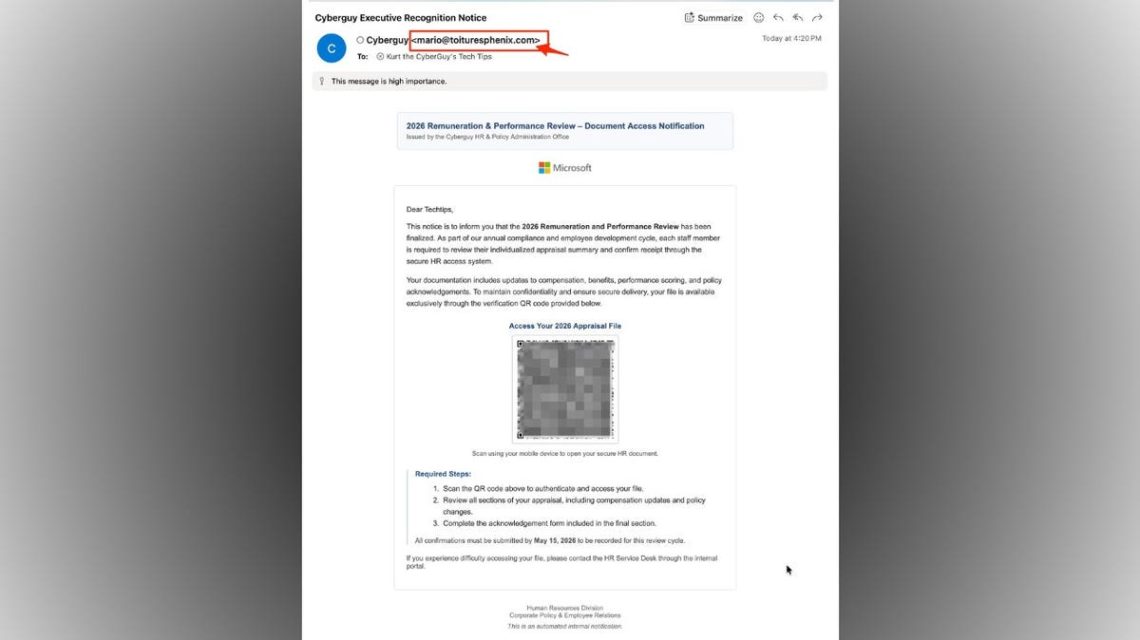
Email scams are becoming more sophisticated, especially those involving QR codes. One recent scam involves a fake HR performance review email urging you to scan a QR code for appraisal details. This tactic is a phishing attempt designed to steal your login information.
Email Scam Red Flags
Several warning signs can help identify these scams:
- Sender’s Email Mismatch: Scammers often use email addresses unrelated to the company they claim to represent. Legitimate companies send HR notices from their own domain.
- Urgency and Deadlines: Scammers impose deadlines to rush your decision-making process. Real HR communications use legitimate portals, not urgent emails.
- Call to Action with QR Code: Real companies provide direct links or recognized portals. Scammers use QR codes to hide malicious links.
- Generic Greetings: Authentic HR communications address you by name, not with vague terms like “Dear Techtips.”
- Vague System Language: Legitimate emails mention specific platforms, whereas scams use unclear terms to avoid verification.
- Fake Branding: Scammers can easily copy logos, but their emails lack the consistency of genuine corporate templates.
- High-Importance Flags: Scammers add urgency by marking messages as high-importance.
Why QR Code Scams Are Increasing
QR codes are everywhere, making them feel safe. However, scammers exploit this by embedding malicious links within. Scanning can lead to phishing pages that harvest credentials.
Steps to Protect Yourself
- Avoid scanning unexpected QR codes. Instead, visit official websites directly.
- Verify the sender’s email domain carefully.
- Access HR systems through known URLs, not email links.
- Be wary of generic greetings in email.
- Contact your company’s HR department directly if suspicious.
- Use strong antivirus software to block malicious links and phishing pages.
- Consider a data removal service to reduce exposure.
- Keep devices and apps updated for security.
- Enable two-factor authentication for added security.
Conclusion
Email phishing tactics are constantly evolving. The safest approach involves not trusting emails with sensitive requests. Use secure and familiar pathways for accessing important information.
For more tech tips and security alerts, visit CyberGuy.com. Stay informed about scams and learn how to protect data effectively.
 The Challenges of Regulating AI Unveiled
  Challenges of the Digital Markets Act in the EU
  Scientists Discover Enormous Crater on Moon
  AI Chatbot Concerns: Families and Legislation
  NPR Launches AI-Focused Podcast ‘Machine Gods’
  Trump Proposes ‘AI Force’ to Oversee Artificial Intelligence