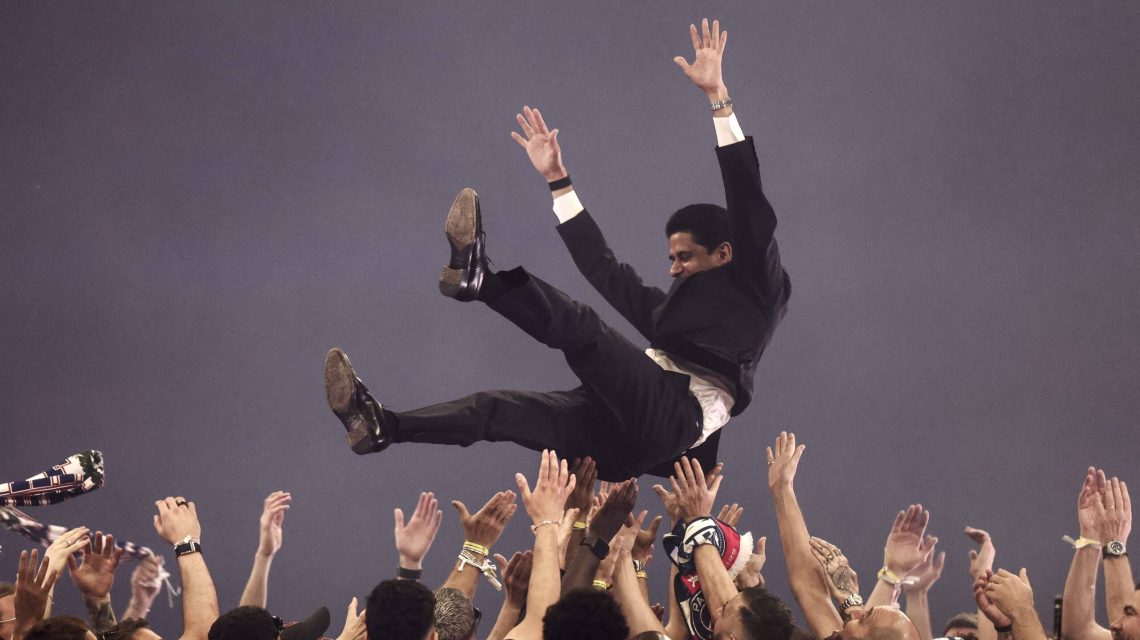
Paris Saint-Germain (PSG) is recognized as one of the top teams in Europe and potentially the world. Their dynamic style is showcased through full-backs who could play as wingers for other teams. The midfield’s warm-up routines can captivate audiences with their skillful rondo formations.
Key players like Ousmane Dembele have evolved significantly. Once a promising but inconsistent winger, he now stands as a formidable striker, even winning the Ballon d’Or. Desire Doue combines speed and technical prowess, while Bradley Barcola, despite his talent, finds it challenging to secure a spot in this star-studded lineup. Another standout is Khvicha Kvaratskhelia, a player known for his physical prowess and graceful movements.
PSG’s performances in the Champions League have demonstrated an attacking style full of goals, bringing a mix of strong structure and slight vulnerability, creating entertaining football. The impression of enjoying football as intended is palpable, until the club’s ownership enters the conversation.
Qatar Sports Investments (QSI) acquired PSG in 2011, a year after Qatar secured the 2022 World Cup hosting rights.
Their motives include sportswashing and geopolitical influence, overshadowing PSG’s football success. From a football viewpoint, it’s been successful. PSG has claimed 12 of the last 14 French titles, including the recent Champions League. Financially, QSI’s initial €70 million investment has skyrocketed to a valuation of €4.25 billion, following a partial sale to Arctos in 2023.
PSG’s Development Under Qatari Ownership
Initially, they focused more on building a brand than a cohesive team. Chairman Nasser Al-Khelaifi prioritized PSG as a brand from day one. Famous players were signed to boost reputation, rather than team functionality. Collaboration with likes of Nike and Jordan, and celebrity endorsements, boosted their global image.
Their retail strategy included launching a superstore in London, a goal deemed ambitious by peers in the industry. This was part of their larger strategy for global expansion, a testament to their marketing prowess.
Winning the Champions League was a long-sought goal. While initial ambitions minimized its importance, recent victories highlight their balanced approach to football and branding.
Transfer Policy Evolution
PSG’s transfer strategy evolved through three main phases. Initially focusing on established stars like Zlatan Ibrahimovic and David Beckham, they moved to acquiring superstars such as Neymar and Mbappe. Recently, they have built a team focusing on talent like Dembele, Doue, and Kvaratskhelia.
Al-Khelaifi aimed to develop a future team with homegrown or French talent. Despite this, only two French players featured in the last Champions League final starting lineup.
Geopolitical Criticisms and Football’s Dilemmas
PSG’s success as a geopolitical entity remains debated. Qatar is more recognized globally, yet criticisms of their policies, particularly regarding migrant workers and human rights, persist.
Sportswashing through state ownership of football clubs introduces ethical questions, challenging traditional football values. Unlike clubs focused on competition, PSG’s identity is intertwined with geopolitical interests.
The contrast between PSG’s captivating football and the issues surrounding club ownership poses ongoing questions. This situation isn’t unique; other state-linked clubs face similar scrutiny. However, PSG’s prominence as perhaps the most visible state-backed club in football can’t be ignored.
 Debate Over O.J. Simpson’s Exclusion from Buffalo Bills’ Wall of Fame
  Chad Tracy Appointed Permanent Red Sox Manager
  Lane Kiffin’s Postgame Comments After Ole Miss vs LSU Game
  Deion Sanders Addresses Colorado Loss and Team Conduct
  Steve Lotysz: From Gates to Galleries
  Ireland Faces Calls to Boycott Matches Against Israel