Nvidia, the world’s most valuable company, has made significant strides by selling artificial intelligence chips for massive data centers. Now, the tech giant is set to introduce its technology into household devices.
On Monday, Nvidia announced a new chip, the RTX Spark, designed to enhance laptop and desktop computers from leading brands like Dell, HP, Microsoft, and Lenovo. These computers, expected in the fall, will feature local AI systems aimed at efficiently sorting files and executing tasks while prioritizing security and privacy.
As part of the AI era, Nvidia joins other tech companies in redefining personal computers. Two years ago, Microsoft partnered with Qualcomm to release the Copilot+ PC, designed to simplify document management and photo editing. Yet, those devices faced challenges in gaining widespread acceptance.
Nvidia anticipates its offerings will enter the market at an opportune moment, coinciding with the growing popularity of AI-powered assistants. Collaborating with Microsoft and laptop manufacturers, Nvidia is working on enabling these agents to interact with PCs by autonomously managing the mouse and keyboard.
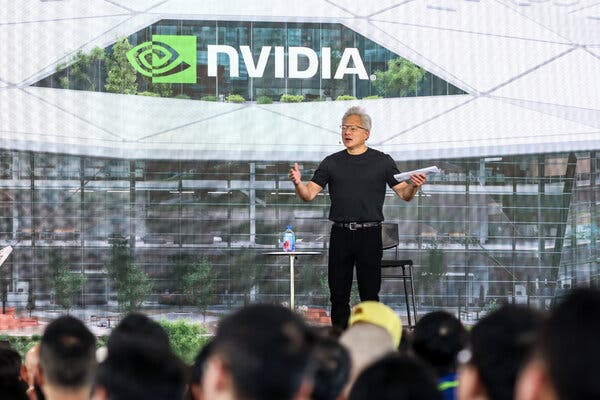
The PC chip was a highlight during a two-hour presentation of Nvidia’s AI products at a computer and electronics conference in Taipei, Taiwan. The event also marked the announcement of a collaboration with the Chinese company Unitree Robotics on a new robot, and a new software system aimed at assisting customers in managing Nvidia’s chips in data centers.
Jensen Huang, Nvidia’s CEO, expressed his vision of AI supercomputers becoming commonplace in homes, akin to home theaters, large televisions, lawn mowers, and dishwashers today.
 Conservative Activist Urges AI Safety Measures
  FBI Modernizes Cybersecurity to Counter AI Threats from China and Russia
  Keurig Dr Pepper Introduces AltaRounds to Reduce Coffee Pod Waste
  Impact of Trump’s AI Accord in Washington
  Fox News Achieves Top Spot on YouTube and Social Media Platforms
  Understanding the RatHat Android Malware Threat