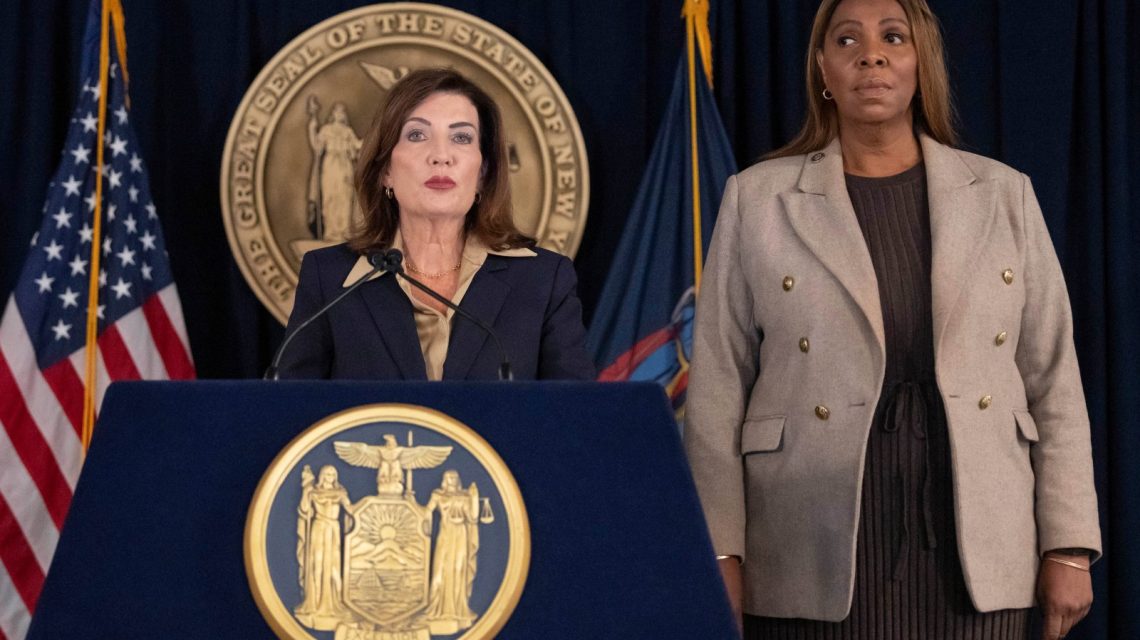
Governor Kathy Hochul of New York has committed to collaborating with lawmakers to eliminate the state’s ‘voluntary intoxication loophole.’ This decision comes in response to the investigation into a reported gang rape at Cornell University in 2024.
During a press conference, Hochul announced that Attorney General Letitia James would act as a special prosecutor for the case. She emphasized that intoxication does not excuse sexual assault, saying, “If someone is too intoxicated to consent, it should not matter whether they chose to use drugs or alcohol. Voluntary intoxication is not a license for sexual assault or gang rape—period.” Hochul’s dedication to change is matched by her concern for the victim’s rights, insisting on state legislators’ support to close the loophole.
Hochul’s action follows skepticism about Tompkins County Attorney Matthew Van Houten’s handling of the initial investigation, particularly his decision not to pursue charges against the accused. Hochul stated, “At the heart of all this is one young woman and what she deserved from the very beginning.” She called for safety assurances for all students, highlighting the need for effective legal protection when victims are too intoxicated to consent.
Hochul intends to push for legislative changes by January to close the loophole, which has impeded justice for victims, despite Senate approvals in past years. Manhattan District Attorney Alvin Bragg supported Hochul, noting the critical need for legal clarity in cases where intoxication prevents meaningful consent.
Current laws in New York, and 19 other states, consider victims mentally incapacitated only if intoxication occurs without consent. Recent updates in other states, including Minnesota, Michigan, and Texas, have expanded laws to cover cases involving voluntary intoxication. University of Minnesota professor Chinmoy Gulrajani stated, “That business of whether the victim was voluntarily intoxicated or involuntarily intoxicated should really not matter in the vast majority of cases, if not all of them.”
In October 2024, allegations of sexual assault at a Chi Phi fraternity house have intensified calls for changing the law. Assemblyman Jeffery Dinowitz expressed regret over legislative delays but sees urgency in the situation, stating, “It’s just outrageous and it makes me angry that we haven’t passed this yet.” He backs proposals to ensure justice for survivors.
Dinowitz’s Bill A101 could have compelled deeper investigations into reports like that of Jane Doe’s case against Cornell University and fraternity members. Van Houten acknowledged the bill’s potential impact on investigations, affirming further inquiry would have been required.
Attorney General James reiterated the importance of thorough investigations in upholding justice. “Every New Yorker deserves to know that when they report a crime, it will be investigated fully and fairly, that they will be seen and heard,” she said.
The ongoing investigation has spurred public discourse about violence against women in academic settings, prompting remarks from public figures such as Florence Pugh, Mariska Hargitay, and Alexandria Ocasio-Cortez. Ocasio-Cortez criticized cultural norms that allow assaults: “When I read about what happened at Cornell, those men posted in a group chat. That means it was normal to them. We cannot protect those spaces anymore. Never again.”
 Karine Jean-Pierre Critiques Trump’s Messaging Mistakes
  Understanding Voter Registration Deadlines in the U.S.
  Trump Announces Plan for $100 Checks to Seniors
  Trump’s Influence on Alabama’s Mobile Bay Bridge Project
  California’s Challenges Require Local Solutions
  Protest Against Trump’s Proposed Arch at Arlington Bridge