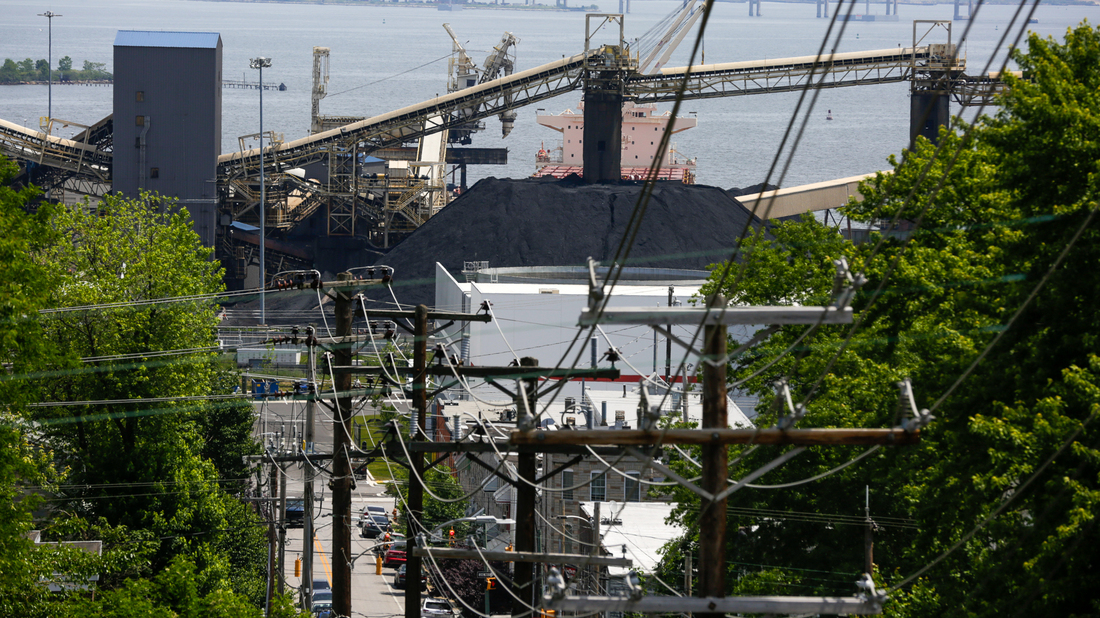
Residents in Curtis Bay, Maryland, have long pursued cleaner air. The introduction of a new satellite could significantly enhance the air pollution data available to them. This advancement may have the potential to bring cleaner air to neighborhoods most affected by pollution.
Various communities across the U.S. experience challenges with air pollution. This issue frequently affects neighborhoods where working-class individuals and people of color reside. While residents are often aware of the pollution, they lack sufficient data to confront the issue effectively.
NPR climate reporters Rebecca Hersher and Seyma Bayram discussed with Short Wave host Emily Kwong the impact of the new satellite, TEMPO (Tropospheric Emissions: Monitoring Pollution). This satellite could provide communities with essential data, aiding in their continuous battle for improved air quality.
TEMPO results from a collaborative project between NASA and the National Oceanic and Atmospheric Administration (NOAA). It will monitor pollutants such as ozone, nitrogen dioxide, and sulfur dioxide across the U.S. every hour, daily. The data aims to enhance air quality guides by making them more timely and location-specific.
If you have science-related inquiries, contact us at [email protected]. We welcome your input! You can listen to Short Wave on platforms like Spotify, Apple Podcasts, and Google Podcasts.
This episode was produced by Berly McCoy, with editing by managing producer Rebecca Ramirez. Fact-checking was conducted by Rebecca Hersher and Seyma Bayram, and Patrick Murray served as the audio engineer.
 Communities Continuing Recovery from Hurricane Helene Explored through Graphic Novel
  Fat Bear Week 2026 Highlights: Meet the Competitors
  Annual Fat Bear Week Begins at Katmai National Park
  Understanding Hurricane Development
  California Prepares for El Niño-Fueled Storms with Emergency Declaration
  California’s Growing EV Adoption: Challenges and Benefits