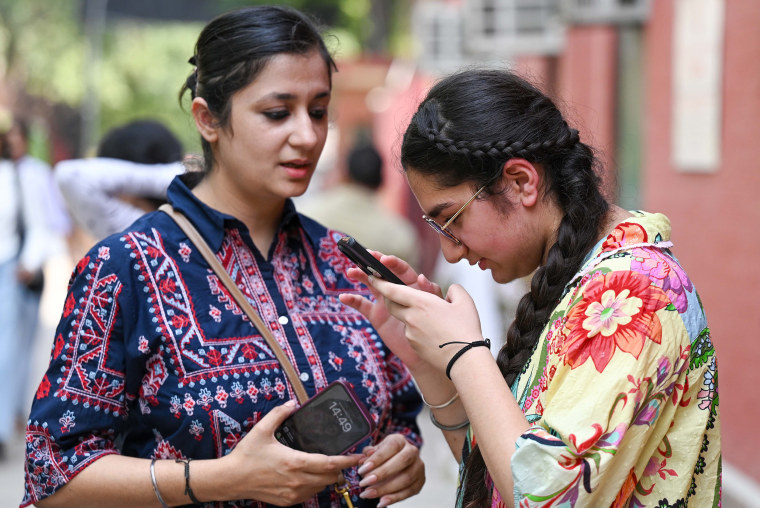
Ridhvi Saxena, an 18-year-old aspiring cardiologist, saw three years of hard work culminate in disappointment. She completed what she believed to be a decisive exam on May 3, only to learn the exam had been compromised due to leaks. This shocking news forced a retest, deeply affecting her hopes and those of many other students.
India’s authorities identified Telegram as a platform where “cheating rackets” thrived, leading to a temporary nationwide ban. Saxena expressed feelings of betrayal, noting the emotional and mental toll, saying, “I was excited for college… They just put me back into the zone in which I worked so hard to get out of.” Her uncertainty about the upcoming retest reflects a broader disillusionment among students.
Over 2 million aspirants took the NEET undergraduate exam, a fierce competition to enter medical schools in India. This three-hour test covers physics, chemistry, and biology, similar in difficulty to its engineering counterpart, the JEE. The exam demands years of dedicated preparation.
Students like Saxena, who previously attempted NEET, felt crushed by the decision to nullify results. Saxena highlighted the sacrifices made for this exam, saying, “You’ve sacrificed quality time with your family… The Indian education system just lets you down.”
The Central Bureau of Investigation initiated a probe into the leaked papers. Meanwhile, the Ministry of Electronics and Information Technology imposed a ban on Telegram, effective until June 22, to maintain the “sovereignty and integrity of India.” Despite this measure, Telegram founder Pavel Durov remarked that the leaks merely shifted to other platforms.
On Friday, the Delhi High Court rejected Telegram’s attempt to overturn the ban, raising concerns among digital rights advocates. The Internet Freedom Foundation warned that this ban could have long-term implications for open internet access in India.
The current year has been challenging for India’s education system. The Central Board of Secondary Education (CBSE) faced backlash over technical issues in electronic exams, leading to student protests. Technical flaws also surfaced in CBSE’s systems, exposed by cybersecurity researchers.
Demonstrations across India, including those by the Cockroach Janta Party, signaled public dissatisfaction, demanding accountability from Education Minister Dharmendra Pradhan.
Students doubt the efficacy of the Telegram ban, noting that a virtual private network (VPN) can bypass it. The issue lies deeper, with authorities’ failure to secure exam materials in the first place. Proton VPN experienced a 120% spike in Indian registrations following the ban.
Anoop Girijesh, another affected student, called the ban a “Band-Aid solution,” which does little to address the root causes. “We’re expected to perform at our best, but how can we when we’re constantly looking over our shoulders?” he questioned.
The National Testing Agency assured students of improved security measures for the retest, emphasizing the importance of these actions. Despite this, many remain skeptical about the sufficiency and effectiveness of these steps.
 Fatal Car Crash in Grand Rapids Involving ICE Agents
  Orland Park Plans Traffic Enforcement Measures
  Congressional Hearing Addresses Fatal Shootings Involving Federal Agents
  Texas Man Arrested in Shooting of 5-Year-Old Girl
  Implications of Stripping Tax-Exempt Status from Schools Engaging in Racial Admissions Policies
  Star Meat Delivery Inc. Recalls Over 167,000 Pounds of Meat