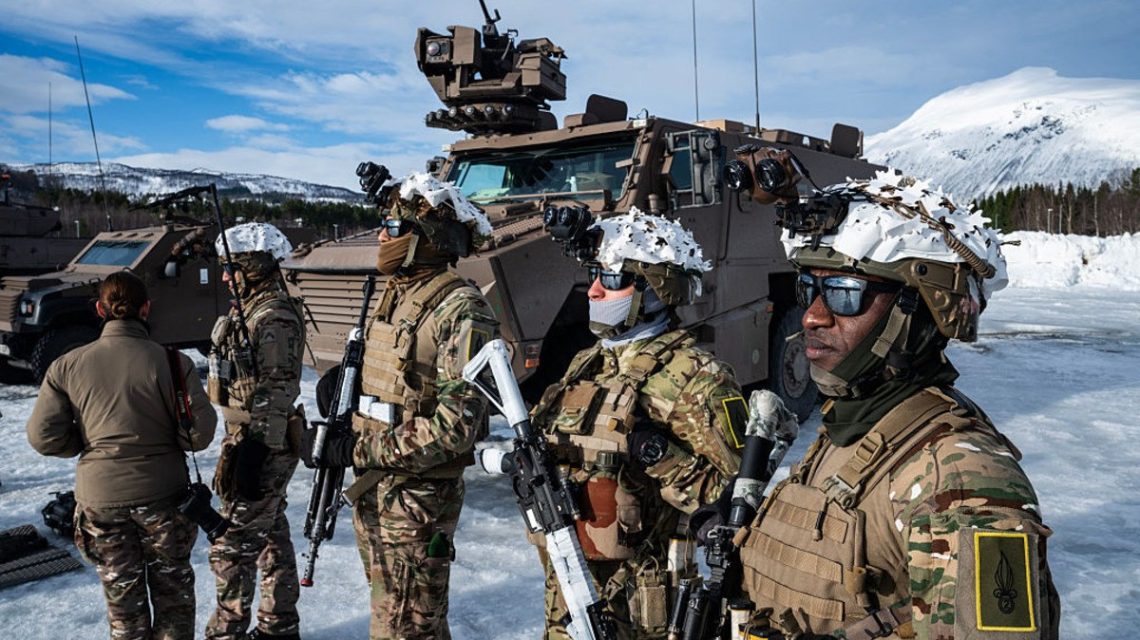
A senior NATO military official has emphasized that NATO poses no threat to Russia, countering recent claims made by Moscow’s top diplomat. Russia accused NATO of posing a direct danger to the Kremlin in the Arctic, a region noted for previously avoiding international tensions.
Colonel Martin O’Donnell, spokesperson for NATO’s Supreme Headquarters Allied Powers Europe, assured that NATO is a defensive alliance
and does not threaten anyone. Russian Foreign Minister Sergey Lavrov accused NATO of driving the region toward militarization and creating hotbeds of international tension
in the Arctic.
In recent years, the Arctic has gained attention due to climate change creating new routes for military and civilian traffic. Among the eight Arctic states, only Russia is not a NATO member, yet it remains the most dominant country in the region. Russia has reopened Soviet-era bases, established a new Arctic-focused military command, and built new facilities, including its critical nuclear submarine fleet.
NATO has responded by increasing its presence in the Arctic, particularly after tensions arose from President Donald Trump’s interest in controlling Greenland, a strategic part of Denmark rich in minerals. Lavrov expressed concern in an essay, published by Russia’s foreign ministry, about intensive military preparations
near Russia’s northern borders.
In February, NATO unveiled the Arctic Sentry initiative to increase the frequency and visibility of its activities in the region. This includes intelligence-gathering flights, maritime drills, and training for troops to withstand extreme temperatures. Oversight is managed by NATO commanders in Norfolk, Virginia.
NATO has launched similar initiatives in the Baltic Sea and along its eastern flank. This year, NATO committed to deploying hundreds of troops from various member nations to Finland and Sweden to reinforce its northeastern flank.
A new center was established in October 2025 in Bodø, Norway, to oversee all air operations monitoring the Arctic and northern Atlantic.
NATO Drills
NATO conducts regular military drills in the Arctic, as does Russia. These exercises allow troops to practice missions in extreme cold, such as landing on shorelines, capturing territory quickly, and navigating icy expanses. The alliance has increased the number of Arctic exercises over the past few years.
Recently, NATO led U.S.-led exercises known as Northern Viking in Iceland to defend the Nordic nation and the GIUK Gap. This passage is crucial for Russian submarines moving from the Arctic to the northern Atlantic.
Lieutenant Commander Tim Pietrack from NATO Maritime Command confirmed that NATO’s posture is defensive and proportional to the security environment. NATO’s forces will continue to exercise, train, and maintain a presence in the Arctic and High North.
Earlier this year, tens of thousands of troops, including 4,000 U.S. Marines, took part in cold-weather drills in Norway and Finland. Danish-led exercises in Greenland also contributed to the broader Arctic Sentry label.
 Marco Rubio’s Expanding Role in Trump Administration
  Byron Donalds Adjusts Campaign Strategy as Florida Governor Race Intensifies
  Trump’s Engagements at the UN: Focus on Ukraine and White House Developments
  Collins Faces Scrutiny in Tight Maine Senate Race Amid Donor Allegations
  Trump Administration to Admit 17,500 Afrikaner Refugees from South Africa
  Trump’s Vision for Global Security: Iran, AI, and the Role of the U.S.