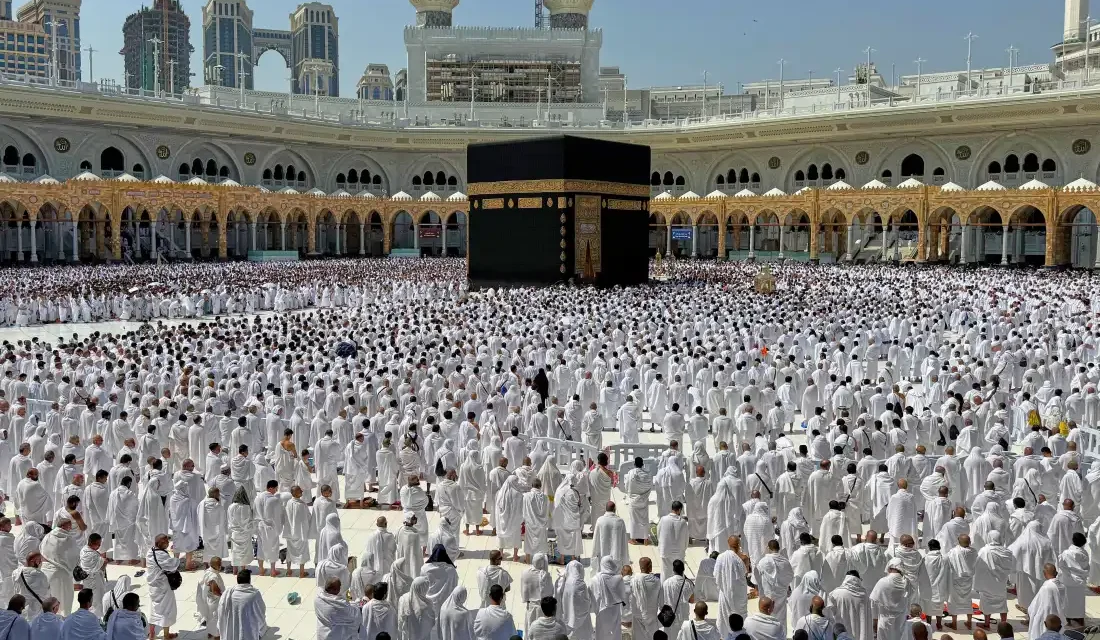
Muslims are projected to surpass Christians as the largest global religious group by 2035, according to a report from the Pew Research Center. While both populations will continue to grow, Muslims are expected to increase at a more rapid rate.
Recent data suggest the Muslim population could reach 3.6 billion by 2070, compared to just under 3 billion Christians. These projections rely on national census data, fertility rates, religious conversion trends, United Nations analyses, and global migration insights. The findings anticipate demographic changes affecting other religious groups as well.
Hindus and Jews are expected to grow in absolute numbers, yet their share of the total population will decrease. In contrast, Buddhists will not only decline in numbers but also in their global percentage. The trends in population growth are particularly evident in Africa.
Sub-Saharan Africa is forecasted to house over a quarter of the world population by 2070, significantly impacting religious distributions due to high fertility rates and increased lifespans. Indeed, this area will witness faster Muslim growth, potentially making the Democratic Republic of the Congo surpass the U.S. in Christian numbers by that year.
“This represents a shift in Christianity’s ‘center of gravity’ on a global scale,”
said Alan Cooperman of Pew.
Birth rates are pivotal in shaping religious demographics. Muslims globally have a fertility rate of 3.1 children per woman, surpassing the average 2 children per non-Muslim woman. Pew’s report also anticipates substantial demographic shifts by 2070.
Nations such as China, Japan, and South Korea will see reduced populations, halving their Buddhist communities. Simultaneously, a greater proportion of Jews, projected to grow to 62%, will reside in Israel by 2070.
The percentage of people identifying as non-religious will rise in several countries, but the total number of religiously unaffiliated will decrease due to plummeting birth rates in heavily populated China.
In the United States, these trends reflect global patterns. Pew expects Christians to remain the largest religious group, albeit dropping to just under 48% of the population from today’s 62%. Meanwhile, the religiously unaffiliated could rise to 41%. This shift results largely from religious switching rather than birth rates, with more individuals opting for non-religious identities.
The U.S. is likely to become more religiously diverse. Muslim and Hindu populations are expected to outnumber American Jews by 2070, assuming current trends persist.
 Protests Erupt Against Data Centers in Spain
 Migration, Politics, Peace Talks, Health Alerts, Legal Settlements, and Fire Conviction News
 Pentagon’s Declassified Files Reveal Plans for Underground Facility and UFO Research
 Lewis Pugh Swims Strait of Hormuz Amid Conflict
 Cartel Boss Fausto Isidro Meza Flores Captured in Sinaloa, Mexico
 Trump Compares Historical Meeting with China and Russia to Yalta Conference