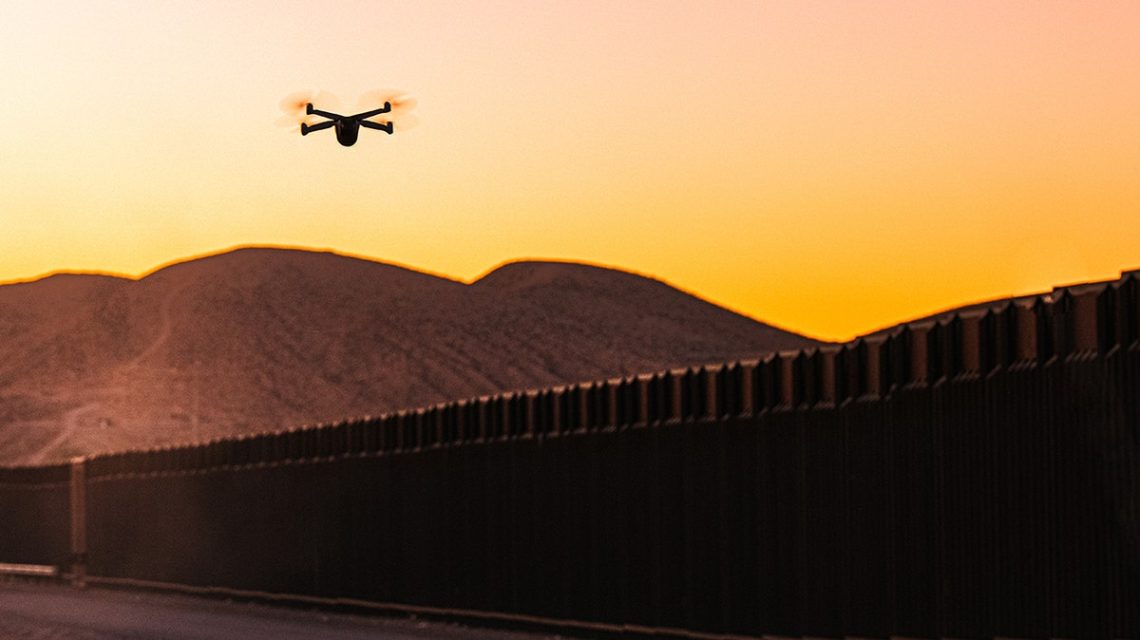
Mexican cartels are increasingly using commercial and modified drones to monitor U.S. security activities, map patrol patterns, and aid smuggling routes along the southern border. In response, authorities are enhancing efforts to counter these aircraft.
Increasing Drone Incursions
The U.S. military reported detecting 378 drone incursions along the border within a recent 30-day period, according to Brig. Gen. Brian Filler of Joint Task Force-Southern Border. The use of drones for surveillance and smuggling purposes is on the rise, with cartels employing commercial drones equipped with cameras.
Austin Doctor, who oversees strategic initiatives at the National Counterterrorism Innovation, Technology and Education Center, noted that cartels aim to understand U.S. security personnel routines to facilitate smuggling operations.
Arizona’s Law and UAS Challenges
A new law in Arizona permits law enforcement to down drones involved in criminal activities near the U.S.-Mexico border. A U.S. Customs and Border Protection (CBP) representative confirmed the growing threat from Unmanned Aircraft Systems (UAS), highlighting their use in counter-surveillance, illicit cargo movement, and potential attacks.
CBP detected over 42,000 UAS flights near the border in fiscal year 2025 and over 37,000 in fiscal year 2026, indicating the magnitude of the issue. Under congressional authority, the Department of Homeland Security has empowered CBP with Counter-UAS capabilities to detect, monitor, and track these drones.
Cartel Drone Innovations
According to Doctor, most cartels rely on commercially available drones, but more advanced devices are emerging. These include larger agricultural drones, often modified for increased payloads and enhanced capabilities. Surveillance remains a primary use along the border, with weaponized drones frequently appearing further inside Mexico.
Among the cartels, the Jalisco New Generation Cartel stands out as a leader in drone technology and adoption, spreading their methods across several Mexican states.
Documented Cases of Drone Use
In 2025, authorities in Reynosa, Tamaulipas, discovered 18 drones, 151 explosive items, and counter-drone devices in a raid, linked to the Los Metros faction of the Gulf Cartel. In Tijuana, a drone attack damaged an anti-kidnapping prosecutor’s office, highlighting the weaponized drone threat in border areas.
Efforts to Combat Drone Threats
Mexico is actively working to combat drone-related threats through interdictions, counter-drone technology, military operations, and new legal penalties. The recent Águila Alta operation in the Tijuana-San Diego area demonstrated collaboration between Mexican forces and U.S. authorities, leading to drone neutralizations and detentions.
Despite these efforts, the number of cartel-operated drones remains uncertain, as do the groups controlling specific flights. Austin Doctor emphasized that although counter-drone resources are growing, cartels are likely to continue evolving their tactics.
 Climate Change and Child Marriages in Developing Countries
  Ukraine’s Urgent Request to SpaceX: Reconsider Restrictions on Starshield Satellite Service
  Pope Leo XIV Recuperates Post-Lung Surgery
  U.S. Allegedly Withheld Warnings of Russian Missile Strikes on Ukraine
  Nobel Peace Prize Controversies: Analyzing the Recent Award Decisions
  Investigation Underway in Germany Over Robot Involved in Alleged Sexual Harassment