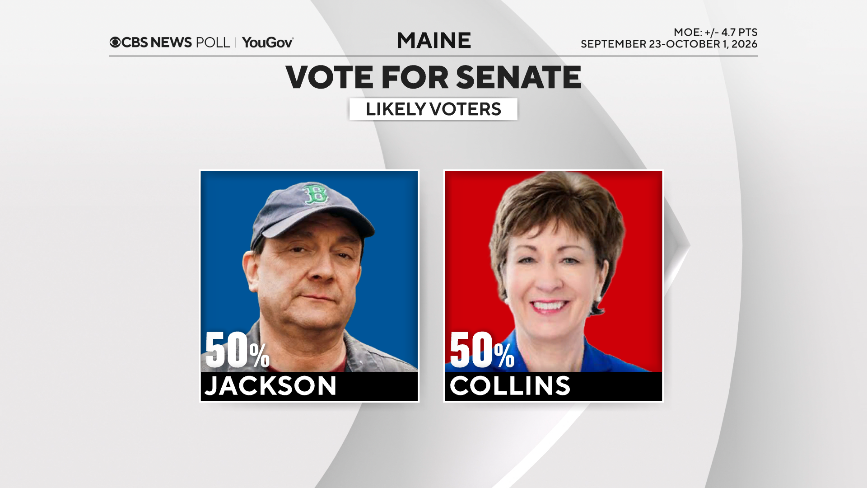
The rugged coast and mountainous terrains of Maine are well-known to adventurous travelers. Yet, the state’s Senate race presents its own unique landscape. Unlike many states, where national political trends favor Democrats, Maine’s race is a close contest. Incumbent Republican Senator Susan Collins is in a tied battle with Democrat Troy Jackson, despite the state’s Democratic lean.
Collins has secured a surprising number of voters, including Maine Democrats. Many voters state they’re prioritizing state issues over national concerns, keeping Collins competitive. She also has a perceived advantage in returning federal funds to the state. One challenge for Jackson is that Collins claims support from one in five voters critical of former President Trump, a rate above the national average for Republican congressional hopefuls.
Jackson finds backing among those believing Collins aligns too closely with Trump. He also has the support of voters opposing tariffs, seeking Democratic Senate control, and prioritizing change over experience. A significant 10% of voters remain undecided, signaling the race could shift either way.
Interestingly, even voters who perceive Jackson’s economic policies as beneficial are swayed, with nearly one in five favoring Collins. General sentiment among Maine voters suggests Trump’s policies have negatively impacted the state’s economy, with Jackson attracting those voters.
Despite an anti-incumbent atmosphere, Collins benefits from a strong track record. Voters who’ve consistently supported her help bolster her campaign. Conversely, some Democrats reflect on the primary season, with four out of ten wishing for an alternative candidate. Jackson also trails the Democratic gubernatorial nominee, Hannah Pingree, who benefits from the state’s partisan leaning.
The CBS News/YouGov poll surveyed 1,114 registered Maine voters from September 23 to October 1, 2026. The sample, representing gender, age, race, and education per U.S. Census data, shows a margin of error of ± 4.7 points. The poll’s findings reveal a complex political environment in Maine that continues to evolve.
 Texas Becomes Key Battleground in Midterm Elections
  Trump Revisits Strongholds Ahead of Midterms
  Karine Jean-Pierre Critiques Trump’s Messaging Mistakes
  Understanding Voter Registration Deadlines in the U.S.
  New York Moves to Close Voluntary Intoxication Loophole in Sexual Assault Cases
  Trump Announces Plan for $100 Checks to Seniors