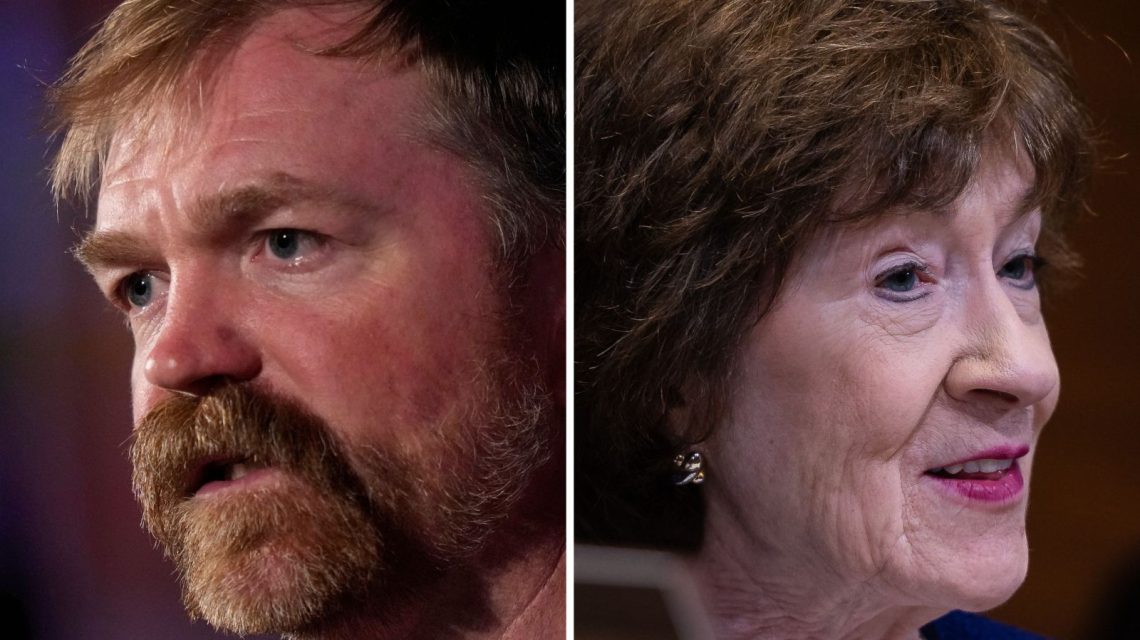
The race for Maine’s Senate seat is intensifying as Democratic candidate Graham Platner struggles against Republican incumbent Susan Collins. A recent poll conducted by President Donald Trump’s pollster reveals a tightening competition, with both candidates tied at 46 percent. The poll, carried out by Tony Fabrizio, David Lee, and Travis Tunis for the Collins-aligned Pine Tree Results PAC, shows modest growth in favorability for Platner from 35 percent in January to 40 percent in June. However, unfavorable opinions have risen sharply from 29 percent to 49 percent.
Platner’s public image has taken a hit, with damaging controversies unfolding around him. According to the pollster, 60 percent of voters might be deterred from voting for Platner due to his activity on the social media site Kik, known for its negative reputation. Although media reports link a Kik profile to Platner, details of his interactions remain unclear, with no evidence of communication with minors.
The Maine Senate race remains highly competitive. The pollster suggests that ongoing controversies could further erode Platner’s support, urging Senator Collins and her allies to continue exerting pressure.
Controversies Surrounding Graham Platner
Graham Platner, an oyster farmer and Marine Corps veteran, launched his campaign in August 2025, focusing on progressive issues like housing affordability and universal healthcare. Endorsed by prominent figures such as Bernie Sanders and Elizabeth Warren, his campaign has faced significant challenges due to various controversies.
Old Reddit posts containing offensive language resurfaced, prompting public scrutiny. Platner apologized, stating that these posts do not reflect his current views. Additionally, controversy arose over a tattoo linked to Nazi imagery. He claimed ignorance of its association, apologized, and covered it up.
In May, reports of explicit messages sent to women emerged. Platner expressed regret over the situation, indicating efforts to reconcile with his wife. The most recent issue involves allegations of disturbing behavior, though Platner denies any misconduct.
Platner emphasizes that these controversies distract from key campaign topics like healthcare and economic inequality. He acknowledges past personal struggles with undiagnosed PTSD and alcohol use, highlighting his ongoing efforts for self-improvement.
Future of the Race
As the primary election looms, Platner remains in the race despite the controversies. Political analysts note slight changes in voter support, with a UMass Lowell poll indicating Platner leads Collins by a narrow margin, 48 to 43 percent.
According to John Cluverius, director of survey research at UMass Lowell, both candidates face challenges. Collins contends with a faltering economy and unpopular presidency, complicating her reelection bid. Meanwhile, Platner’s lesser-known status may make voters more swayed by emerging information about him.
The ranked-choice Democratic primary election is set for June 9. Should Platner emerge victorious, he will confront Collins in the general election on November 3.
 Gen Z Voters and Their Impact on the 2026 Midterm Elections
  Rep. Alexandria Ocasio-Cortez Defends Macklemore Amid Tour Controversy
  Influence Concerns Surround California Political Donors
  Michigan Senate Race Sees Influences from Soros-Linked Funding
  Trump Seeks Diplomatic Success at the U.N. Amid Challenges
  North Carolina Senate Race Influenced by Abortion Policy Messaging