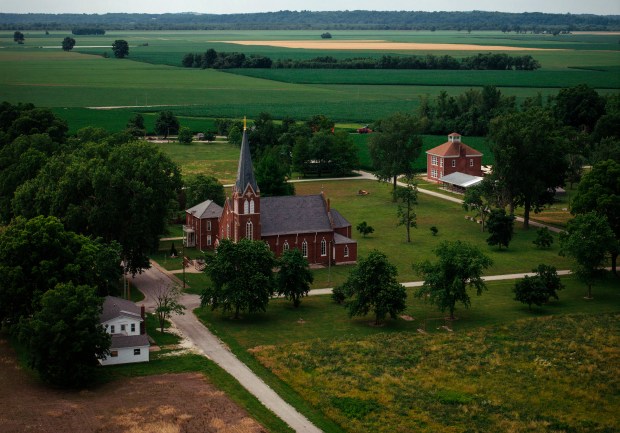
The Immaculate Conception Church in Kaskaskia sees its congregants arrive well before Mass starts each Saturday afternoon. This location, once bustling, now hosts the descendants and caretakers of a place that resonates with both tranquility and loss. Kaskaskia, the first capital of Illinois, lies mostly deserted now. Nature has reclaimed much of it, with numerous floods over time. This unique place is the only part of Illinois west of the Mississippi, emphasizing the river’s dynamic nature.
An aerial view of Kaskaskia from May 2026 shows the Immaculate Conception Church, founded as a mission by Jacques Marquette in 1675. The soil drew settlers, making it a critical location in its early days. Though now largely a ghost town, Kaskaskia holds remnants of its rich history, like a Liberty Bell older than the one in Philadelphia. The church itself stands as a symbol of community perseverance.
Once, more than 7,000 people lived here, making it a hub for westward expansion. It played roles in French Colonial history and the American Revolution and was a key site during Lewis and Clark’s journey. Kaskaskia was Illinois’ first capital after statehood in 1818, a status it held before being displaced by the whims of the river. Major floods in 1844 and 1881 altered the river’s course, reducing the town.
Parker, a remaining resident, patrols a street near historic sites. Here Stanley Hurst and the few who stayed after the devastating 1993 flood maintain a commitment to this land.
The floods in 1993 signified a turning point. Many homes were lost. Hurst, among the first to respond, realized the inevitability of moving. Nevertheless, he continues to engage with his roots by attending the weekly Mass. Like him, other long-time residents return to the island each Saturday.
Mary Ellen Brown and Emily Lyons, part of this aging congregation, strive to preserve what remains of Kaskaskia. Lyons, who helped rebuild the church post-1993, sees value in the past. They maintain the history of the island—its artifacts, stories, and architectural marvels—embodied within the chapel’s stone and wood.
Kaskaskia today houses around 22 people. The census numbers feel exaggerated; signs of civilization beyond the weekly Mass are scarce. These weekend gatherings breathe life into a place otherwise still. Visitors arrive, honoring their ancestry through actions like leaving flowers on family graves, connecting to the French Canadian settlers of the 1700s.
Throughout its history, Kaskaskia has been marked by resilience. Although the old town is largely gone, the bell and the church stay on. Community efforts post-1993 led to another rebirth of the church, a project tying people past and present. Personal stories and tough restorations combine, emphasizing this place’s persistent hold over its descendants.
Each Mass represents communal commitment, keeping the church as a ‘historic site with weekly services.’ Although the congregation is aging, leaders like the late Rev. Steve Poole advocate for Kaskaskia’s survival. Mary Ellen Brown acknowledges that younger generations might not continue their dedication, but she remains hopeful.
The history of Kaskaskia entwines resilience with nature’s overpowering force. The Mississippi River constantly challenges human attempts at control. While the island persists with its fertile land and symbolic church, future prospects lie uncertain. The community holds on, regardless of the river’s temper.
As Saturday Mass concludes, the church briefly fills with farewells and echoes of history before returning to silence, leaving behind thoughts of the quiet defiance that enlivens this enduring symbol of a community.
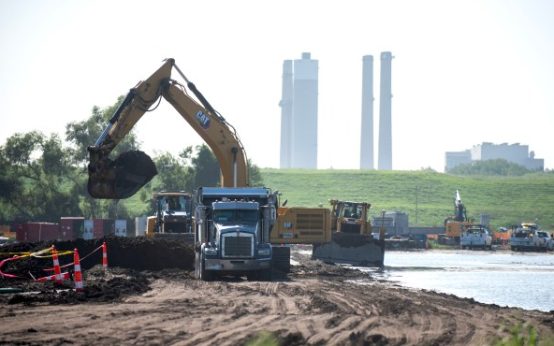 EPA Dismantles Greenhouse Gas Rules, Causing Concern
 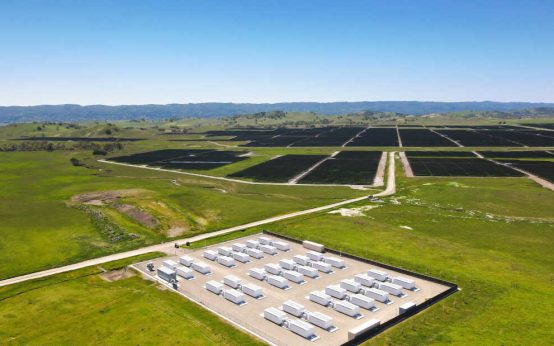 How Battery Innovations Transform Renewable Energy
  Data Centers Stir Controversy in Texas Amid Growth Boom
  Converse Apologizes and Withdraws Controversial Ad Amid Criticism
  Lucas Museum of Narrative Art Unveils in Los Angeles
 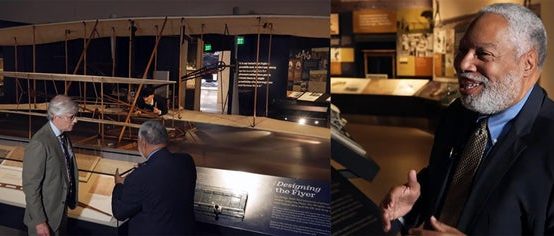 Lonnie G. Bunch III Reflects on His Legacy at the Smithsonian