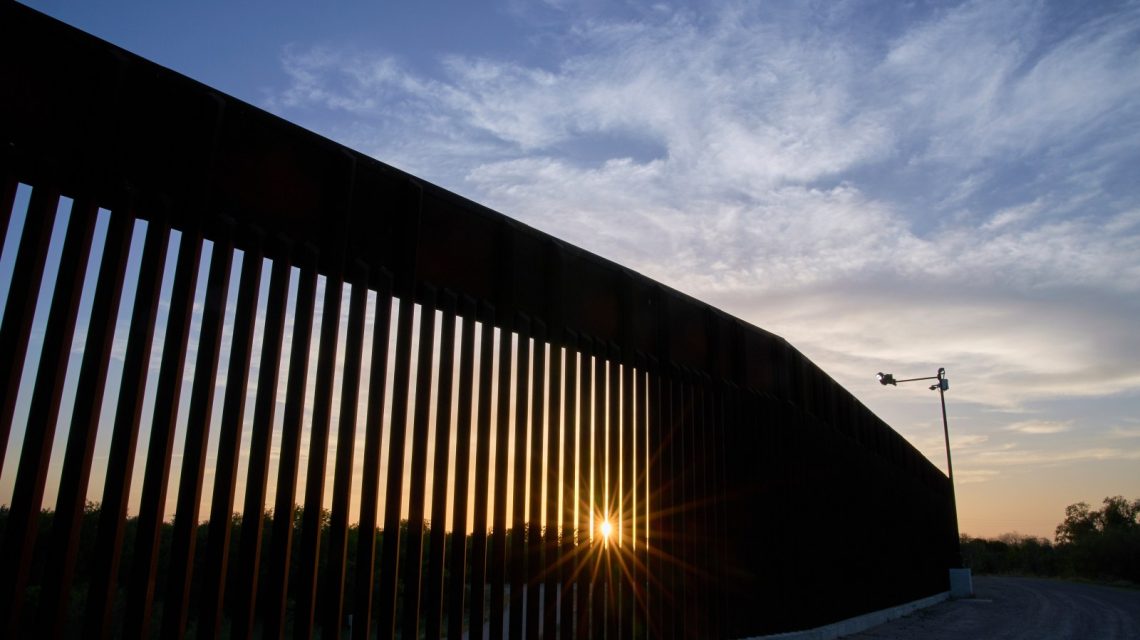
A federal judge recently ruled in favor of the Trump administration, allowing the expansion of the border wall along the U.S.-Mexico border to progress. This decision comes despite objections from the Tohono O’odham Nation, a Native American tribe whose land in Arizona is directly affected by the construction.
Tribe’s Objections and Concerns
The Tohono O’odham Nation expressed significant concerns regarding the impact of the wall on sacred sites and culturally important areas. Tribal leaders argue that the construction will disrupt religious practices and further divide their communities, which have traditionally spanned both sides of the border.
The Nation, which occupies a 2.8-million-acre reservation, including a 62-mile border with Mexico, insists that the wall construction would alter the reservation’s boundaries and potentially trespass on their land. Historically, the tribe’s territory extended into Mexico, with thousands of tribe members residing there.
Legal Challenge and Court’s Ruling
U.S. District Judge Richard Leon rejected the tribe’s request for a preliminary injunction to halt the construction. Judge Leon, a Bush appointee, ruled that the Tohono O’odham Nation is unlikely to win their case on the merits. He stated that the federal Roosevelt Reservation had been established along the border before the modern reservation, suggesting no unlawful alteration of boundaries.
“I conclude that plaintiff is unlikely to succeed on the merits because the federal Roosevelt Reservation exists along the international border and, in any event, plaintiff has not established that construction of a border wall will indeed alter Reservation boundaries,” Leon wrote.
He emphasized that the government’s interests in border security, immigration enforcement, and public safety outweigh the alleged harms at this stage. However, he urged the government to continue its dialogue with the tribe to address concerns.
Impacted Lands and Wider Opposition
The ruling applies to a 62-mile section within the ecologically sensitive Sonoran Desert. This area is crucial for diverse wildlife and unique desert plants like the saguaro cactus. The tribe shared a map highlighting their ancestral lands, which span beyond current reservation borders into regions near Phoenix and Tucson.
Beyond this case, the border wall has faced opposition from various religious organizations and landowners. A separate challenge involves land near Mount Cristo Rey, a significant Catholic pilgrimage site. The Trump administration maintains that these territories are essential for achieving border security goals.
Government’s Justification for Construction
Construction of the border wall has been a key aspect of the Trump administration’s immigration policy. With billions of dollars allocated by Congress, the administration aims to complete the wall by the following year, saying it is vital for national security.
The project has initiated controversial measures in other regions, such as Big Bend National Park in Texas. There, construction efforts might involve significant environmental alterations, raising concerns from various groups about the potential impact.
 Former House Speaker Dennis Hastert Passes Away at 84
  Two Killed, Dozens Injured in Georgia Homecoming Party Shooting
  Tragic Loss of a Young Life in Chicago: 7-Year-Old Victim of Fatal Stabbing
  Exploring Orange County’s Anti-Mexican Political History
  Search Underway for Missing Aircraft Near Nantucket
  Tennessee Prison Chief Resigns After Failed Execution