The day John Lennon was shot, December 8, 1980, he and Yoko Ono gave an interview from their Dakota apartment in New York to a San Francisco radio team. They were promoting their album Double Fantasy, yet the two-hour discussion covered many topics. Despite instructions for no questions about the Beatles, Lennon and Ono were surprisingly open.
Photographer Annie Leibovitz also captured her famous image of a naked Lennon embracing Ono that day. The interview itself is similarly revealing. Both Lennon and Ono, especially Lennon, spoke candidly about love, their relationship, creativity, life post-Beatles, raising their young son, and songwriting in bed. At 40, Lennon expressed newfound clarity, saying, “It feels like nothing has happened before today.”
In John Lennon: The Last Interview, Steven Soderbergh transforms those tapes into a documentary that demystifies Lennon and Ono like Get Back did for the Beatles. The film premiered Saturday at the Cannes Film Festival.
“I was touched by their generous spirit throughout the conversation,” Soderbergh said during an interview in Cannes on Saturday. “It felt like the world happened in one day, in that apartment.”
Creating the film posed challenges. Soderbergh was intent on letting the audio stand alone. Although he found ways to visually illustrate much of the film, philosophical portions left gaps. He said, “I worked on everything that could be resolved until I couldn’t anymore. Then came the inevitable moment: ‘OK, seriously, what are we going to do?’ We tried things, but time and budget were tight. That’s when Meta’s AI technology came in.”
Soderbergh accepted an offer to use Meta’s AI software to create surreal imagery for sections that make up 10% of the film. This stirred debate when the news surfaced. Would a top U.S. filmmaker use AI, especially for a Beatles-related film?
The AI parts, mostly criticized by Cannes critics, are simple effects and do not digitally alter Lennon’s images. Soderbergh finds himself at the forefront of a debate on AI in filmmaking. Having made movies with iPhones, he’s eager to engage on the topic.
AP: You’ve been outspoken about AI use as it’s debated in film. Why?
SODERBERGH: Transparency is vital outside the creative context. We hardly know how much AI manipulates us. Often, we learn by accident or from whistleblowers. I’m my own whistleblower: “This is what I’m doing.”
AP: Did you expect such strong reactions?
SODERBERGH: I anticipated it. I take it very seriously and understand the emotional reactions. I owe people the best version of my art with full transparency. You can’t accept tools from Meta to finish a film without knowing criticism will follow.
AP: Some fear AI will ruin the film industry. You see it differently.
SODERBERGH: Many key filmmaking jobs can’t be done by AI and never will be. As anyone can create something with technical perfection, imperfection becomes more valuable. We haven’t seen credible creators fully embrace AI and its impact. We need to. You don’t know the line until someone crosses it. I don’t think I have. Some may disagree. I’m waiting to see where my line is.
AP: What instructions did you give the program for animations?
SODERBERGH: Ideas like circles of light appearing, a black rose transforming into a Busby Berkeley-style scene, then a red rose. It was hard to describe what I wanted. The technology allowed me to react to something quickly, which was useful.
AP: Did your experience set any limits for using this technology?
SODERBERGH: My rule is: it must be necessary. Is this the best way to achieve what I envision? That’s the real question. Many will use AI without meeting those challenges.
AP: There’s an ethical and aesthetic debate. Yet the film’s conversation is deeply inspiring.
SODERBERGH: Especially Lennon’s desire to destroy the rock star myth at a time when no one considered it. That inspires. I hope young viewers take from this: he spoke truth from the start to the end of his life. That’s how he was made. It was constructive. He held strong opinions yet was reflective, asking, “Can we do better? Can we be better humans on this planet?”
 Hilary Swank Announces Third Pregnancy at 52
 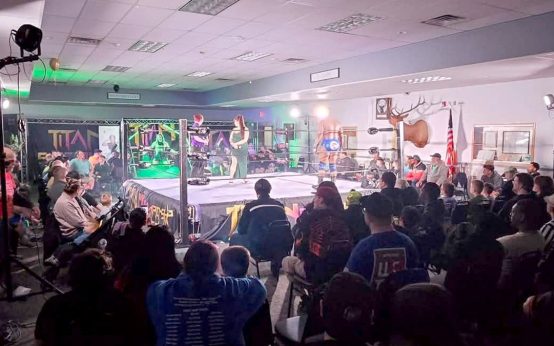 Titan Championship Wrestling Brings Excitement to Spotswood
  Gillian Welch and David Rawlings: Acoustic Folk Tribute to the Grateful Dead
  Netflix Faces Challenges Amid Workforce Reductions and New Competition
  Elizabeth Hurley’s Behind-the-Scenes Photos Highlight Diamond Ring
 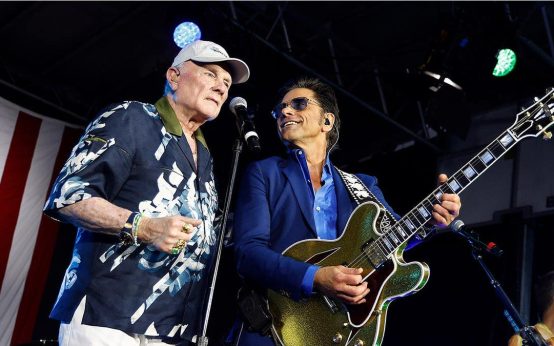 John Stamos Shares Emotional Tribute to Beach Boys’ Mike Love Amid Health Challenges