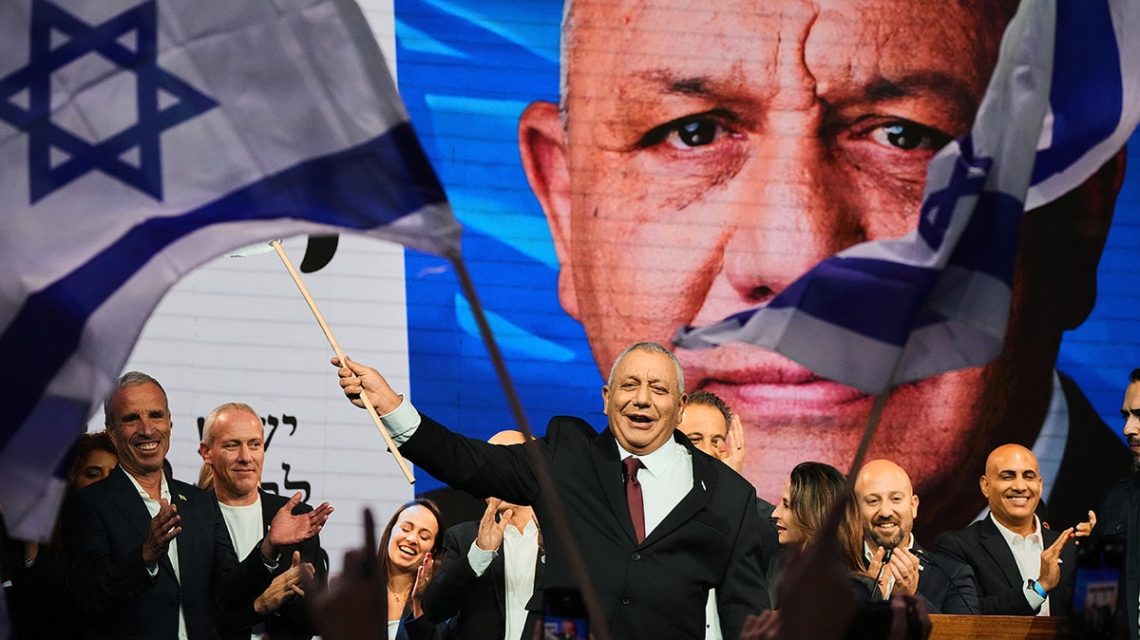
Israel’s political landscape remains uncertain following an inconclusive election, as coalition negotiations unfold in Tel Aviv. Political factions engage in discussions with President Isaac Herzog, aiming to form a new government.
President Herzog selected opposition leader Gadi Eisenkot to attempt forming the government, sidelining current Prime Minister Benjamin Netanyahu. Herzog made the announcement on November 7, planning a formal mandate presentation for November 8 at 5 p.m. local time. Eisenkot will have 28 days, with an option for a 14-day extension, to construct a coalition.
The decision could signal the end of Netanyahu’s leadership, yet it opens a challenging period of coalition discussions marked by significant party disagreements.
Eisenkot secured the recommendation of 67 Knesset members, compared to Netanyahu’s 46. The ultra-Orthodox United Torah Judaism party’s seven members abstained from endorsing either candidate.
However, Eisenkot’s endorsements don’t ensure a majority coalition. In the recent election, Netanyahu’s Likud party won 27 seats, part of a 53-seat political bloc. Eisenkot’s four-party alliance managed 48 seats, with additional support from Arab-led parties, the Joint List and Ra’am, garnering 19 seats.
The affiliations with Arab parties pose a challenge for some coalition partners who prefer not to rely on their support.
Eisenkot outlined his strategy for a National Emergency Government, hoping to extend membership to additional parties and legislators. He warned of the risks to Israeli democracy under the outgoing government, emphasizing the need for stability in security and diplomatic affairs.
His coalition’s foundation rests on four principles: recognizing Israel as a Jewish and democratic state, adherence to the values in the Declaration of Independence, universal military or national service, and the dismantling of Hamas’s military capabilities.
Disagreements persist among Eisenkot’s allies regarding securing the parliamentary support required for governance. Avigdor Lieberman of Yisrael Beitenu showed a willingness to compromise on ultra-Orthodox military conscription, previously a roadblock in political alliances.
Lieberman set three conditions for cooperation: ending Netanyahu’s tenure, avoiding another election, and refusing a government reliant on abstaining from the Joint List and Ra’am.
This stance might pave the way for discussions with United Torah Judaism, despite internal divides on military conscription—a key obstacle due to differences regarding religious exemptions.
Even with United Torah Judaism’s seven seats, Eisenkot’s alliance remains short of a majority. Meanwhile, Netanyahu continues as caretaker prime minister during ongoing negotiations, disputing aspects of the election amid alleged voting irregularities.
For Eisenkot, the presidential mandate is a significant achievement, yet forming a functional government requires consensus among parties fractured over military service and Arab lawmaker cooperation.
Persistent divisions might prolong political deadlock, potentially leading to another election.
Efrat Lachter, reporting for Fox News Digital, brings extensive experience in global conflict coverage and political accountability. Her work spans across continents, emphasizing human rights and humanitarian stories.
 Trump Dismisses Third Impeachment Prospects
 Custody Dispute Involving Rep. Max Miller Delayed
 Attorney General Addresses Post-Midterm Democratic Threats
 Senator Elizabeth Warren and the Future of Crypto Regulation
 Bipartisan Opportunities in Foreign Policy
 Feud and Legal Battle in New York Family Dynasty