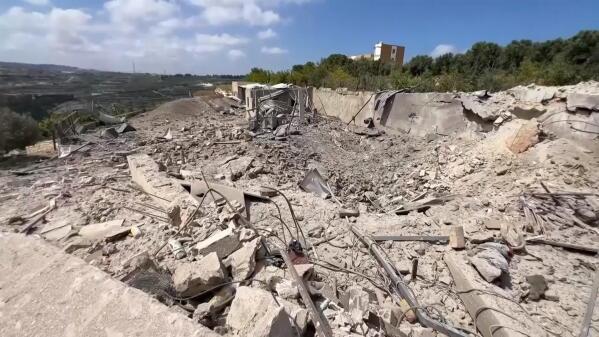
Israeli forces have taken control of a significant mountain in southern Lebanon crowned with an ancient Crusader-built castle, according to the military’s statement on Sunday. This marks Israel’s deepest penetration into Lebanon in over 25 years.
The acquisition of Beaufort Castle, located near Nabatiyeh, followed a series of airstrikes and fierce combat in nearby villages, where Israeli forces battled Hezbollah fighters in challenging terrain. This capture represents a critical milestone in the ongoing conflict between Israel and Hezbollah, which commenced on March 2. Hostilities began after Hezbollah launched rockets into northern Israel, two days following the U.S. and Israel’s offensive against Iran, Hezbollah’s primary supporter.
Israel has engaged in a ground offensive, seizing many villages and towns along the border. Hezbollah retaliated with numerous missile and drone assaults on Israeli forces stationed in southern Lebanon and northern Israel. The Israeli advance proceeded despite a ceasefire in place since April 17 and ahead of planned direct talks between Lebanon and Israel at the State Department on June 2 and 3.
A Historic and Strategic Fortress
The Israeli military’s Arabic spokesperson, Avichay Adraee, shared an image of Israeli troops outside the castle, while Defense Minister Israel Katz announced the raising of the Israeli flag atop the castle. Historically, Israeli forces captured the castle in 1982, maintaining control until withdrawing from Lebanon in 2000.
Beaufort Castle, positioned on Lebanon’s verdant hills above the Litani River, holds strategic military importance, utilized by various armies over nearly 1,000 years. Established as a Crusader fortress in the 12th century atop previous fortifications, its occupants included Crusaders, Saladin’s forces, Mamlukes, Ottomans, the French mandate, the PLO, and the Israeli military until 2000. It was partially restored and opened to visitors post-withdrawal.
During the 1982 capture, Israel achieved a significant victory under Defense Minister Ariel Sharon’s leadership. Israeli forces pushed north to occupy Beirut. In the 2024 Israel-Hezbollah war, UNESCO granted enhanced protection to 34 cultural sites in Lebanon, including Beaufort Castle, to preserve them from conflict damage.
Located a few kilometers north of the Israeli border, Beaufort overlooks extensive areas of southern Lebanon and northern Israel. Known as Al-Shaqif Castle in Arabic, the name refers to the imposing rocky landscape. The Israeli military declared an operation in Beaufort Ridge and Suluki Valley to dismantle Hezbollah infrastructure and eliminate threats to civilians, ready to broaden the operation if necessary.
Beaufort holds symbolic significance in Israel, remembered as a prominent site during the 18-year occupation. Israel’s acclaimed war film “Beaufort” reflects on the moral and existential challenges of war prior to its military withdrawal.
Israel’s Expanded Invasion in Lebanon
Recently, Israel has intensified its operations in Lebanon, advancing beyond the Litani River, historically a boundary, and urging residents to evacuate southern Lebanon. Israel has declared the region from the Litani to the Zahrani River an active combat zone, prompting evacuations amid intensified recent strikes, although many towns still have residents.
Israeli troops have progressed through villages near Beaufort Castle, now advancing towards Nabatiyeh, a pivotal center in southern Lebanon, urging inhabitants to evacuate, as well as those in Tyre, the fourth-largest city in Lebanon, and surrounding areas.
There has been no immediate response from Hezbollah or the Lebanese government regarding Israel’s advancement.
Continued Border Clashes
Hezbollah has claimed two recent attacks on Israeli forces and a Merkava tank in Bayada, close to the border. The group has reported clashes in towns north of the river, near Nabatiyeh, and the strategic castle.
Lebanon’s state-run National News Agency outlined airstrikes on southern villages, citing casualties without specifics. Hezbollah launched rocket salvos into northern Israel, including Kiryat Shmona, the area’s largest city. Hezbollah’s use of stealthy fiber optic drones has been lethal for Israeli forces struggling to counter them.
Israel reported nearly 200 civilian alerts in northern areas for potential drone and missile threats in the past day. The continued conflict has claimed 3,350 lives in Lebanon and displaced over 1 million individuals.
Israeli Prime Minister Benjamin Netanyahu’s office reported 25 Israeli military casualties in or near southern Lebanon, including a recent fatality, and noted two civilian deaths in northern Israel.
 Lithuanian President Urges U.S. to Maintain Military Presence Amid NATO Challenges
 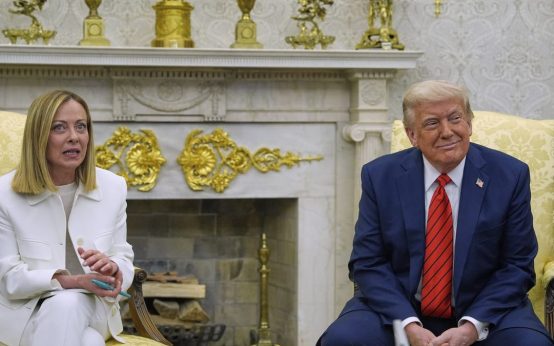 Italian PM Giorgia Meloni Skips UN General Assembly Amid U.S. Tensions
 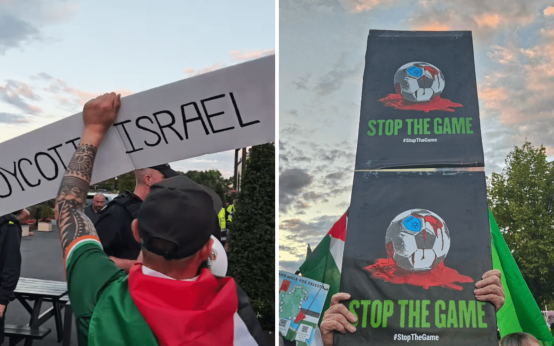 Ireland Faces Calls to Boycott Matches Against Israel
  Social Media Influencer Faces Serious Charges
 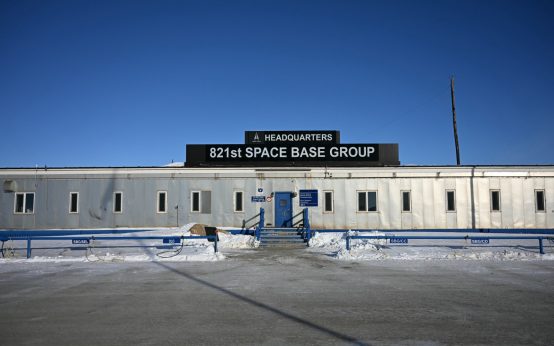 U.S. Military Expansion in Greenland
  The Autocratic Age: A Closer Look