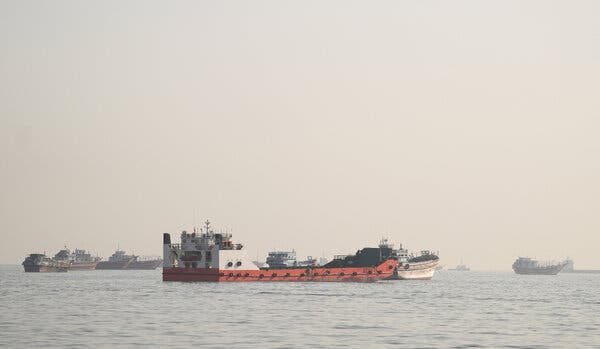
Iran announced its intention to charge fees for vessels passing through the Strait of Hormuz. This decision comes despite President Trump’s declaration that the strait would be ‘permanently toll-free.’
The key issue centers on the legality of such fees under international law. While tolls for passage are prohibited, certain fees for services rendered are permissible. It remains unclear what services Iran intends to offer, as no fees were previously in place before the U.S.-Israeli conflict with Iran.
The prospect of charging fees raises concerns about added costs and potential complications for commercial shipping through this crucial passage for global energy supplies. Iran’s arrangement could set a significant precedent for international waterways.
Iranian foreign ministry spokesman Esmaeil Baghaei clarified that Iran seeks to implement fees rather than tolls, referencing services that might include environmental charges.
Distinctions in maritime law define a toll as a charge for mere passage, whereas fees should correspond to services, such as waste management at ports. Calling a charge a ‘fee’ does not automatically render it legal without providing actual services.
Discussions about passage payments followed the U.S. and Israeli strikes on Iran and the subsequent Iranian response involving attacks on regional commercial shipping. By May, Iran had formed the Persian Gulf Strait Authority to oversee ‘safe passage permits.’
Talks between Iran and Oman, its neighbor across the strait, included developing a ship payment system based on service fees.
 Historical Discrepancies and Diplomatic Sensitivities in U.S.-China Relations
  Escalating Tensions: Russia’s Nuclear Threat and the Kaliningrad Conundrum
 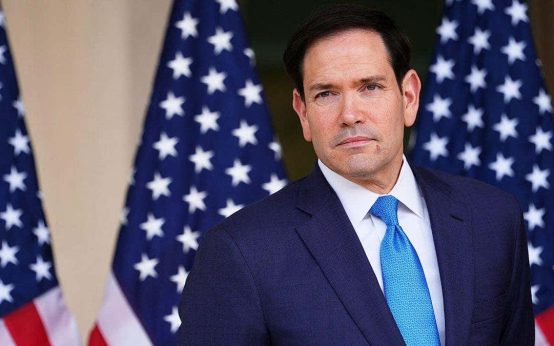 Marco Rubio Discusses Thwarted UK Terror Plot and Global Threats
  New Leads Emerge in 2014 Ayotzinapa Student Disappearance Case
  Concerns Over U.N. Secretary-General Candidate’s Alignment
  Possible Shipwreck Exposed After Nor’easter in Nantucket