Perim Island’s Capture and Strategic Implications
On September 11, Iran-backed Houthi rebels seized Perim Island, located in the Bab el-Mandeb Strait. This island is now a critical front in a strategically important shipping chokepoint. The attack followed a month-long offensive on Yemen’s western coast, resulting in significant losses for Yemen’s military.
The Associated Press reported more than 1,500 soldiers perished, prompting Yemen’s government to reluctantly acknowledge defeat. Morgan Murphy, a former Pentagon press secretary and retired Navy captain, shared insights with Fox News Digital.
They have gained what we could call the cork in the Red Sea bottle. However, they’ve entered a ‘kill box.’ The rebels lack capabilities compared to the United States, and if the president decides, he can eliminate their presence swiftly.
Strategic Importance of Perim Island
The capture of Perim Island, also referred to as Mayun, tightens the grip on a vital global shipping route. Despite the island’s location in the narrow maritime passage, the rebels placed themselves in a vulnerable spot. Perim Island halves the chokepoint with its mere 18-mile width.
Historically, Perim Island has served as a valuable maritime vantage point, previously sought by French forces and held by Britain for over a century. Situated roughly 20 miles from the Horn of Africa, it is close to Camp Lemonnier in Djibouti, a significant U.S. military base.
We’ve got incredible firepower in that region. It’s a volcanic and unliveable rock. The Houthis have massed their troops there, creating a ‘kill box.’
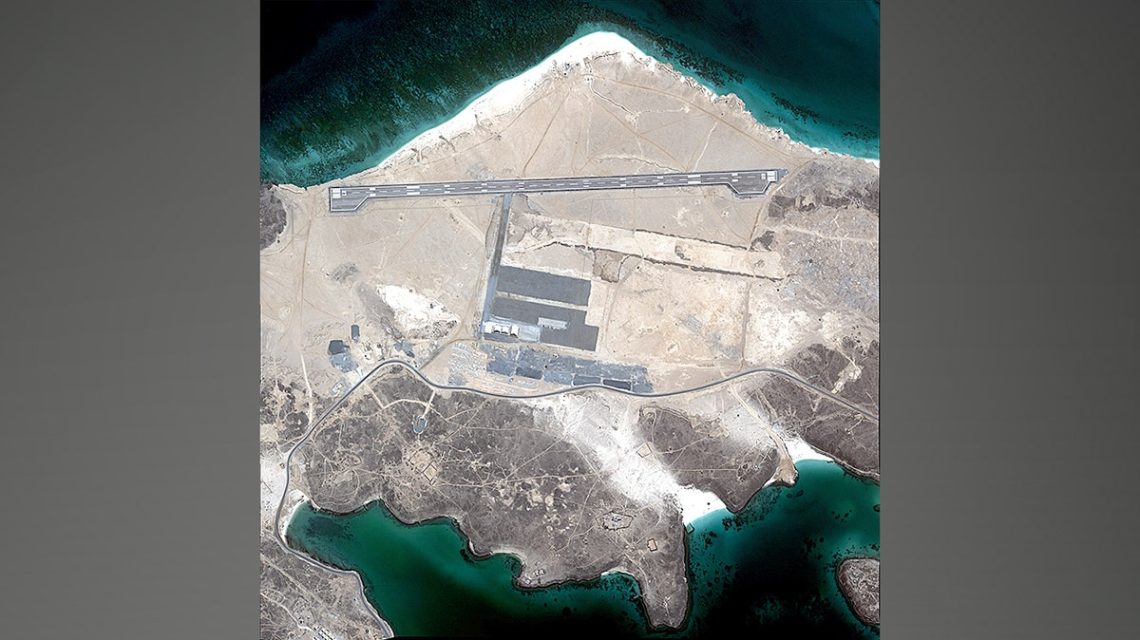
Satellite images reveal a runway alongside three military hangars, attributed to past construction by the United Arab Emirates. Murphy commented on the island’s airstrip.
There’s a 6,000-foot airstrip. While it provides strategic advantage, the Houthis lack sophisticated air power to use it effectively.
Potential U.S. Military Response
Murphy emphasized that U.S. military commanders possess overwhelming options should they decide to target Perim Island.
We could essentially render the island into a smooth glass surface. This intimidates the Houthis who can’t hold the island against the U.S. Navy’s might.
Recently, diplomatic talks occurred between Washington, Riyadh, and the Houthis. Sources indicated that Saudi Crown Prince Mohammed bin Salman urged President Trump to authorize military strikes on September 10. While the Trump administration declined direct intervention, they plan to continue offering intelligence support.
Concerns Over Global Energy Supply
Murphy suggested that Washington’s restraint should not be mistaken for inaction.
The president may take measures against the Houthis disrupting global energy supplies.
Reports indicate Iran and the Islamic Revolutionary Guard Corps support the Houthi advance with weapons and tactics. Hundreds of IRGC officers reportedly remain active in Yemen.
Murphy noted Tehran aims to increase global fuel prices by obstructing shipping lanes.
Historical Context and Future Developments
Drawing comparisons to past naval conflicts, Murphy highlighted the strategic disparity.
We’re in a different era. The Houthis rely on outdated tactics, contrasting with major global powers.
Murphy explains the necessity of a strong navy for global powers to ensure open shipping routes.
As world powers work together, their focus remains on maintaining freedom of navigation through critical waterways. The Trump administration is likely to coordinate efforts with allies in the upcoming days and weeks.
Emma Bussey, an experienced breaking news writer, brings her expertise to Fox News Digital.
 Labor Landscape in 2026: Unions Seek Support Across Party Lines
  U.S. Strategic Goals in Iran Under Scrutiny
  Florida International University’s Controversial Decision on Immigration Enforcement
  The Democratic Response to AI Regulation
  Russia’s Secret Plan with Iran: Financial and Strategic Moves
  JD Vance’s Mom Stands Up to Criticism