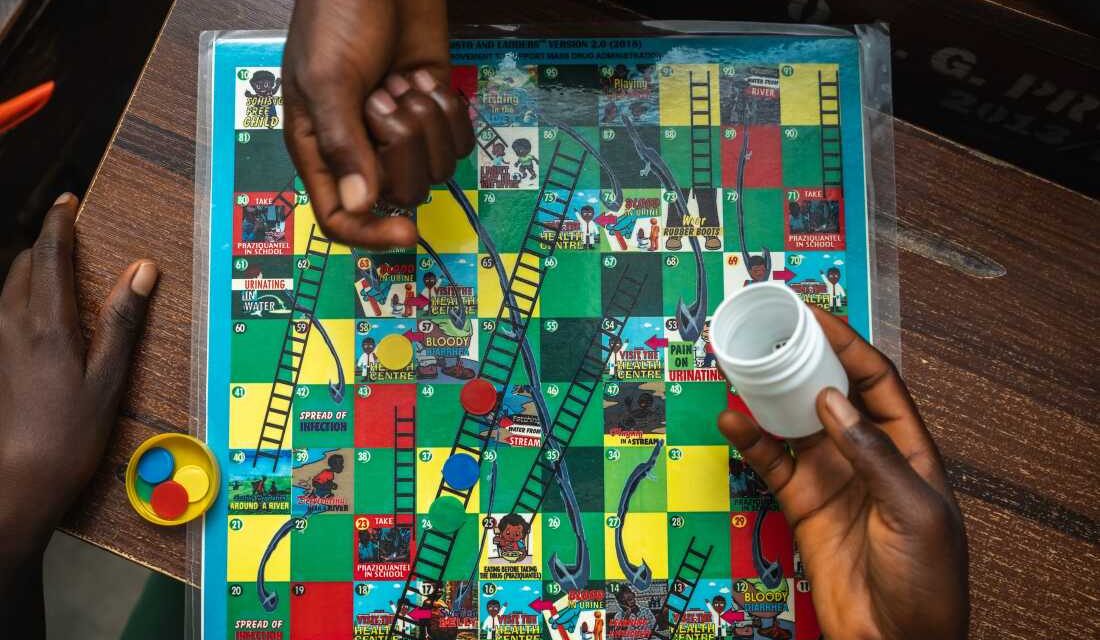
Introduction of Schisto & Ladders
In an elementary school in Nigeria, children are introduced to a unique variation of the classic board game Chutes & Ladders. Known as Schisto & Ladders, this game aims to educate students about schistosomiasis, a neglected tropical disease endemic to the region.
Objective of Schisto & Ladders
The game serves to teach children preventative measures against infection and outlines treatment options for those who are affected. Schistosomiasis is transmitted via skin contact with water infested by schistosome worms. Players learn through game mechanics designed to illustrate these risks.
Development and Implementation
Developed by Nigerian researcher Cynthia Umunnakwe, Schisto & Ladders uses creative approaches to combat the pervasive illness. Locally known as “Atosi Aja” or Bloody Urine, schistosomiasis causes various symptoms such as blood in urine, fever, and rash. If untreated, it can lead to severe organ damage, infertility, and bladder cancer.
Children at Risk
School-age children are especially susceptible due to their frequent water play and underdeveloped immune systems. The game illustrates this risk with square placements such as “Playing in a river,” which sends the player’s token down a Schistosoma worm instead of a chute.
Educational Approach
The game includes positive squares like “Eat before taking medicine” that offer educational rewards and moves the player up a ladder. Negative squares like “Blood in Urine” indicate infection risks, but neighboring squares offer solutions such as “Visit the health center.”
Interrupting the Life Cycle
Gameplay demonstrates preventive actions such as “Taking praziquantel at school” and “Cutting vegetation around a river” to discourage snail hosts. It warns students with squares like “Fetching water from a stream” and “Defecating near a river” to prevent pathogen spread.
Program Implementation and Impact
In July 2025, Cynthia Umunnakwe visited Apojola village to teach the game as part of a broader health program. Urine testing and treatment for schistosomiasis were provided. An alarming one-third of residents screened were found to have active infections due to reliance on freshwater sources for daily activities.
Interactive Learning Experience
Umunnakwe brought live examples of snail hosts for students to identify, collected by her colleague Dr. Olubukola Adelakun. Ministry of Health staff administered praziquantel treatment and encouraged participation with snacks, educating children on safe practice while introducing infection prevention measures.
Study and Results
Research conducted by Umunnakwe showed significant educational impact. A six-month study involving 275 students demonstrated enhanced knowledge of the disease and treatment. Before the trial, none had heard of praziquantel; but post-trial, understanding increased substantially.
Conclusion
The game is a means to enrich health education and potentially alter behaviors, promoting both awareness and enjoyment among children. The winner declared his success with pride, highlighting the fun aspect of the learning journey.
“Hey, look, I’m on top!” – a triumphant boy celebrating his victory.
 The Importance of Financial Responsibility in Higher Education
  The Financial Expectations on Universities: A Parental Perspective
  Concerns Over Food Safety and Its Impact on Families
  Nikole Hannah-Jones Reflects on Educational Choices for Her Daughter
  The Rising Trend of GLP-1 Medications Among College Students
  Seton Hall National Security Graduate Fellowship Provides Hands-On Experience