
The global AI race often evaluates success by the size of models, advancements in chips, and the scale of data centers. However, Shri Ashishkumar Chauhan, CEO of the National Stock Exchange of India, suggests that such metrics might not determine which nation reaps the economic benefits. At the Newsweek July 27 ‘AI Impact Forum’ webinar, he emphasized that one doesn’t need to invent technologies to harness their potential effectively.
Chauhan believes India can gain an advantage by integrating AI into various sectors, even if the foundational technology originates elsewhere. Dr. Ranjit Tinaikar, the webinar host, raised concerns about India potentially becoming a perpetual customer of AI models from the U.S. or China. Chauhan responded by reflecting on India’s past with technology. Although India did not originate computer chips or languages, its workforce mastered these technologies and built an industry around solving international problems.
Chauhan envisions opportunities in AI through open models that reduce experimentation costs. Smaller systems tailored for phones, vehicles, and appliances don’t require the biggest models. He predicts that open-source approaches could prevail, as indicated by his earlier view from 2025.
Presently, model developers and infrastructure providers receive significant investments. Chauhan anticipates economic value shifting to countries and companies that apply AI efficiently. India’s vast pool of technology service employees positions it well in this competition, as they already support global companies.
Smaller models might broaden AI applications, making them more accessible. Chauhan foresees that as computing becomes cheaper, more AI processing will occur on mobile devices. Open technology enables developers to customize models for local requirements, bypassing centralized platforms. While large models address demanding tasks, smaller ones handle routine jobs. By leveraging both, nations could derive greater value than those focused on size.
Chauhan also questions innovation metrics. While India may spend less on research and development compared to others, significant technical work occurs within its borders. Indian engineers often conduct research for foreign firms, occasionally leaving to start their own enterprises.
He describes India as having a “bottom-up framework,” where entrepreneurs adapt to emerging opportunities instead of following a national plan. Their innovations should remain economical yet high-quality.
India is investing in semiconductor manufacturing and renewable energy as data centers’ electricity demands increase. Chauhan cautions against assuming current shortages will persist. Extensive investment in data centers and semiconductor production might lead to overcapacity if AI revenues fall.
Chauhan is skeptical about closed-model companies maintaining dominance. With open-source alternatives, he believes a variety of models will thrive, fitting India’s advantages in cost and technical expertise.
Advising AI entrepreneurs, Chauhan emphasizes financial prudence. Maintaining expenses below income allows more time for development and growth.
The next topic in Newsweek’s AI webinar series, hosted by Cognizant, addresses customer experience. Set for July 30, at 2 p.m. Eastern, ‘Humanizing AI: Personalization, Engagement and the Customer Experience’ will explore AI’s role in improving customer service.
The session, moderated by Gabriel Snyder of Newsweek, will feature insights from industry leaders Nick Mehta, Arun Chandra, Jon Hyman, and Adrian McDermott. Interested participants can register for the free event.
 Data Centers Stir Controversy in Texas Amid Growth Boom
 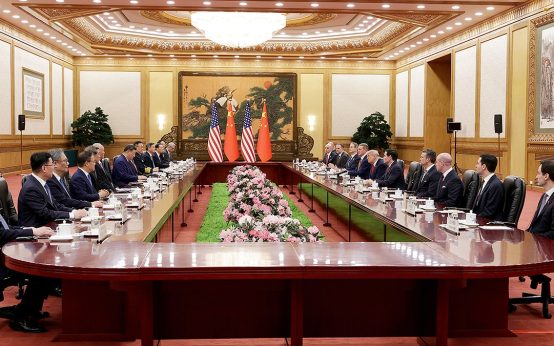 The Technology Rivalry: Trump’s Meeting with Xi and the AI Ecosystem Clash
  Ways to Protect Your Finances from Cyber Threats
  Interview with Nvidia CEO Jensen Huang: AI Outlook and Business Strategy
  Concerns Rise Over Addictive Design of Sports Betting Apps
  Seton Hall National Security Graduate Fellowship Provides Hands-On Experience