
The Trump administration’s approach to immigration has sparked debates about the U.S. job market. Treasury Secretary Scott Bessent emphasized that mass deportations and reduced immigration have decreased the workforce size, suggesting fewer jobs are necessary.
Following a recent report indicating potential weaknesses in the job market, Bessent noted that due to tightened immigration policies and border measures, fewer new jobs are required for the existing workforce. This view shifts from previous claims of deportations opening up opportunities for American workers to a more comprehensive argument regarding workforce size.
Current Labor Market Conditions
The Bureau of Labor Statistics reported a loss of 23,000 jobs in July. Revisions of May and June payroll estimates showed a combined downgrade of 103,000 jobs, indicating weaker-than-expected hiring. The unemployment rate was 4.1 percent, with a labor force participation rate declining to 61.4 percent. Administration officials suggest stricter immigration enforcement helps direct jobs toward American workers.
However, a shrinking labor force could pose challenges for economic growth. The Social Security Trustees’ 2026 report projected weak labor-force growth due to an aging population and slow growth in the working-age group. Trump administration agencies, like the Department of Homeland Security, have recognized immigrants as vital cogs in sectors such as agriculture, healthcare, construction, and transportation.
Experts’ Views
Despite official claims, experts caution that mass deportations might reduce the workforce when employers face hiring challenges. Labor-market researchers argue that without immigrants and their children, recent labor force growth would be negligible. Stuart Anderson from the National Foundation for American Policy highlighted that the policies might have inadvertently harmed American workers.
“The unemployment rate for U.S.-born workers rose from 4.3 percent when Trump took office to 4.6 percent in July,” Anderson observed. “Expulsions curtail economic dynamism by providing fewer opportunities for entrepreneurs and employers.”
Policy and Campaign Messaging
In contrast to campaign rhetoric, which claimed undocumented immigrants competed with Americans for jobs, Bessent’s points pivot to suggesting fewer workers require fewer jobs. Economists are divided. Some assert lower immigration reduces job competition, while others believe immigrants are economic drivers by filling labor gaps and boosting market demand.
“With fewer economic opportunities, employers may be less motivated to invest in training,” Anderson noted. “Immigrants are also consumers, so fewer immigrants mean a smaller domestic market.”
Bessent’s remarks contribute to ongoing debates about the long-term impacts of scaling back the workforce on economic growth.
 Darline Graham Faces Scrutiny on National Security Knowledge Prior to Senate Runoff
  Trump’s Turkey Stance Raises Concerns at NATO Summit
  ActBlue Co-founder Invokes the Fifth During Congressional Deposition
 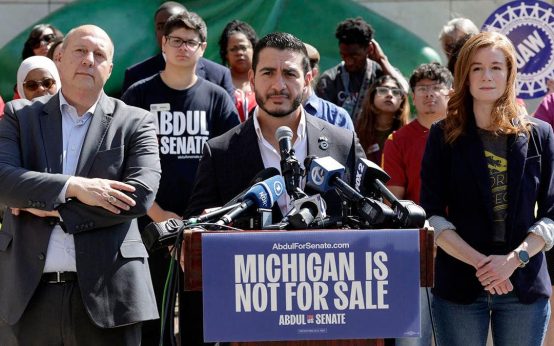 Michigan Senate Nominee Abdul El-Sayed Discusses Faith and Policies
  Trump Shows Off White House Construction Projects
  Democracy Dies in Darkness