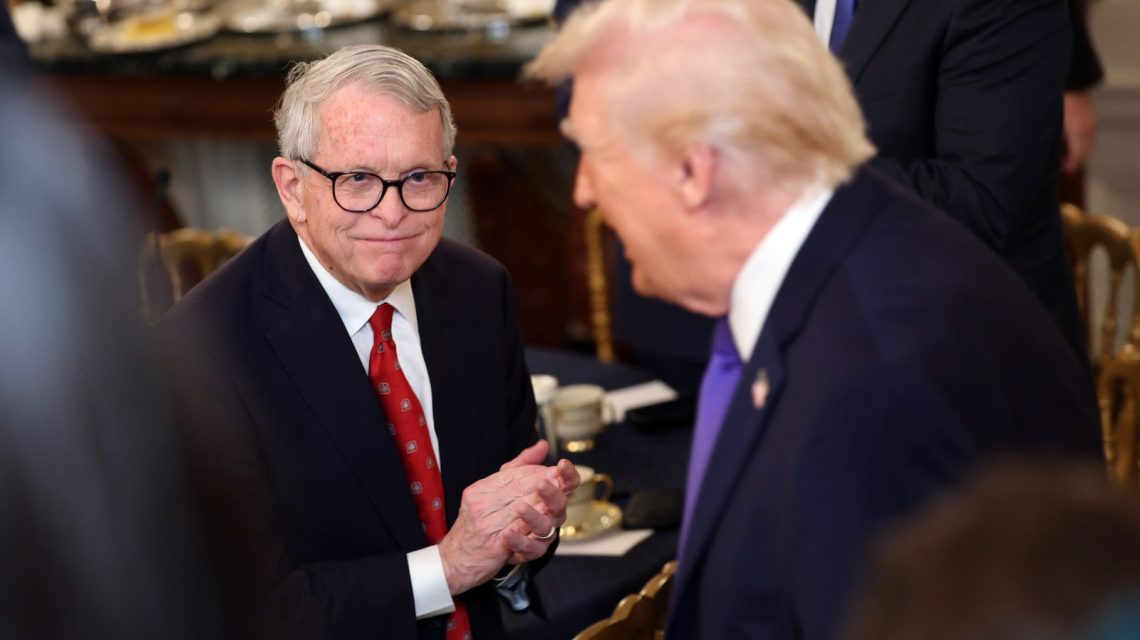
Ohio Governor’s Warning
Ohio Governor Mike DeWine, a Republican, expressed concerns on CNN’s State of the Union regarding plans to deport Haitians with Temporary Protected Status (TPS). He described this move as a mistake, which contradicts the Trump administration’s current stance. The discussion gained urgency after a recent Supreme Court ruling on TPS.
DeWine emphasized that deporting these individuals would expose them to perilous conditions and disrupt vital sectors dependent on their labor. This includes areas in Ohio like Springfield, which have seen substantial Haitian immigration.
He stressed that these are productive people contributing to American society by maintaining jobs, supporting families, owning homes, and starting businesses. His statements followed the Supreme Court’s 6-3 decision to empower the administration to terminate TPS for numerous migrants, including Haitians and Syrians.
Unsafe Conditions in Haiti
DeWine highlighted the precarious situation in Haiti, emphasizing that returns are untenable. He noted persistent airline restrictions due to security threats, escalating gang violence, and instability that render daily life hazardous. The conditions are integral to TPS, which allows migrants to stay in the U.S. when their home countries are deemed unsafe.
The U.S. State Department cautions against travel to Haiti, referencing widespread violence and instability, aggravating over recent years.
Supreme Court Decision
The Supreme Court ruling significantly altered the TPS policy landscape. It grants executive authority to end protections by limiting judicial reviews of these decisions. More than 350,000 Haitians and thousands of Syrians might lose legal status after lower courts briefly blocked these actions.
The legal battle unfolded amid broader political conflicts. Trump’s false claims during his 2024 campaign regarding Haitians in Ohio were mentioned in court. Yet, the conservative majority stated challengers were unlikely to prove racial bias motivated policy.
The decision complicates future challenges to TPS terminations, shifting focus from courtrooms to policymaking. Analysts foresee implications for over a million migrants relying on TPS, reinforcing its temporary nature and the government’s discretion.
Policy Direction from Homeland Security Secretary
Homeland Security Secretary Markwayne Mullin shared the administration’s plan post-legal barrier reduction. Mullin stated TPS migrants must acquire permanent status or exit the U.S.
The administration intends to offer financial incentives for voluntary departures. Mullin mentioned a package including airfare and about $2,100 to aid resettlement.
The Department of Homeland Security confirms similar programs to lessen dependency on temporary protections, aiming to reduce TPS reliance.
Understanding TPS
Established in 1990, Temporary Protected Status offers short-term protection to migrants from countries facing armed conflict, natural disasters, or crises. It allows beneficiaries to reside and work legally in the U.S. for designated periods, renewed if conditions remain unsafe.
Haitians initially received TPS following a devastating 2010 earthquake. Extensions continued due to ongoing instability. Losing TPS doesn’t trigger immediate deportation but can lead to loss of work permissions, legal status, and vulnerability over time.
Economic Impact in the U.S.
DeWine argued that consequences extend beyond migrants. He stated Haitian workers are integral to key U.S. sectors, particularly those experiencing labor shortages.
Roles like healthcare and elder care heavily depend on Haitian immigrants. Additionally, sectors such as manufacturing and food production face similar reliance.
In Ohio, Haitian worker influx corresponds with economic rejuvenation, filling jobs, stabilizing businesses, and occasionally increasing wages.
Particularly in Springfield, Haitian presence supports workforce demands. Local officials warn that their removal could disrupt businesses, housing markets, and essential services.
Republican Party Divide
DeWine’s remarks reveal a split within the Republican Party about immigration policies. While the current administration prioritizes enforcement and emphasizes TPS’s non-permanent nature, some state leaders focus on economic impacts and workforce requirements.
Without directly criticizing Trump, DeWine signals disagreement with current policy direction, hoping for reconsideration.
Policy Turning Point
The intersection of the Supreme Court ruling and enforcement strategies marks a pivotal point for TPS. Legal obstacles lessen, empowering policymakers to end protections, boost enforcement, and redefine program operations.
The debate shifts from abstract policy discussions to tangible consequences, affecting safety abroad and labor shortages domestically.
For DeWine, the implications are clear. Decisions made in Washington influence U.S. communities, impacting both deported individuals and the economies left behind.
 Court Blocks Trump’s Mail-Ballot Rules Ahead of Elections
  A Mother’s Tragic Journey Under Abortion Ban
  U.S. Strategic Goals Remain Unmet Amid Prolonged Conflict
  The Impact of Arts and Closure on Democracy
  U.S. Ambassador Comments on Iran War Duration Amid Political Concerns
  US-China Relations Under Scrutiny: Expert Warns of Escalating Tensions