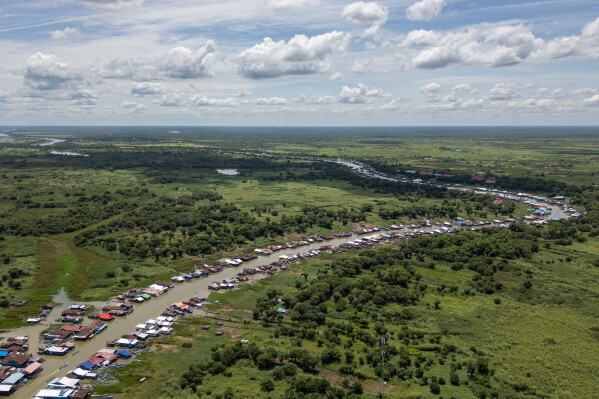
Sou Sreynich, a 13-year-old from the floating village of Kampong Prahok on Cambodia’s Tonle Sap Lake, has aspirations of becoming a teacher. Her journey began late; she entered her first classroom at the age of 10. This delay was due to her mother’s fear of the potential dangers associated with the journey to school across the lake, where the risk of boats capsizing is a concern for many families.
The recent war in Iran has led to spikes in gasoline prices, adding a new layer of difficulty for families like Sreynich’s. While the impact of this conflict on education may not be as apparent as the school closures witnessed during the COVID-19 pandemic, it is acutely felt by impoverished families. Increased fuel costs have made travel to school more expensive for students and teachers, complicating government efforts to finance education under strained national budgets.
Tonle Sap Lake presents unique challenges as traveling requires navigation of unpredictable waters, further affected by climate change, leading to irregular floods and droughts. Tragically, teachers report that ten students have drowned over the years.
“If the conflict persists, it could thrust up to 23.4 million more children into poverty, particularly in Africa and Asia,” reported a recent UNICEF study.
On most mornings in Kampong Prahok, students board gas-powered boats, driven by peers, to pick up classmates. The children wear crisp uniforms and strive to keep their belongings dry as they travel to school.
Sreynich’s family, like many others on the lake, depend on fishing to survive. High fuel prices due to the war restrict their ability to venture to deeper waters for abundant catches. Financial constraints often necessitate that Sreynich skip school to help her parents work. “I want to complete my studies,” she emphatically states, dreading every missed school day.
Vulnerable Children at High Risk
Families already living on the edge face hard decisions: choosing between essential expenses like food, fuel, and rent, or keeping children in school. According to Sabrina Hervey of Education Above All Foundation, “The Iran war is likely to force millions out of school, preventing many from enrolling in the first place.”
In Southeast Asia, some children are leaving school to earn money. The story of Ly, 16, and her sister Nhi, 13, from Vietnam echoes this pattern. Following their father’s job loss due to unaffordable diesel prices, they left school to work long hours in Hanoi. The Blue Dragon Children’s Foundation assisted their return to education, underlining the severe and slow-unfolding repercussions of the war.
Michael Brosowski of the foundation highlights the financial breaking point families face. Resource allocation often leaves some children out of school, exposing them to risks like exploitation and homelessness. “It’s a tipping point for many families,” he asserts.
Wider Educational Disruptions
Higher fuel prices raise education costs significantly, from student transport to classroom supplies. In Cambodia, where goods arrive by boat, even electricity for labs can be prohibitively expensive, noted by Samphors Vorn of Aide et Action.
Developing nations dependent on imported energy are most vulnerable to the war’s disruptions. Rising fertilizer costs and diminished remittances are putting these economies in tight spots. In Bangladesh, financial pressures could reduce government healthcare and education budgets.
“Economic hardship may increase the likelihood of girls dropping out of school or entering into child marriages,” stated Arshad Malik of Save the Children International.
UNICEF points out that South Asia accounts for 45% of global child marriages. Education and nutrition programs, like those providing school meals to over 466 million children worldwide, face threats from transport cost spikes and disrupted food supplies, especially in West and Central Africa.
Local health and aid workers in northern Nigeria report recurring malnutrition among children, prompting fear for what the future holds.
The Associated Press continues its dedication to climate and environmental coverage, supported by private foundations. Detailed support information is available at AP.org.
 Bolivia Faces Security Challenge Amid Shield of the Americas Test
 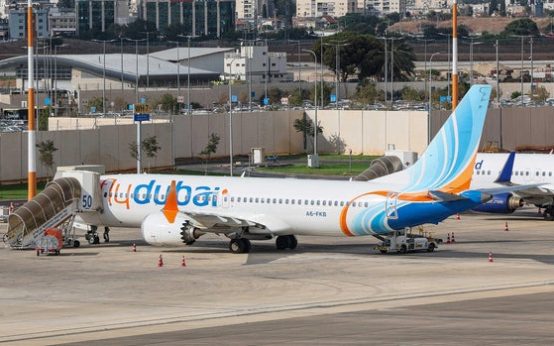 Investigation Continues Into FlyDubai Co-Pilot Incident
 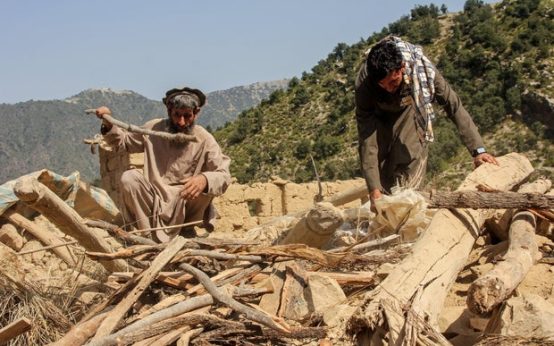 Pakistan Airstrikes in Afghanistan Kill Civilians
  Inequality in West Virginia School Funding
 Impact of Removing Regents Exams on Students and School Accountability