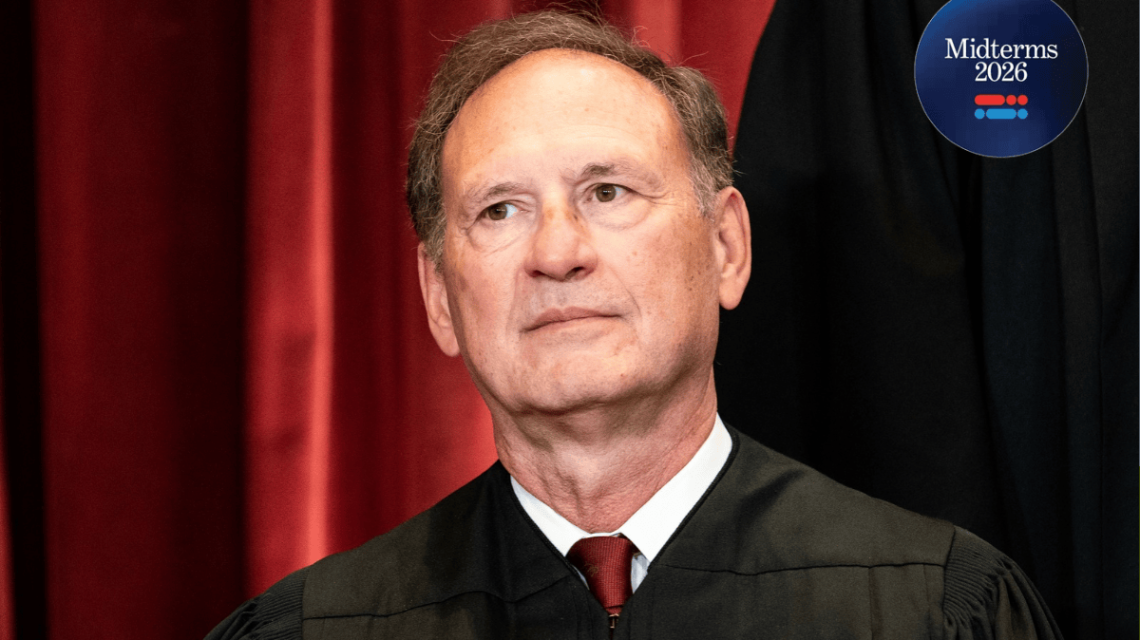
Legal analysts indicate that President Trump may face obstacles in appointing another Supreme Court justice due to the Senate majority shifting to Democrats. With Democrats gaining control of at least seven Senate seats in states like Iowa, Kansas, and Maine, they now possess a significant influence over future appointments.
A Democratic-controlled Senate can deny a new justice appointment if a Supreme Court vacancy arises. Historically, justices were confirmed with bipartisan support, but recent years have made the process more partisan. Notable examples include the refusal to confirm Merrick Garland in 2016 and the confirmation of Justices Gorsuch, Kavanaugh, and Barrett during Trump’s term.
Senate Democrats’ Potential to Block Nominations
Democrats’ Senate majority enables them to block Trump’s nominees, says Northeastern University law professor Daniel Urman. He suggests Democrats might not hold hearings for a Trump nominee, leading to a deadlock in case decisions, leaving lower court rulings in place.
Urman notes a slim chance of Trump negotiating with Democrats for a more moderate nominee. However, given Trump’s preference for loyal justices, this remains unlikely. Republican strategists express concerns about missed opportunities to appoint younger conservatives if senior Justices like Alito or Thomas were to retire.
Possibility of Lame Duck Session Retirements
Paul Collins from the University of Massachusetts highlights the chance of confirming a justice in a lame-duck session if any retirements occur. Justice Alito is speculated as a potential retiree, given his ties to the conservative legal movement.
However, Collins cautions against the risks of politically motivated retirements. Democrats could respond by pursuing Supreme Court reforms, including term limits and court expansion.
Justice Clarence Thomas and the Supreme Court’s Future
Justice Clarence Thomas, the second-longest serving justice, may consider his retirement and legacy. However, facing a Democratic Senate and potential court shifts, he might choose to continue his tenure until he holds the record for longest-serving justice in May 2028.
Experts expect Thomas to weigh the court’s ideological balance heavily. Collins emphasizes that Thomas considers both his historical legacy and the ideological impact of a successor chosen by a Democratic president.
Democratic Senate’s Influence on Court Reforms
Senate Democrats could explore reforms to address public trust in the Supreme Court. Proposals like term limits or an ethics code face challenges due to Republican resistance and Trump’s veto. Yet, public dissatisfaction may drive reform efforts, as public approval for the Court remains low, reflected in a 34 percent approval rating in a recent Gallup poll.
Overall, the shift in Senate control could mean significant consequences for the Supreme Court’s future. Reforms remain uncertain, dependent on bipartisan support.
 Controversy Surrounds Governor Newsom’s Death Sentence Commutation Plan
 Jewish Activist Criticizes Event Cancellation at CUNY School
 Debate on School Choice in Texas Elections
 Amy Klobuchar Takes On Governorship with Promises for Minnesota’s Growth
 Challenges of Signature Requirements for Political Candidates in Illinois
 Debate Rekindled Over Gray Wolves and Livestock Losses