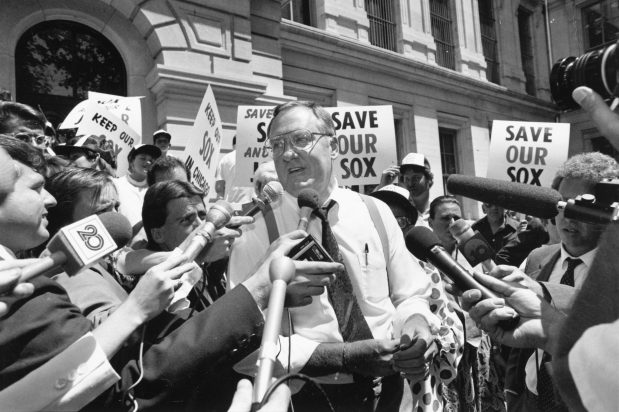
As the midnight deadline approached during Illinois’ legislative session of 1988, tension filled the statehouse. Governor James R. Thompson and House Speaker Michael Madigan negotiated intensely in the House chamber. They sought votes to secure funding for a taxpayer-supported stadium to keep the Chicago White Sox in Chicago. The stakes were high, with a move to St. Petersburg, Florida, on the line. At midnight, an out-of-state reporter prematurely announced the White Sox’s relocation. In reality, Illinois politics played out differently. The final vote came at 12:03 a.m., narrowly passing despite missing the deadline.
Fast forward to the recent legislative session, another stadium dilemma emerged. Lawmakers worked on a plan to prevent the Chicago Bears from moving to Hammond, Indiana. The session ended with no resolution. The Bears, who bought the Arlington International Racecourse site, sought property tax certainty for their new stadium. The White Sox previously succeeded in securing a new taxpayer-funded stadium. However, the Bears faced uncertainty when the legislature adjourned without a property-tax relief agreement.
The handling of the White Sox and Bears stadium plans highlights differences in politics and sports. Urgency surrounded the Sox vote, with leaders aligning to save the team. Conversely, the Bears appeared an afterthought, with no consensus on stadium plans. Governor JB Pritzker had not reviewed the Senate’s proposal. He expressed doubts about the Hammond site due to environmental issues.
Public sentiment has shifted since 1988. Voters oppose using taxpayer money for sports venues, especially amid high property taxes. House Speaker Emanuel “Chris” Welch noted the change in attitudes. He mentioned Sox owner Jerry Reinsdorf’s failed attempts to replicate the 1988 deal. Senate President Don Harmon reflected on legislative reluctance to support franchising with public funds. Instead, focus lay on mitigating federal budget cuts and addressing key voter concerns.
Scott Hagel from the Chicago Bears attended the session. Despite initial skepticism, Welch remarked on public conversations against funding the Bears. Yet, people did not want the team to leave Illinois. Factors outside Springfield affected the decision. Negotiators pointed to a naive Bears leadership and late involvement from Chicago’s Mayor Brandon Johnson. Johnson revisited a rejected 2024 lakefront plan for Soldier Field, adding complexity.
The Bears and NFL reaffirmed focus on Arlington Heights and Hammond. However, talks with Chicago prompted opposition to a move to the suburbs. The Senate Democrats rejected a House-passed bill providing tax certainty for Arlington Heights. They proposed an alternative, allowing cities to create a stadium authority to own privately financed arenas. Yet, financial uncertainties led to the House adjourning without a resolution.
Governor Pritzker stated his commitment to keeping the Bears in Illinois. He emphasized that the burden should not fall on taxpayers. Legislative leaders will continue discussions and may call a special session if needed. The Bears, with a long history in the NFL, hold the next move. Monday’s statement confirmed ongoing evaluations of Arlington Heights and Hammond, promising an update when a decision is made.
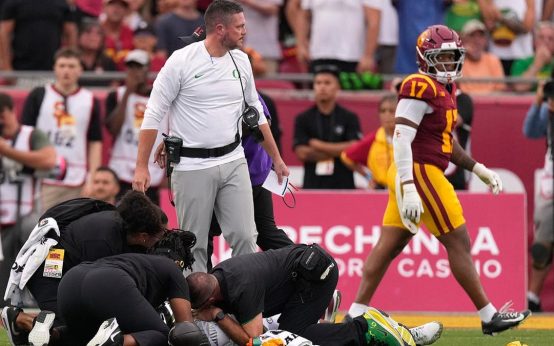 Dan Fouts Commends Oregon Coach’s Response to Violent Football Incident
  Dodgers’ NLDS Game 1 Lineup and Strategy
 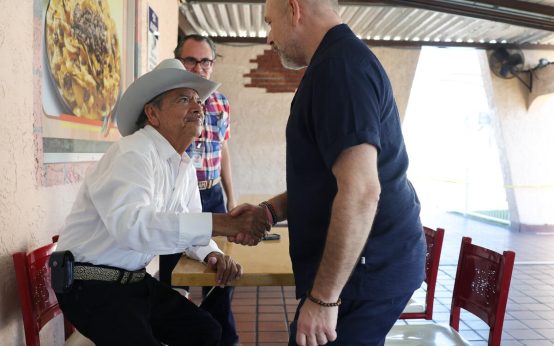 Steve Hilton’s California Dream: Wooing Latino Voters
 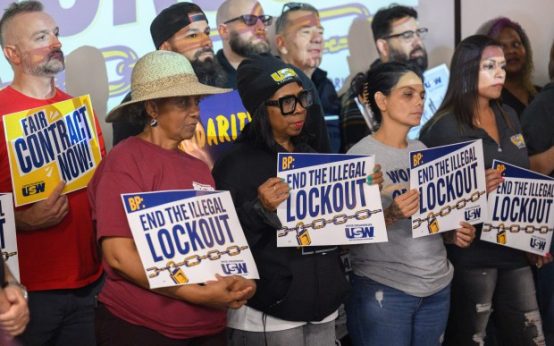 Indiana Legislators Advocate for Unemployment Benefits for Locked-Out Workers
  Analysis of Urgent Reforms in the U.S. Presidential Nomination Process
  High School Football Game Turns Chaotic with Multiple Field Fights