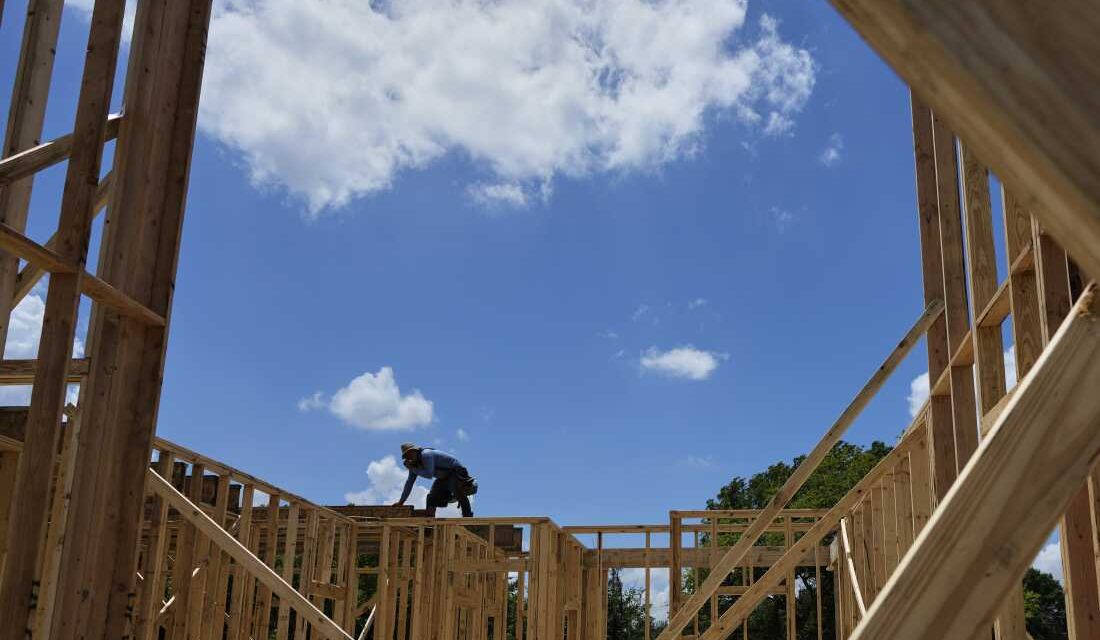
On Tuesday, construction workers were seen working on the roofing structure of a new home in Richardson, Texas. Meanwhile, a significant milestone was reached in Washington regarding housing affordability. Legislators from both parties in the House passed the 21st Century Road to Housing Act with a decisive vote of 358 to 32. The Senate had already approved the bill, and it now awaits President Trump’s signature.
Senator Elizabeth Warren of Massachusetts, a co-sponsor of the bill, highlighted the urgency of addressing housing affordability. “Every time every member of Congress goes back home, they hear how urgent it is to bring down home prices. And that’s what the bill does,” she stated in an NPR interview. Many factors have contributed to the challenge of affording homes in the U.S. For instance, real estate broker Redfin noted that to afford a typical home, a family needs an income of around $117,000 per year, which is significantly higher than what many U.S. households earn.
Additionally, rising mortgage rates have increased ownership costs. Rates had been on the decline earlier this year, but the conflict in Iran has pushed them back up; the current national average is about 6.5%. Consequently, families now have reduced purchasing power as inflation has surpassed wage growth. However, the primary issue targeted by this bill is the insufficient housing supply to meet demand. According to Realtor.com, the U.S. was short by over 4 million housing units last year.
Ban on Corporate Home Investors
The bill comprises various provisions, including a notable ban preventing corporate investors from purchasing more single-family homes to rent out. If an investor owns at least 350 houses, they cannot acquire more. Although the provision sparked debate, supporters argue it stops corporate landlords from outbidding families and buying significant portions of local housing markets. However, national data shows these investors represent only about 3% of the single-family rental market.
Some experts caution the ban might limit the available housing supply since these investors often renovate homes that might otherwise be unmarketable. Ross Marchand of the Taxpayers Protection Alliance expressed concern about chilling investment, which he believes is needed.
Streamlining Regulations for Homebuilders
The legislation aims to ease homebuilding by streamlining regulations. Builders can now bypass environmental reviews if a project is situated between two previously approved buildings. Additionally, a new grant program will help communities develop “pattern books” of preapproved housing designs, reducing the need for multiple approvals.
Another provision targets manufactured homes, proposing to remove the chassis requirement. This could lower construction costs by $5,000 to $10,000 and allow homes to incorporate features like second stories or basements. “Not having that chassis immediately wipes several thousand dollars off that price,” said Kate Wood, a lending expert at NerdWallet.
The bill also incentivizes local governments to accelerate homebuilding by offering more federal funds to areas that construct additional housing units. “If you don’t build more housing, you should lose those incentives,” stated co-sponsor Senator Tim Scott of South Carolina.
Limits of Federal Legislation
Federal legislators have limited influence over homebuilding, as local governments and private builders play larger roles. Builders face challenges like the high costs of labor and supplies. Additionally, Congress doesn’t control mortgage rates, which the Federal Reserve might raise later in the year due to inflation concerns. Despite this, the bill represents the most substantial housing affordability measure from Congress in decades and could make homeownership more accessible, according to industry experts.
Amanda Crist, vice president of member engagement at Greater Nashville Realtors, noted that making homeownership more accessible is crucial. Senator Warren emphasized the significance of the federal government’s action after decades of inaction: “Finally, we are actually moving.”
 Naperville Business Updates: CLOSINGS & COMINGS
  The State of Home Inspector Licensing in the U.S.
  Reimagining Los Angeles’ Vacant Lots for Affordable Housing
  The Impact of AI Data Centers on Home Prices
  The Preservation Dilemma in Sunset Square: A Closer Look
  Modern Four-Bedroom Home in Downers Grove