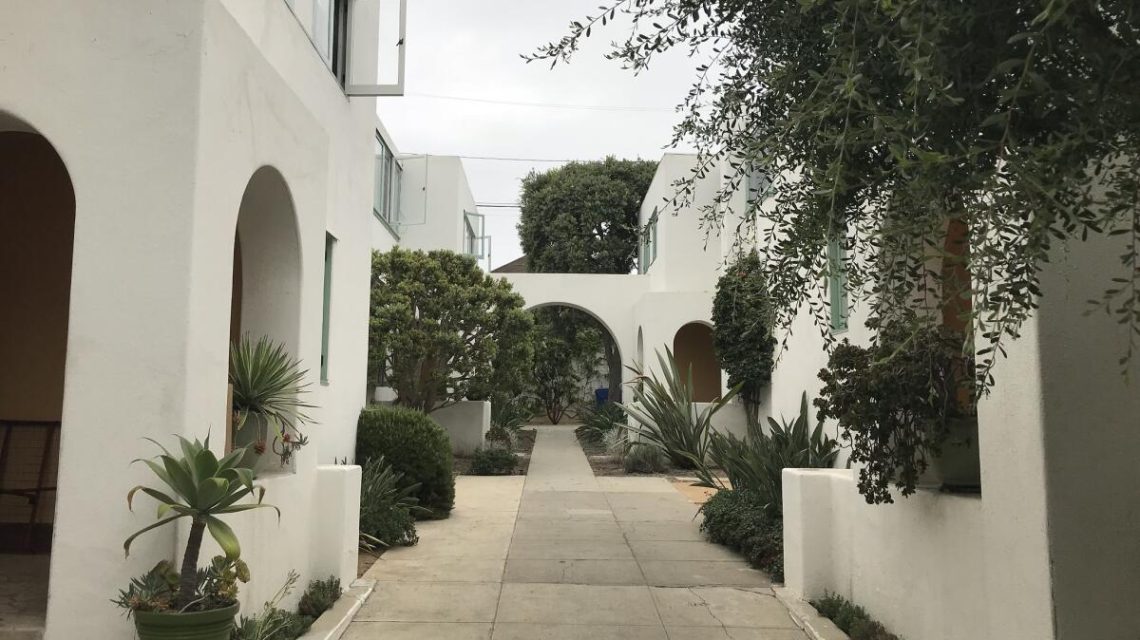
Los Angeles faces a notable contradiction in its housing crisis. The city has over 20,000 lots zoned for housing but still remains with many vacant. As housing remains financially inaccessible for many, these lots present a fresh opportunity for attainable homeownership.
A new experiment seeks to transform these small, vacant lots into thoughtfully designed, multiunit housing. These structures, such as duplexes, fourplexes, and townhouses, aim to offer more reasonable prices compared to single-family homes. Dana Cuff, director of UCLA’s cityLAB, is leading the ‘Small Lots, Big Impacts’ initiative, which focuses on turning these parcels into affordable homeownership opportunities.
“There hasn’t been a new generation of starter homes since post-WWII. How do we get back to that?” — Dana Cuff
Small-scale multiunit housing has been part of L.A.’s architecture for over a century. While these options traditionally served as rentals or high-end listings, recent legislative changes now allow more lots, including vacant ones, to be open for such developments. This creates new opportunities for affordable homes in areas lacking mid-density buildings, according to Emmanuel Proussaloglou, co-director of cityLAB.
L.A. has struggled with housing shortages despite new developments in certain areas. Many neighborhood proposals have faced opposition, but the initiative’s focus on smaller lots avoids altering the neighborhood’s fabric. Proussaloglou highlighted the potential impact of these lots. They constitute only 2% of L.A.’s privately owned parcels yet hold significant potential.
Recently, the ‘Small Lots, Big Impacts’ initiative revealed the designer-developer teams that will bring these projects to life. Each will build multiunit complexes on small, empty lots within the city. The program provides financial and regulatory support, ensuring homes are sold below market rate for low- or middle-income buyers. Support comes from LA4LA, the city of L.A., and BMO bank.
The aim is to show developers and buyers that these lots can accommodate modern starter homes. Cuff noted that this approach creates more housing units and attractive features such as outdoor spaces and community access.
The cityLAB initiative began last year with city-owned lots but shifted to privately owned parcels due to delays. Christian Stayner of Stayner Architects is leading one of three pilot projects. Stayner’s lot on L.A.’s Eastside, previously used for storage, now benefits from support and legislative changes. The project plans include a building with six individually owned units.
The two other teams are developing their visions. One employs a shared cooperative structure, while the other uses prefabricated materials to speed construction. These variations illustrate different approaches to this pilot project, providing a platform for others to follow.
The three teams aim to start construction before next summer, potentially inspiring similar initiatives.
 Former Chicago Federal Prosecutor Sells Lincoln Park Mansion
  Jevon Carter Sells Chicago Townhome in West Town Neighborhood
  Luxury Home in River Forest with Elegant Features
  Disclosing Neighborhood Rumors: A Decision to Consider
  Historic Church Transformed Into Los Angeles Boutique Hotel
  Amazon Offers Discounts to Employees at Whole Foods