
A report from the House Select Committee on the Chinese Communist Party criticizes Harvard University for allegedly not adequately protecting research collaborations with Chinese institutions. These institutions include those linked to Beijing’s military and defense sector.
According to the report, researchers from Harvard co-authored over 140 publications with individuals from a group of Chinese universities. These include the “Seven Sons of National Defense,” identified by U.S. officials as crucial to China’s defense research and military modernization.
The committee argues that Harvard’s approach to research security allowed collaborations that potentially benefit China’s technological and military advancements. Harvard reportedly received over $600 million from China through the federal Section 117 foreign-gift disclosure program, topping any other American university. These financial ties underscore the need for stringent oversight of research partnerships, according to the report.
The report includes examples such as a 2023 paper on bio-inspired soft robots for deep-sea exploration, co-authored by a Harvard-affiliated researcher and a Beihang University researcher. Beihang is one of the Seven Sons institutions and has been on the Commerce Department’s Entity List since 2001. The committee states that the work has potential military use, although Harvard classified it as nonmilitary research.
Harvard also collaborated on a study with China’s National University of Defense Technology, involving magnetic materials, with partial U.S. Army funding support. The committee examined numerous publications, finding engineering the most involved discipline in these collaborations.
From allowing violence against anti-China protestors to collaborating with entities linked to the PLA, Harvard has made serious mistakes and must act now to prevent more.– Rep. John Moolenaar, committee chairman
The report scrutinizes Harvard’s executive education program with China’s National Healthcare Security Administration. Officials from the XPCC, sanctioned in 2020 for human rights abuses, appeared in registration records for some sessions. Harvard Professor Winnie Yip, involved with the program, noted she was unaware of the XPCC’s sanctioned status at the time.
The report further alleges Harvard’s focus on legal compliance neglected broader national-security risks related to partnerships with Chinese military-linked institutions. Harvard research official John H. Shaw testified the university does not blanketly ban work with Chinese institutions, reviewing collaborations individually.
Concerns were also raised about Harvard Global Research and Support Services. This nonprofit can receive awards when Harvard can’t directly accept sponsor terms, potentially bypassing federal foreign-gift reporting. The report advises Harvard prohibit collaborations with entities on U.S. government restricted lists and centralize research security oversight. It also suggests Congress reinforce foreign-funding disclosures for universities.
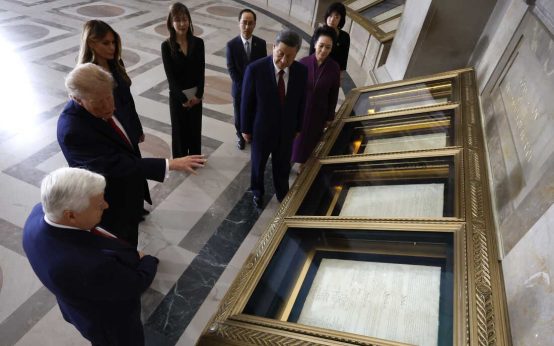 Historical Discrepancies and Diplomatic Sensitivities in U.S.-China Relations
  Escalating Tensions: Russia’s Nuclear Threat and the Kaliningrad Conundrum
  Supporting Child Mental Health: The Role of Home Environments
 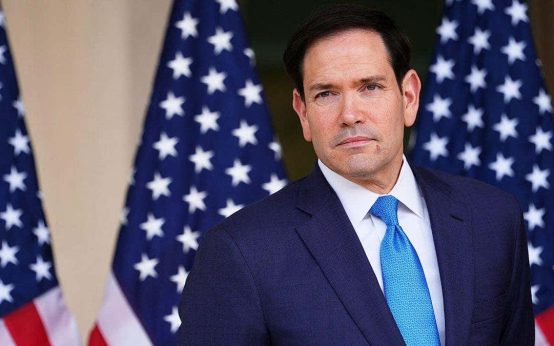 Marco Rubio Discusses Thwarted UK Terror Plot and Global Threats
 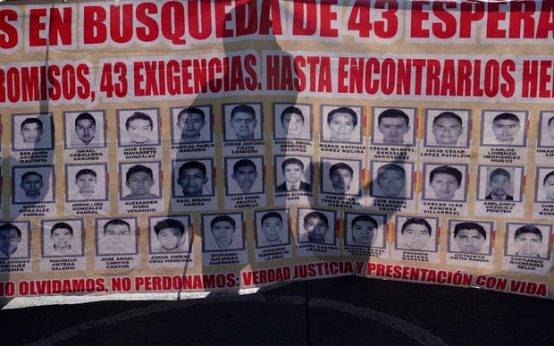 New Leads Emerge in 2014 Ayotzinapa Student Disappearance Case
  Concerns Over U.N. Secretary-General Candidate’s Alignment