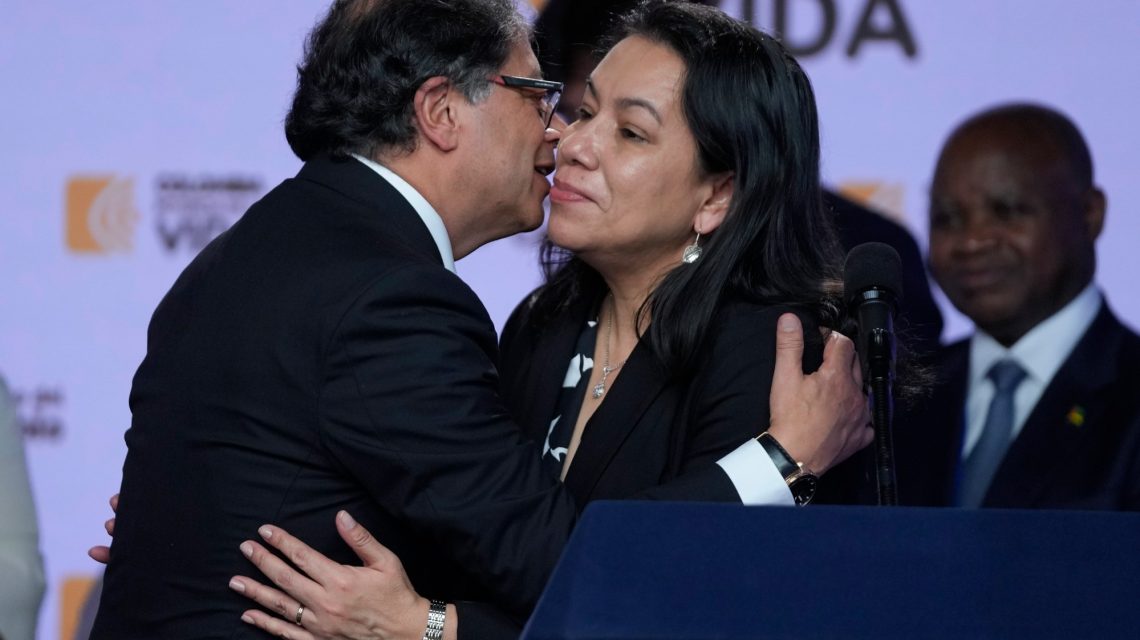
The selection process for the next U.N. secretary-general is underway, yet no candidate has emerged as a clear favorite. However, one contender, Carolyn Rodrigues-Birkett from Guyana, has caught attention in Washington due to her foreign policy positions.
The latest straw poll among U.N. Security Council members shows Rebeca Grynspan, former Vice-President of Costa Rica, leading slightly, with Rodrigues-Birkett close behind. For a candidate to succeed, they must secure support from nine of the 15 council members and avoid vetoes from any of the permanent members: the U.S., China, the UK, France, and Russia.
Rodrigues-Birkett presents a challenge for the U.S., given her political stances. Although representing Guyana, an ally of the U.S., her views align more closely with nations like China, Cuba, and Hamas, rather than with American allies. China, a primary U.S. adversary, is likely to endorse her candidacy.
Rodrigues-Birkett’s ties with China are evident in her support for China’s World Artificial Intelligence Cooperation Organization. This organization includes countries often at odds with the U.S., such as Russia, Cuba, and Nicaragua, highlighting a potential strategic misalignment if she becomes secretary-general.
Moreover, her visit to Beijing, praising a U.N. resolution that recognizes the People’s Republic of China and excludes Taiwan, underscores her affinity with Chinese policies. This stance conflicts with U.S. efforts to include Taiwan in international dialogues.
Rodrigues-Birkett also expressed admiration for the late Cuban dictator Fidel Castro, describing him as a “visionary.” Her past actions, like backing a motion against the U.S. blockade of Cuba, raise further concerns about her ideological leanings.
Her views on the Israeli-Palestinian conflict have also been controversial. After the 2023 incident involving Hamas in Israel, she criticized Israel and called their response a “veritable genocide.” Her support for the U.N. Relief and Works Agency, despite U.S. calls for its abolition due to alleged terrorist links, adds to the worries.
With these factors in mind, the U.S. may consider using its veto power against Rodrigues-Birkett’s recommendation. Her potential leadership could conflict with American interests and strategies in international relations, particularly concerning AI development and Middle Eastern policies.
Richard Goldberg is a Senior Advisor with the Foundation for Defense of Democracies, and Ben Cohen is a Research Fellow there.
 Abdul El-Sayed Aims to Attract ‘Make America Healthy Again’ Supporters in Michigan Senate Campaign
  Possible Shipwreck Exposed After Nor’easter in Nantucket
  Turkey’s Ambitions and Regional Dynamics: The Mecca Joint Defense Agreement
  Trump’s Second Term Transformation of Washington
  Washington’s AI Concerns and the Promised Technological Future
  Efforts to Restrict Voter Registration Funding Trigger Concerns for Nonprofits