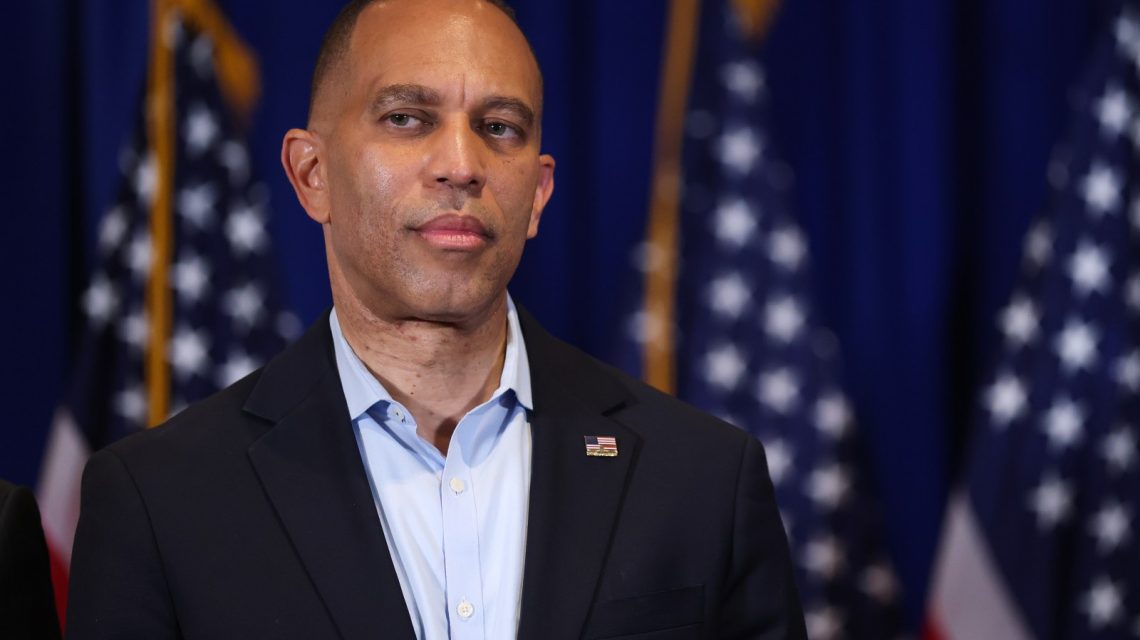
Kevin McCarthy’s time as House speaker was marked by Republican infighting, leading to his eventual downfall. Representative Hakeem Jeffries is now campaigning for the same position. As a frontrunner to become the first Black speaker of the House, Jeffries faces early resistance from his party’s progressive wing.
Jeffries, a New York Democrat, has not yet gained support from several progressives. His position on Israel and a pre-election meeting with Jared Kushner have stirred dissatisfaction. These issues hint at potential internal challenges similar to those McCarthy faced.
Currently, Jeffries does not seem to face a revolt of the magnitude that McCarthy did, who needed 15 ballots to secure his position in 2023. Nonetheless, the resistance is a test of his ability to manage an ideologically diverse majority.
“The main similarity [to McCarthy] would be that he’s being challenged from what you might consider the outer ideological edge of his party in the House,” said University of Tennessee professor Andy Busch.
McCarthy encountered opposition from far-right Republicans, while Jeffries faces discontent from progressives. The House speaker’s role is crucial, as it involves presiding over the House, leading the majority party, and setting legislative agendas. The speaker has significant influence over the legislation.
Jeffries Faces Progressive Pushback
The upcoming speaker vote will test Democratic unity post-midterm elections. Despite initial opposition, Jeffries launched his bid for speaker following a significant election victory. Democrats currently hold a larger majority than Republicans did in McCarthy’s time. By January, Democrats will have at least 254 seats compared to 165 Republicans.
If party lines determine the vote, Democrats would hold an 80-seat advantage, allowing Jeffries to lose some support. This contrasts with McCarthy’s narrow majority, which offered little room for defection. University of Akron’s David Cohen noted that Jeffries is in a stronger position than McCarthy was.
“Jeffries’ caucus will be much bigger than McCarthy’s,” Cohen told Newsweek.
McCarthy’s greatest challenge was deep division within his party. Far-right Republicans opposed his stance on spending and party power. With only a narrow majority, even a few dissenters had significant influence. This led to McCarthy’s historic 15-round voting process.
The Democrats, while united on many issues, face divisions over the party’s direction. These disagreements have fueled some resistance to Jeffries. Questions remain whether different Democratic factions will support him. Notable undecided members include:
- Claire Valdez, New York’s 7th District Democratic Socialist
- Darializa Avila Chevalier, New York’s 13th District Democratic Socialist
- Melat Kiros, Colorado’s 1st District Progressive Democrat
According to Busch, this resistance might preview future challenges.
Why Are Progressives Hesitant?
Progressive opposition to Jeffries stems largely from his support of Israel and ties with the American Israel Public Affairs Committee (AIPAC). Jeffries has maintained close relationships with pro-Israel groups. In July, he opposed cutting military aid to Israel, conflicting with some House Democrats.
He has, however, acknowledged a need for change in the U.S.-Israel relationship. Despite this, some critics urge Jeffries to distance himself from AIPAC. Public opposition has also surfaced, as evidenced by a petition against Jeffries as Speaker, gathering over 1.1 million signatures.
“Hakeem Jeffries is simply not the right choice,” the petition claims.
Despite opposition, Northwestern University’s Laurel Harbridge-Yong believes Jeffries will avoid McCarthy’s voting difficulties. Democrats aim to resolve disagreements privately.
McCarthy’s Downfall
McCarthy required 15 voting rounds to secure the speaker position in January 2023, making concessions to conservative holdouts. Those divisions eventually led to his removal after a motion by Matt Gaetz, following McCarthy’s reliance on Democratic votes to prevent a government shutdown.
Eight Republicans joined Democrats in the vote to remove McCarthy, marking the first such ousting of a speaker in U.S. history. He chose not to seek the speakership again, announcing his resignation that December.
Future Implications
House Democrats plan to conduct leadership elections on November 18. Members will vote behind closed doors for their speaker nominee. Jeffries, leading the party as minority leader since 2023, remains uncontested and is expected to win the nomination.
The decisive vote occurs when the new Congress gathers on January 3, 2027. The full House will elect the speaker. Jeffries must secure a majority of votes for a named candidate in this setting.
Republicans have also selected their leaders for the next Congress, choosing Jim Jordan as House minority leader and retaining John Thune as Senate minority leader.
 Flavio Bolsonaro Claims Political Persecution Led to U.S. Asylum
 Key Developments in U.S. Politics and International Affairs
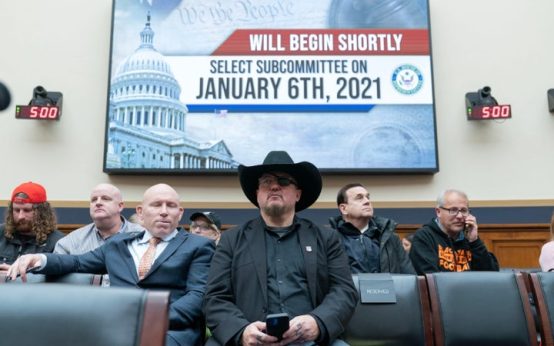 Ex-Oath Keepers Leader Turns Against Trump
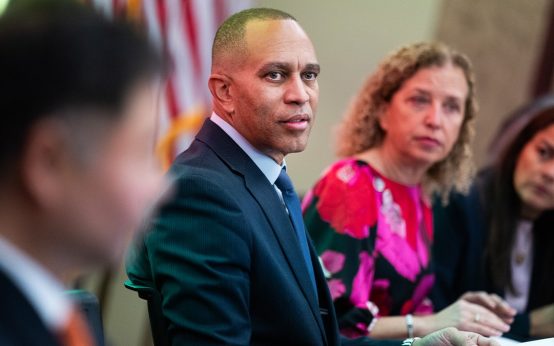 Progressive Democrats Seek to Push Agenda in House
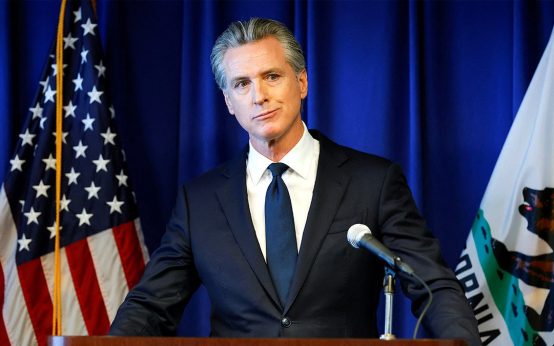 Controversy Surrounds Governor Newsom’s Death Sentence Commutation Plan
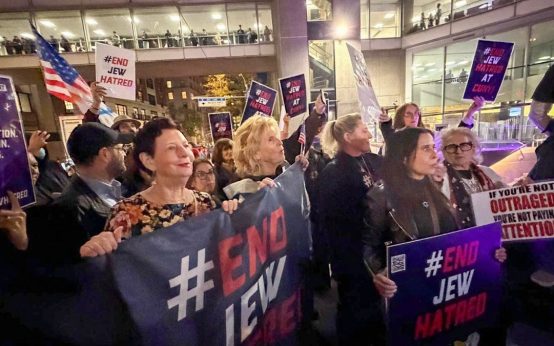 Jewish Activist Criticizes Event Cancellation at CUNY School