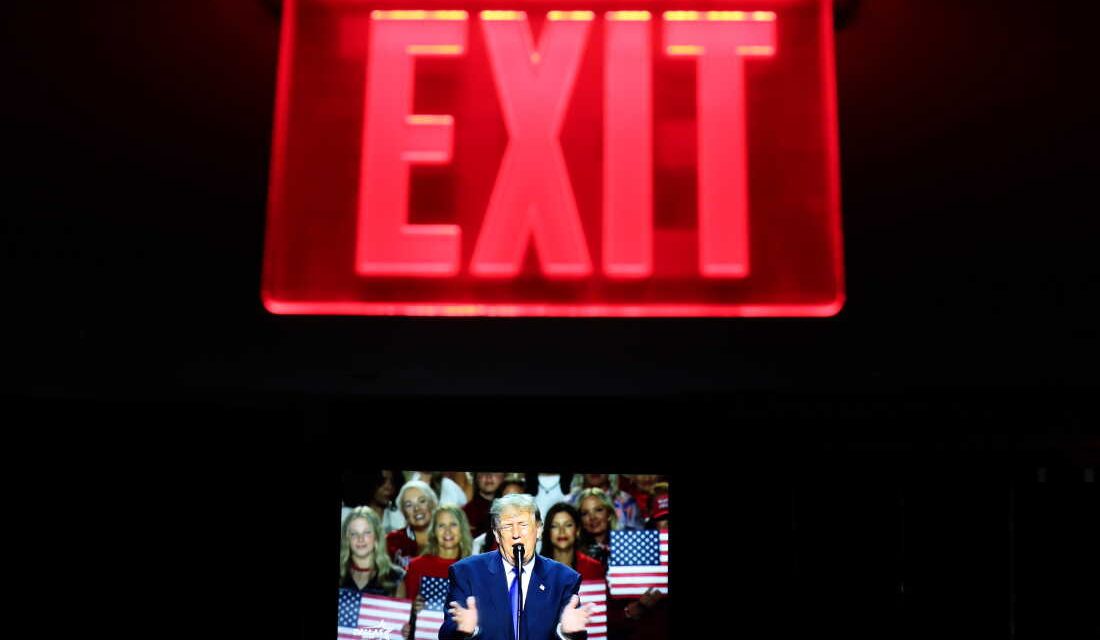
Inside President Trump’s Republican Party, dissent is emerging. Trump has demanded loyalty, but recently, more Republican candidates and officials have started distancing themselves from his core agenda. They seek the end of the U.S. conflict with Iran and relief from high prices, criticizing Trump’s handling of key issues, such as immigration.
The GOP faces a crucial moment. With less than 40 days until voting ends, the party aims to maintain its slim majority in Congress. Control of the Senate and House of Representatives may hinge on a few closely contested races.
Trump’s influence looms over the midterms. He encourages voters to act as if he is on the ballot, despite his low approval ratings. This strategy could backfire according to a recent NPR/PBS News/Marist poll. The poll shows 45% of registered voters and a majority of independents view their vote as being against Trump.
“Trump’s strength has typically come from his bond with voters,” explained Sarah Longwell, a GOP strategist who often criticizes Trump. “Republicans have hesitated to oppose him due to his stronghold on the party.” Yet as Americans grow more critical of Trump, Longwell believes GOP lawmakers and candidates might feel more able to oppose him on issues of importance to them.
While many Republicans distancing themselves from Trump are on the ballot this fall, the dissent extends beyond the campaign trail. Recently, Utah Republican Senator John Curtis, not up for re-election until 2030, urged the Senate Judiciary Committee to look into the president’s son, Donald Trump Jr. This followed reports that a Russian oligarch funded parts of his wedding celebration. Longwell sees Curtis’ action as a sign that GOP lawmakers perceive Trump’s coalition as increasingly fragile.
Divides on the Campaign Trail
Polls consistently rank the cost of living as Americans’ top concern. Many now link the economic strain to the ongoing conflict. Some Republican candidates in contested races are addressing this. On Monday, GOP Senate candidates Ashley Hinson of Iowa and Mike Rogers of Michigan opposed the war and called for relief for Americans affected by rising costs.
“Iowans are being squeezed and shouldn’t have to cover costs at the pump or checkout for the war in Iran,” said Hinson in a social media statement. She insists the conflict “must be brought to a swift end.” This marks a shift for Hinson, who has previously voted against ending the war.
At a supermarket, Rogers highlighted rising prices linked to the conflict. “Michigan families struggle with everyday costs. Groceries are too expensive. We need to lower prices. Ending the war with Iran will reduce energy costs,” he stated.
Neither Hinson nor Rogers mentioned Trump, yet their comments break from the White House’s stance. Trump has defended the war with Iran, downplaying its economic effect.
Frustration with the conflict grows on Capitol Hill. Last week, seven Republican House members joined Democrats in a resolution seeking U.S. force removal from Iran.
GOP strategist Ron Bonjean, founder of ROKK Solutions, noted, “Republicans have largely stood by Trump. But those facing electoral challenges need to set themselves apart.” By opposing Trump late in the election cycle, Bonjean said their move highlights the stakes for Republicans. “They’re showing voters they’re more independent than just following Trump,” he added.
This independence matters for Republicans whose political survival depends on key voting blocs distancing from Trump, like Hispanic voters. Even in red states, large Hispanic districts in places like Texas and Florida saw declining Republican support, according to a New York Times/Siena poll.
Florida’s 27th district, where Rep. María Elvira Salazar seeks re-election, offers an example. Salazar aired an ad criticizing Trump’s immigration efforts, claiming, “They’ve gone too far.” While her district is likely Republican, Salazar warned, “The Hispanics who helped elect you in 2024 feel let down.”
Aliing with Trump remains complex. Days after releasing her ad, Salazar described having a “fantastic conversation” with Trump. She told CBS News, “We’re not attacking. I’m advising Trump, as a Congress member from South Florida, that his advisers might not present the full picture.”
 Potential Agreement on Permitting Reform
  Voter Concerns and Challenges in Upcoming Elections
  Trump’s Approval Rating Decline in Beef-Producing States
  Improving the Transparency of Public Records
  Death of Jim Copenhaver Brings Attention to Butler Rally Security Issues
  Republican Senator Proposes Major Overhaul of U.S. Immigration System