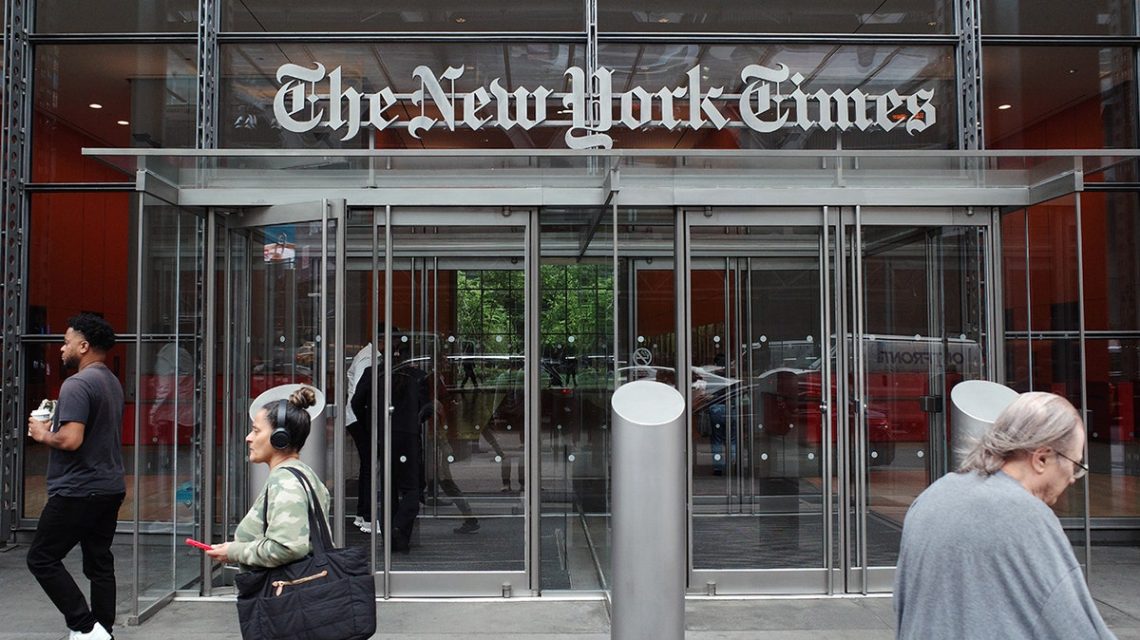
The New York Times has sparked discussion among critics over its portrayal of the American Israel Public Affairs Committee (AIPAC) as a controversial entity among anti-Israel advocates. AIPAC, a U.S.-based group, has become a prominent subject in debates concerning U.S.-Israel relations.
On Wednesday, a significant event unfolded in the House of Representatives as lawmakers voted on a bill proposed by outgoing Rep. Thomas Massie, R-Ky., aiming to reduce military and humanitarian aid to Israel. Although the bill failed, it garnered considerable support from Democratic lawmakers, ending with a 103-98 result, with Massie casting the sole Republican vote.
The New York Times report on this vote highlighted a growing trend among Democrats to refuse donations from AIPAC. Historically, AIPAC has supported both Democrats and Republicans who favor a strong U.S.-Israel alliance. Among the Democrats distancing themselves from AIPAC is Rep. Seth Moulton, D-Mass., currently running for Senate. The Times described AIPAC as a “hard-right pro-Israel lobbying group” that has become “toxic” among Democrats.
The Times described the fractured situation among House Democrats after the Massie amendment vote, where prominent Democrats like Rep. Nancy Pelosi voted in favor, while Rep. Hakeem Jeffries voted against cutting $3.3 billion in U.S. aid to Israel.
AIPAC, founded in 1954, aims to influence U.S. government policies to ensure a strong alliance with Israel. It assists in electing Democrats and Republicans who support this relationship. Before the COVID-19 pandemic, the AIPAC annual Policy Conference saw participation from major Democrats like Senate Minority Leader Chuck Schumer, Sen. Cory Booker, Rep. Hakeem Jeffries, and former Vice President Joe Biden.
Critics have questioned the Times’ description of AIPAC. Commentary Magazine editor John Podhoretz criticized the characterization by Times reporter Annie Karni, calling it misleading given the organization’s diverse political staff. Others, like Karol Markowicz of the New York Post and Joel Pollak of the California Post, expressed similar sentiments, noting that AIPAC is more centrist than the “hard-right” label suggests.
The political climate post-October 7 has seen dwindling support for Israel among Democrats, while Republican support remains strong. AIPAC faces criticism from anti-Israel advocates who argue, falsely, that Israel influences American politics through monetary means. The progressive Democratic base increasingly sees opposition to Israel as a political strategy, impacting future elections.
As these debates continue, the role of AIPAC in American political dynamics remains a contentious subject. Neither The New York Times nor AIPAC provided comments to Fox News Digital on the matter.
 Rep. Alexandria Ocasio-Cortez Defends Macklemore Amid Tour Controversy
  Influence Concerns Surround California Political Donors
  Michigan Senate Race Sees Influences from Soros-Linked Funding
  Trump Seeks Diplomatic Success at the U.N. Amid Challenges
  North Carolina Senate Race Influenced by Abortion Policy Messaging
  Trump Pressures Republicans on Filibuster Threat