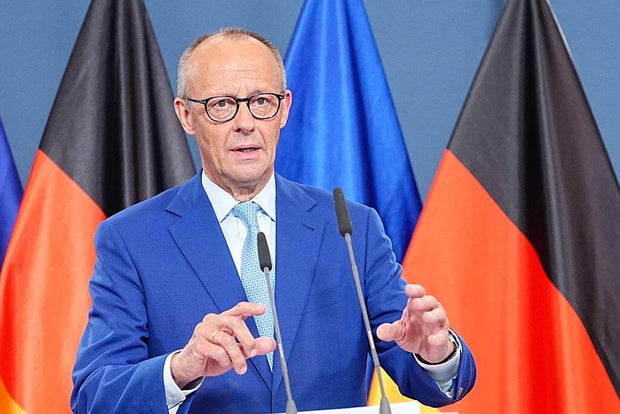
German Chancellor Friedrich Merz remains undeterred after facing a significant electoral setback in two state elections. His resolve is to continue pushing for potentially challenging reforms in Europe’s largest economy.
Exit polls from public broadcaster ARD revealed that Merz’s center-right Christian Democratic Union (CDU) garnered only 5% in Mecklenburg-Western Pomerania. This marks the CDU’s lowest performance in any state since World War II. Meanwhile, the Alternative for Germany (AfD), a far-right and anti-immigration party, made noteworthy progress.
Merz admitted that the election results were disastrous. Nevertheless, he emphasized the necessity of moving forward with his government’s reform agenda. He asserted that Germany’s economic and political challenges demand urgent, albeit potentially unpopular, reforms.
What needs to be done now requires backbone, steadfastness, and patience. I will demonstrate these qualities as chairman of the CDU and, above all, as chancellor of our country.
In Berlin, the CDU was projected to rank second with 20%, following Die Linke (The Left Party) at 24.5%, according to ARD’s exit poll. Elif Eralp, Die Linke’s lead candidate and a daughter of Turkish migrants, expressed joy at her party’s triumph over AfD.
Merz’s leadership was also challenged by the CDU’s loss to AfD in the September 6 election in Saxony-Anhalt. The results concerned many Germans, who had believed in their resilience against nationalism due to their nation’s historical education and laws against persecution.
On Sunday, AfD was anticipated to gain considerable support in both states, receiving 37% of the vote in Mecklenburg-Western Pomerania and 15.7% in Berlin according to ARD. However, forming a regional government remained out of reach for AfD.
Tino Chrupalla, AfD’s national co-leader, criticized Merz’s commitment to continue unchanged, suggesting resignation might be more appropriate. Merz, referencing the far-right, asserted his government’s reforms would counteract authoritarianism’s rising allure.
The CDU has predominantly governed Germany since World War II. Merz, who took office 16 months ago, aimed to revive a stagnating economy. His administration struggles with economic stagnation and voter dissatisfaction due to delayed financial and tax reforms.
Although Germany is experiencing moderate growth, last year’s labor market issues persist, with over 3 million unemployed in August, marking a rise from the previous year. The Federal Employment Agency reports ongoing weak labor demand.
AfD’s recent success in Saxony-Anhalt, where it may form a far-right regional government, has further weakened Merz’s national position. Within his party, calls for his replacement are mounting, although top-level figures have yet to voice public demands for his resignation. Concerns persist about internal debates concerning leadership.
Merz has postponed his planned visit to the U.N. General Assembly in New York, foreseeing challenges after the election. Despite these obstacles, he remains committed to serving his term as chancellor.
 The Impact of Arts and Closure on Democracy
 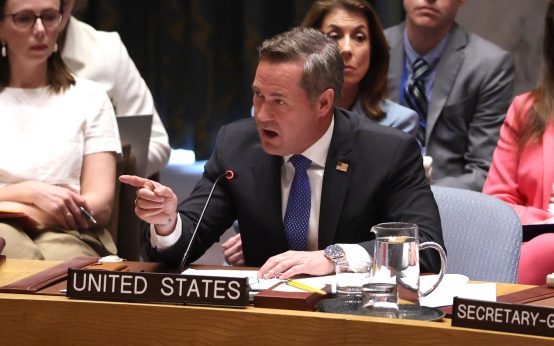 U.S. Ambassador Comments on Iran War Duration Amid Political Concerns
  US-China Relations Under Scrutiny: Expert Warns of Escalating Tensions
  No Timeline for End of Iran Conflict
 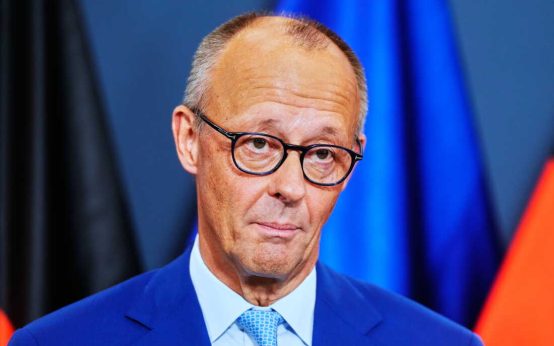 German Chancellor Merz Vows to Pursue Reforms Despite Election Setbacks
  The Technology Rivalry: Trump’s Meeting with Xi and the AI Ecosystem Clash