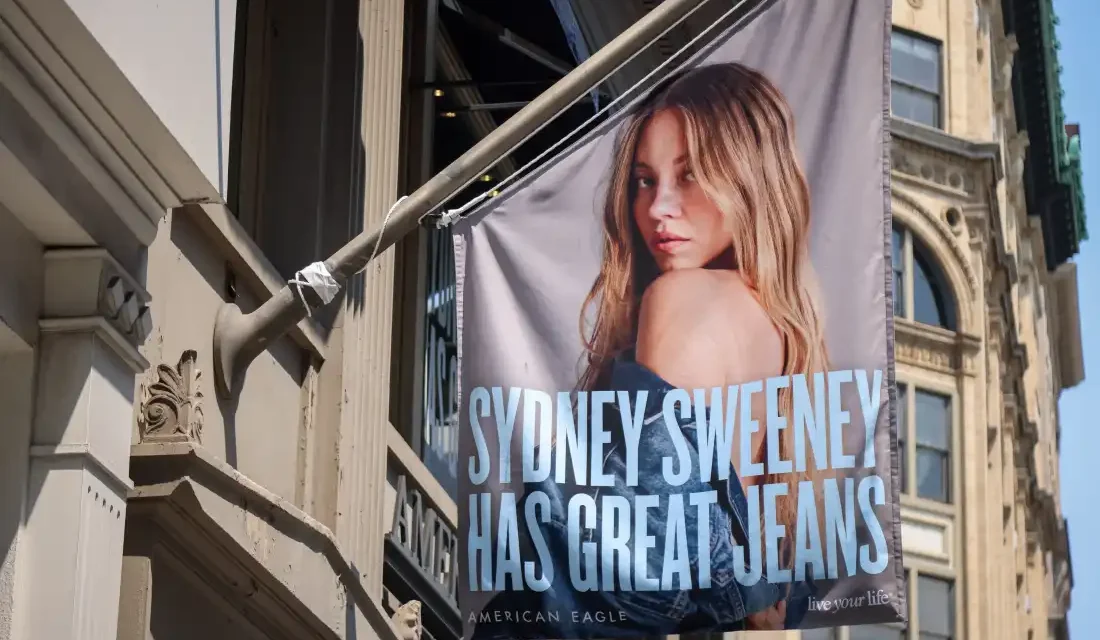
An advertisement with actress Sydney Sweeney outside an American Eagle store in New York sparked controversy. The tagline “Sydney Sweeney has great jeans” led to discussions of potential hidden meanings. But another issue emerges: who are the workers making these jeans?
In Karachi, Pakistan, a garment worker nods as she sees the advertisement on a smartphone. Her recognition comes not from Sweeney but from familiarity with the jeans and jackets, styles she’s helped produce at an American Eagle factory. She notes, “I know how all of them are made” due to her firsthand experience on production lines.
Sydney Sweeney’s advertisement led to a debate on its message, but it missed a crucial point: the garment workers’ role in the production of the jeans. Most garment factories operate in Asia, making it rare for American consumers to meet the individuals behind their clothes. This raises significant questions about these workers’ conditions.
Focus on the Working Conditions
S., a single mother in Karachi, supports her son and mother with her earnings. She works at Artistic Garment Industries, earning about $144 a month. She describes the factory as “oppressively hot” with a temperature of 106°F outside feeling hotter inside. Despite this heat, leaving her workstation for water is challenging due to tight production quotas. She checks the quality of up to 1,600 clothing pieces daily and has fainted thrice this year.
Artistic Garment Industries confirmed its association with American Eagle but insists it does not retaliate against workers raising concerns. They claim to have a robust complaints system and conduct regular temperature checks.
The Fast Fashion Industry
Coverage of Sydney Sweeney’s American Eagle campaign exposed broader issues of the fast fashion industry. These factories usually produce clothes for various brands simultaneously, including Levi’s, Massimo Dutti, The Gap, and H&M. Workers consistently report low wages and oppressive production targets.
Increased global temperatures exacerbate working conditions. Research by the Global Labor Institute at Cornell University and Climate Rights International highlights health risks from extreme heat within factories. The heat arises from crowded spaces, machinery, and ventilation issues. Brands demand large outputs on tight schedules, putting extra pressure on factory workers.
Survival Tactics of Workers
Another worker, R., works in Dhaka, Bangladesh at a factory producing denim for Levi’s. Her insights reveal the struggles faced by workers meeting high quotas under intense pressure. Handling extreme heat without adequate hydration or rest sacrifices their health for survival.
Inside these factories, optimal conditions for productivity are absent. The costs of retrofitting factories with air conditioning deters companies, and long-term brand commitments are lacking to justify the expenditure.
Efforts for Improved Conditions
Following the 2013 Rana Plaza disaster in Bangladesh, global brands initiated the International Accord. Though the accord exists in Bangladesh to improve safety, similar initiatives in Pakistan have not yet achieved significant change.
Efforts to reduce heat stress, agreed upon by the International Accord, aim to ensure cool working conditions become enforceable. Inspections by accord staff enforce compliance in signed countries.
Voices of the Workers
Despite ongoing struggles, workers in Pakistan describe inadequate safety measures at factories. Reports of illnesses from the intense heat emphasize the urgent need for reform. Artistic Garment Industries and Artistic Milliners, major producers for Western brands, face accusations of harmful working conditions.
Responses from Brands
Levi Strauss & Co., H&M, and others responded to these concerns, emphasizing their commitment to workers’ rights. H&M referenced participation in heat stress pilots in Pakistan for solutions.
The garment auditing system, meant to ensure compliance, faces criticism for its reliability. Workers report receiving warnings before audits and feeling pressured to falsely portray conditions.
Ensuring truthful audits remains crucial to addressing these workers’ challenges. Continued international attention and improvements in factory environments are vital to safeguarding these essential labor forces.
 Failed UN Climate Talks in Turkey Highlight Fossil Fuel Dilemma
 Extreme Coastal Flooding Risks Loom Over California
 Shirley Heinze Land Trust’s New Headquarters: A Hub for Conservation
 Challenges and Innovations at White Oak Pastures
 Debate Rekindled Over Gray Wolves and Livestock Losses
 Protests Erupt Against Data Centers in Spain