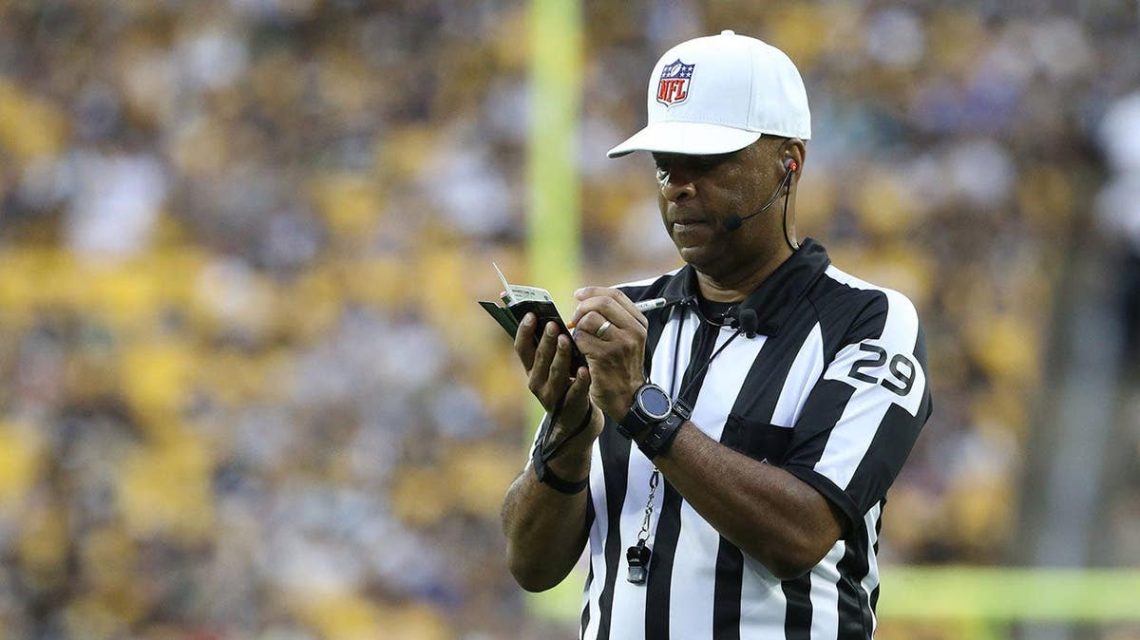
NFL players and coaches frequently face the media after games, often while still upset about any mistakes. Former NFL quarterback Sean Salisbury wants the same level of scrutiny applied to officials when errors occur.
Officials Should Face Post-Game Interviews
Salisbury expressed his desire to know what officials observed on the field immediately after a game, while their emotions are as heightened as those of players and coaches. In his discussion with OutKick, he emphasized the need for prompt accountability.
Salisbury said, “I want to know what they saw on the field immediately after the game, when their emotions were up, just like the players and coaches.” (USA TODAY Sports)
Currently, the NFL enables a pool interview process where media can request clarifications on specific calls. However, Salisbury envisions officials facing on-camera interviews after games as routinely as players and coaches do. This would provide transparency, similar to how a player explains a game-deciding mistake.
The Role of Officials in Maintaining Control
Salisbury acknowledged respect for officials’ roles but voiced frustration over obvious errors that should not require video replay analysis. He questioned whether replay technology has made officials hesitant, treating it as a safeguard rather than making decisive calls when needed.
He referenced recent NFL actions against officials, citing suspensions issued in response to confrontations during games. Line judge Jeff Seeman and referee Adrian Hill faced suspensions following aggressive interactions with players.
The Importance of Objectivity
Keeping emotions in check is integral to an official’s duties. Salisbury and the interviewer agreed that, while players should maintain high standards, officials bear the responsibility to prevent situations from escalating.
The conversation underscored the need for officials to remain impartial, avoiding personal engagement during disputes. Emotional restraint facilitates continued control over the game, preventing disputes from impacting subsequent decisions.
Salisbury highlighted that arguments with players could lead to perceptions of bias in future calls. This concern is exacerbated by gambling implications and the conspiracy theories arising from contentious decisions.
He remarked, “You start to think, well, if you miss a call later on against the team, well, he had it in for us.”
In conclusion, Salisbury advocates for officials to openly explain their decisions post-game, allowing for accountability comparable to that expected of players and coaches.
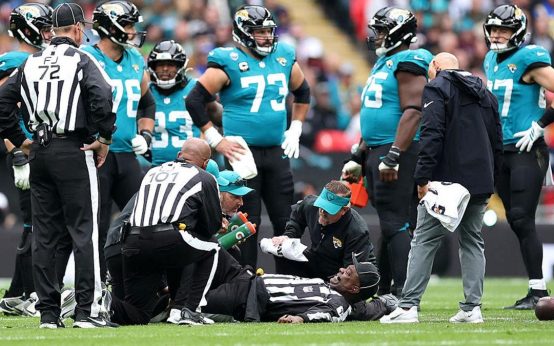 Human Touch on the Gridiron: Empathy Amidst NFL Criticisms
 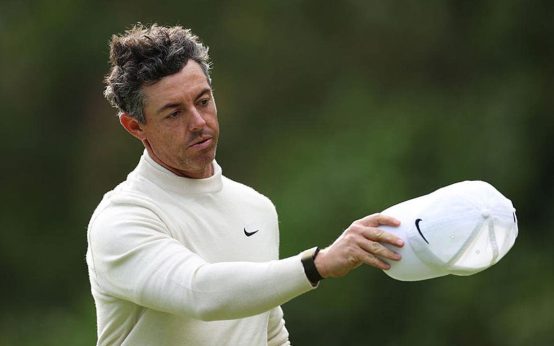 Kevin Kisner Criticizes Rory McIlroy’s Intentions in India Golf Event
  Unrest in France Raises Concerns Over Upcoming NFL Game
  Week-by-Week NFL Betting: A Showdown Against AI
  Historic Upsets Shake College Football
  Struggles at the WNBA Finals: A Clash of Values