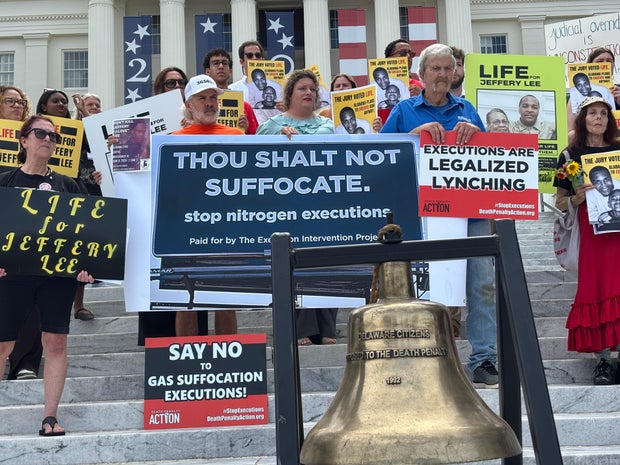
A federal judge has blocked Alabama from executing a death row inmate using nitrogen hypoxia. This decision reverses a prior opinion that deemed the method constitutionally acceptable. The ruling, effective on Tuesday, prevents the state from executing Jeffrey Lee, 49, through nitrogen gas.
Lee was set for execution by nitrogen hypoxia on Thursday. He has been on Alabama’s death row for over twenty years, after a conviction for a 1998 double murder. According to prosecutors, Lee killed Jimmy Ellis, a store owner, and Elaine Thompson, an employee, during a robbery attempt.
U.S. District Judge Emily Marks determined Alabama’s nitrogen gas protocol breaches the Eighth Amendment, which safeguards against cruel and unusual punishment. Her decision followed a Monday appeals court reversal of her earlier finding supporting the method’s constitutionality.
Lee has shown by a preponderance of evidence that the Protocol constitutes cruel and unusual punishment,Marks wrote, referencing the appeals court’s opinion.
During an April bench trial, the first to assess the constitutionality of Alabama’s nitrogen protocol, experts testified that inmates could face “severe air hunger and corresponding emotional distress” as they suffocate over one to three minutes. The court concluded this poses a “substantial risk of serious harm.” The timeframe, ranging from 60 to 180 seconds, was deemed intolerable due to the distress involved.
Marks’ decision signifies a pivotal moment for challenging Alabama’s capital punishment methods. The state started using nitrogen hypoxia in 2024. To contest a method under the Eighth Amendment, inmates must demonstrate it presents a serious risk of pain and propose a viable alternative.
Lee suggested execution by firing squad, which Marks viewed as “feasible, readily implemented, and significantly reduces the substantial risk of serious harm.” While not officially permitted in Alabama, Marks criticized the state’s lack of a valid reason against adopting it.
The Alabama Attorney General’s office intends to appeal. Despite criticism, the state denies its nitrogen protocol causes excessive suffering. If executed, Lee would be the ninth in the U.S. and the eighth in Alabama by nitrogen hypoxia. Louisiana conducted one similar execution.
The issue of nitrogen hypoxia execution’s constitutionality may reach the U.S. Supreme Court next, which has not previously found any capital punishment method unconstitutional.